Culture Video: Attract Top Talent With Employer Brand
You're competing for the same engineers, designers, and marketers as Google, Stripe, and every well-funded startup within 50 miles. Your job postings look identical to theirs. Your benefits are probably similar. So what makes someone choose your company?
Culture. And the fastest way to communicate culture isn't a Glassdoor page or an "About Us" section - it's a company culture video that shows people what it actually feels like to work at your company.
But here's the catch: most culture videos are terrible. They're either too corporate (stock footage of diverse teams high-fiving) or too informal (shaky iPhone footage of the office dog). This guide shows you how to create culture videos that actually attract the talent you want.
Table of Contents
Why Culture Videos Matter More Than Ever
The talent market has fundamentally shifted. Remote work means candidates have more options than ever. Compensation transparency means you can't simply outbid competitors. What's left? Culture is the tiebreaker.
The data behind employer brand video
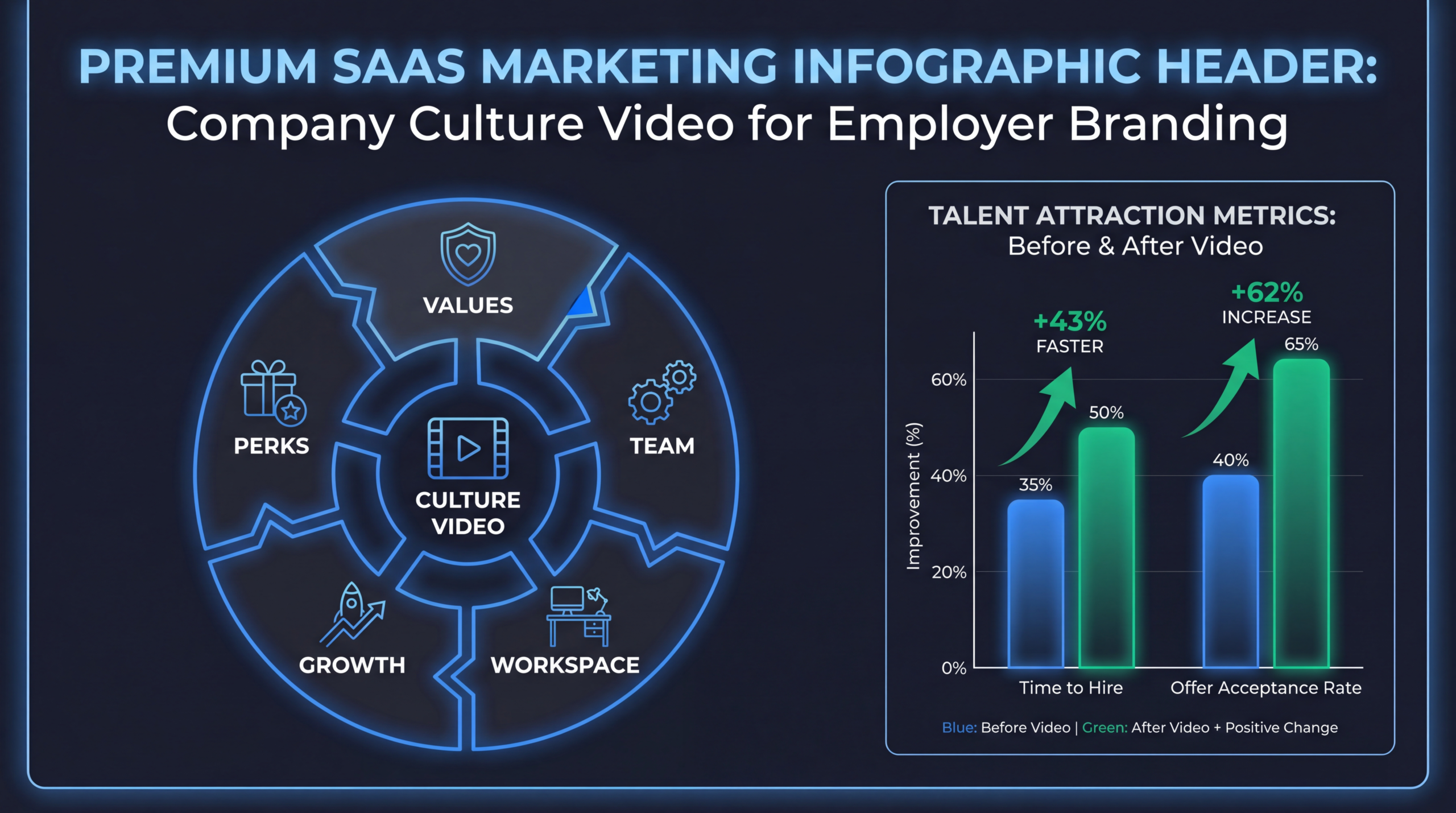
LinkedIn's Global Talent Trends report found that companies with strong employer brands see a 43% decrease in cost-per-hire and 50% more qualified applicants. Glassdoor research shows 77% of candidates consider company culture before applying.
Video is the most effective medium for communicating culture because it captures what words can't: the energy of a standup meeting, the vibe of the office, the way people actually talk to each other.
Culture video vs. recruitment ad
| ELEMENT | CULTURE VIDEO | RECRUITMENT AD |
|---|---|---|
| Goal | Show what working here feels like | Fill a specific open role |
| Shelf life | 12-24 months | Until role is filled |
| Tone | Authentic, documentary-style | Polished, promotional |
| Focus | People, values, environment | Job requirements, benefits |
| Best for | Long-term employer brand | Short-term hiring pushes |
You need both, but culture videos provide the foundation. They work in the background, constantly attracting passive candidates who aren't actively job hunting but are always evaluating where they'd want to work next.
6 Types of Culture Videos
1. Day-in-the-Life
Follow one or more employees through a typical workday. Shows real routines, interactions, and environments. Most authentic format.
2. Employee Testimonials
Team members share why they joined, what they love, and what surprised them. Best when diverse roles are represented - not just executives.
3. Office Tour / Virtual Tour
Walkthrough of the physical (or virtual) workspace. Especially valuable for remote-first companies showing how distributed teams collaborate.
4. Values in Action
Show company values being lived, not just stated. If "we move fast" is a value, show the sprint process. If "transparency" is a value, show an all-hands meeting.
5. Team Event Highlight
Capture team retreats, hackathons, celebrations, or volunteer events. Shows the human side of the company beyond day-to-day work.
6. Founder + Team Story
Combines the founder story format with team perspectives. The founder explains the mission, and team members explain why they believe in it.
Planning Your Culture Video
Define your employer value proposition (EVP)
Before you film anything, answer these questions:
- What makes working here genuinely different from competitors?
- What type of person thrives at your company?
- What do current employees say they love most?
- What would make the wrong candidate self-select out?
Key insight: The best culture videos repel as much as they attract. If your culture is intense and fast-paced, show that honestly. The people who love that environment will apply. Those who don't will save everyone time.
Choose participants wisely
- Mix of roles, tenure levels, and backgrounds
- Include individual contributors, not just managers
- Prioritize people who are naturally expressive on camera
- Avoid only featuring executives - it signals hierarchy over collaboration
Pre-production checklist
- Identify 4-6 employees willing to participate
- Prepare interview questions (see next section)
- Scout filming locations (meeting rooms, common areas, workstations)
- Schedule around natural team moments (standups, lunches, collaborative work)
- Plan B-roll shot list
Interview Questions That Reveal Real Culture
The questions you ask determine whether you get authentic responses or rehearsed corporate-speak. Here are questions that consistently produce genuine, compelling answers:
Getting started
- "What surprised you most in your first month here?"
- "What's something about working here that you'd never know from the website?"
- "Describe a typical Thursday afternoon."
Culture and values
- "Tell me about a time someone helped you here without being asked."
- "What's a company value you were skeptical about until you experienced it?"
- "How does your team handle disagreements?"
Growth and impact
- "What's something you've shipped that you're proud of?"
- "How has your role changed since you joined?"
- "What skill have you developed here that you didn't expect?"
The real stuff
- "What's the hardest part of working here?"
- "Who would NOT enjoy working here?"
- "If you could change one thing about the company, what would it be?"
That last category is where the magic happens. When an employee honestly answers "who wouldn't enjoy working here" - that level of authenticity builds incredible trust with potential candidates.
Production Guidelines
Visual approach
Culture videos should look documentary, not commercial. Think natural light, handheld camera moments, candid interactions. The production quality should be professional - clean audio, good exposure, intentional framing - but the style should feel observational.
Audio matters most
In interview-based culture videos, audio quality makes or breaks the content. Use lavalier microphones for all interviews and capture room tone for natural-sounding B-roll.
Length guidelines
| FORMAT | IDEAL LENGTH | USE CASE |
|---|---|---|
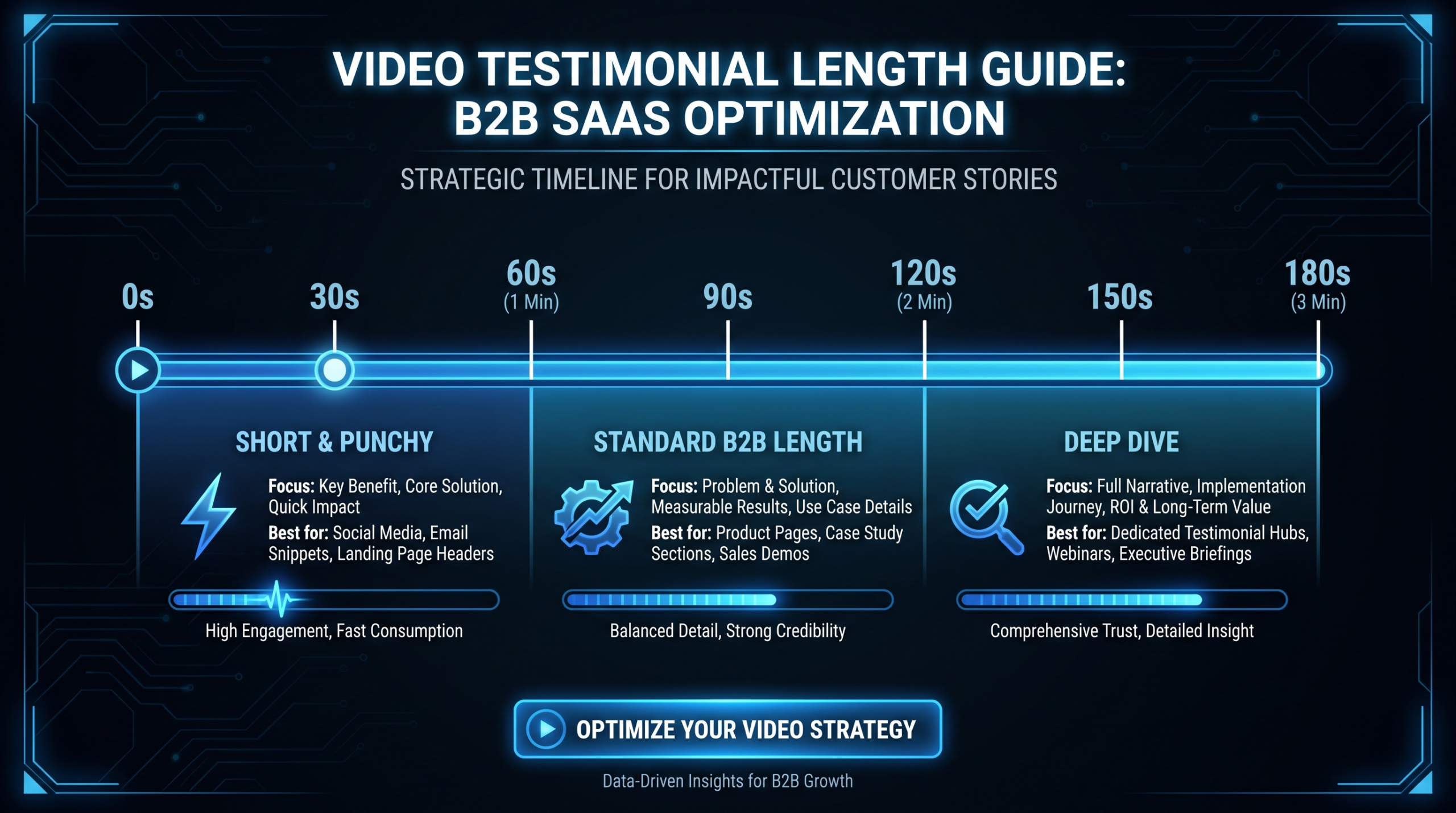
| Hero culture video | 2-4 minutes | Careers page, YouTube, LinkedIn |
| Individual testimonials | 60-90 seconds each | Role-specific pages, social media |
| Social clips | 15-30 seconds | LinkedIn, Instagram Stories |
| Full documentary | 5-8 minutes | Internal use, immersive candidate experience |
Music selection
Choose music that reflects your actual culture, not generic corporate inspiration. A startup with a casual vibe should use different music than an enterprise security company. The music should match the energy of the people on screen.
Where to Distribute for Maximum Impact
Primary channels
- Careers page: This is the single highest-impact placement. Embed prominently above the fold.
- LinkedIn company page: Post the full video and individual employee clips. Tag participants.
- Job postings: Link to the culture video in every job description. Most candidates will watch it.
- Recruiter outreach: Include in cold outreach to passive candidates. Dramatically improves response rates.
Supporting channels
- YouTube (optimized for "[company name] culture" searches)
- Instagram / TikTok (short clips from the longer video)
- Internal communications (reminds current employees why they're here)
- Onboarding materials (sets expectations for new hires)
- University recruiting events (plays on loop at career fairs)
Need a Culture Video That Attracts Top Talent?
We produce authentic employer brand videos for SaaS companies. No stock footage, no corporate-speak - just real stories from real people.
Book a Free Strategy Call See PricingMistakes That Make Culture Videos Cringe
1. Only showing the fun stuff
Ping pong tables, beer fridges, and team outings. These are perks, not culture. A candidate evaluating a career move wants to know about the work, not the snacks.
2. Executive-only testimonials
When only C-suite appears on camera, it signals that rank-and-file voices don't matter. Include individual contributors and mid-level managers.
3. Scripted responses
Viewers can tell when someone is reading from a script. Prepare participants with topics, not word-for-word scripts. Natural delivery always wins.
4. Ignoring diversity
If your video only shows one demographic, candidates from other backgrounds will notice. Represent your team accurately - and if your team lacks diversity, that's a problem to solve, not hide.
5. Overpromising
If the video shows a relaxed, flexible culture but reality is 60-hour weeks, you'll create turnover instead of retention. Authenticity isn't optional.
6. One and done
Culture evolves. Teams change. Update your culture video at least annually, or whenever your team undergoes significant growth or change.
Free: B2B Video Brief Template
Plan your culture video with our comprehensive brief template. Includes interview guides, shot lists, and distribution checklists.
Download the TemplateFrequently Asked Questions
How much does a company culture video cost?
Typically $3,000-$15,000 for SaaS companies, depending on number of interviewees, locations, and deliverable formats. The investment pays back through reduced recruiting costs.
Should remote companies make culture videos?
Absolutely. Remote-first companies benefit even more from culture videos because candidates can't visit an office. Show virtual meetings, async communication, and how remote collaboration actually works.
How many employees should be featured?
4-8 employees for a 2-4 minute hero video. Include a mix of roles, departments, and tenure levels. Individual testimonial videos can expand this number over time.
What if employees are camera-shy?
Use interview-style recording with a producer asking questions off-camera. Most people become comfortable after 5-10 minutes. Start with easy questions and build toward deeper topics.
How often should we update our culture video?
Annually at minimum, or after significant changes (major hiring growth, office relocation, shift to remote/hybrid). The video should always reflect the current team and environment.