
Choosing the right corporate video company is one of the most consequential decisions a marketing leader can make. The right partner transforms your video strategy from a series of one-off projects into a competitive advantage — producing content that drives pipeline, builds brand equity, and accelerates growth. The wrong partner wastes budget, misses deadlines, and delivers videos that sit unused on your website collecting digital dust.
Yet most companies choose their corporate video company based on gut feeling: a portfolio reel that looked nice, a referral from a colleague, or simply whoever was cheapest. That's not a strategy — it's a gamble. In this guide, we'll give you a systematic framework for evaluating and selecting a video production partner, including a vendor evaluation scorecard, a breakdown of different agency types, red flags to watch for, and the questions you should be asking before signing any contract.
Before diving into the selection process, let's establish why this decision carries so much weight:
Not all video production companies are the same. Understanding the different types helps you match the right partner to your needs.
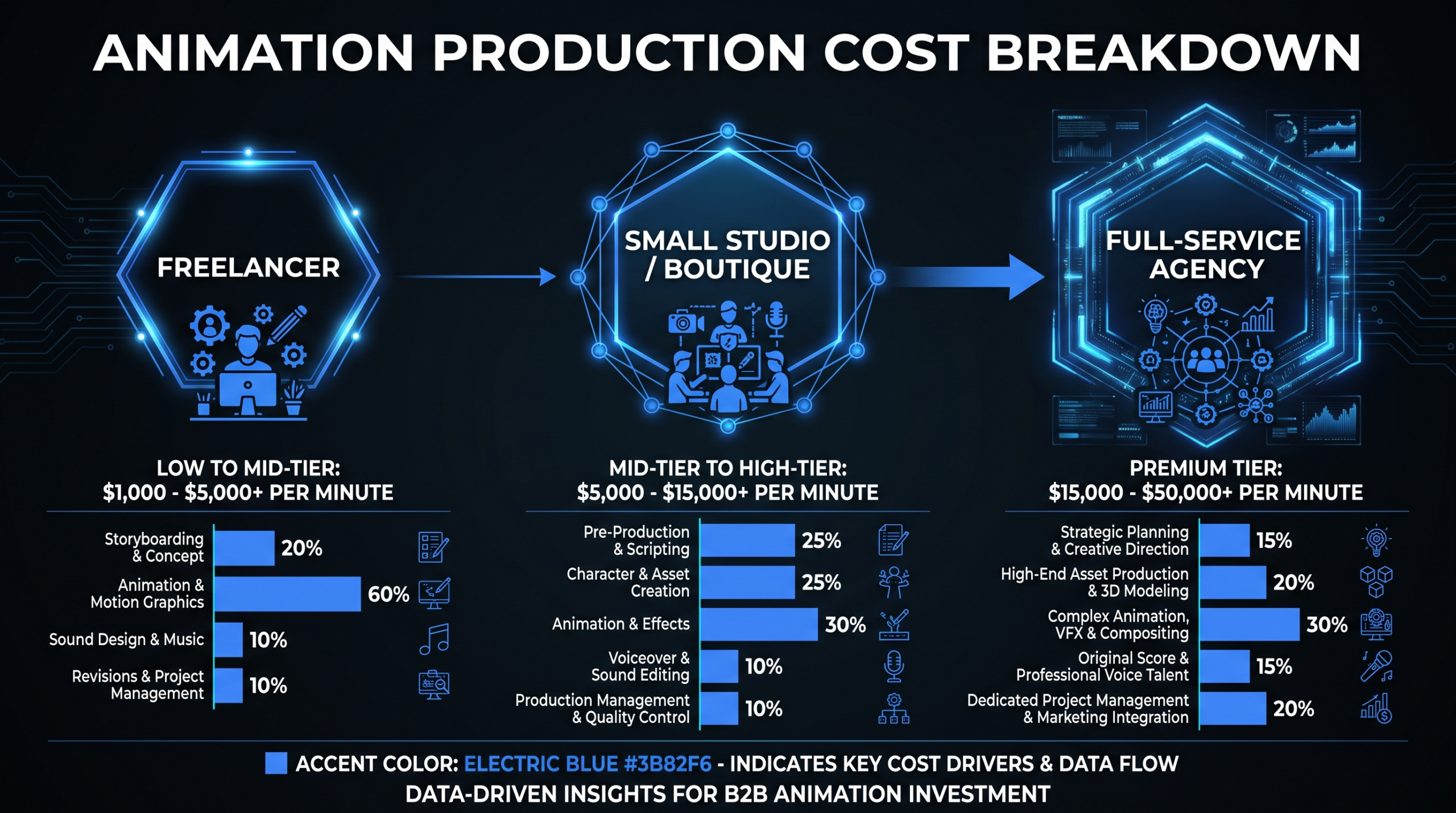
These are established firms with in-house teams covering every phase of production: strategy, scripting, filming, editing, motion graphics, and sound design. They typically have their own equipment, studio space, and a roster of directors and producers.
Best for: Companies investing $50K+ annually in video, producing brand-level content, or needing multi-video campaigns with high production value.
Watch out for: Overhead can mean higher prices. Some full-service shops are better at execution than strategy — make sure they can think beyond the shoot and focus on business outcomes, not just beautiful footage.
Smaller agencies (typically 5–20 people) that specialize in specific video types or industries. A boutique agency focused on SaaS product demos, for example, understands your market, your buyers, and the specific production techniques that work for software demos.
Best for: Companies that need specialized expertise. If you're a SaaS company producing product demo videos, a boutique agency that does this daily will outperform a generalist production house.
Watch out for: Capacity can be limited. During busy periods, boutique agencies may not have bandwidth for rush projects. Establish a retainer or ongoing relationship to secure priority access.
Individual video professionals who handle shooting, editing, and sometimes strategy on their own. They may bring in contractors for specialized needs (motion graphics, sound design).
Best for: Startups with limited budgets, one-off projects, social media content, and internal communications. Also great for supplementing an in-house team's capabilities.
Watch out for: Quality varies enormously. Without a team to provide checks and balances, you're dependent on one person's taste and skill. Availability can also be unpredictable — freelancers often juggle multiple clients.
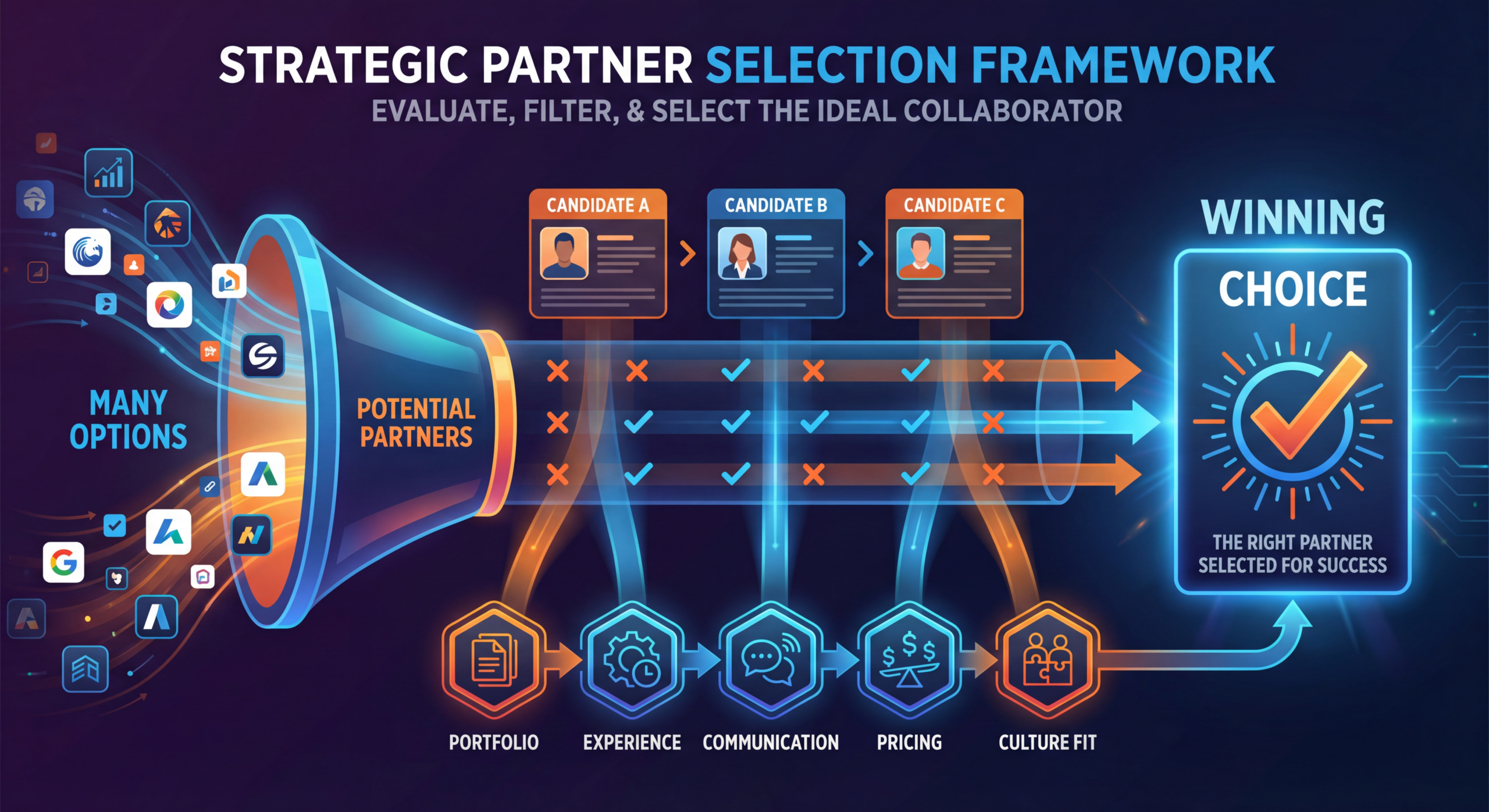
Use this scorecard to systematically evaluate each potential video production partner. Rate each category 1–5 based on your research and interactions.
Score each criteria 1—5. Total possible: 50. Companies scoring 40+ are strong candidates.
The discovery call or initial meeting is your chance to evaluate whether a corporate video company is the right fit. Here are the questions that separate great partners from mediocre vendors:
Industry-specific experience matters. A company that's produced videos for SaaS companies understands the nuances of screen-capture demos, the importance of product storytelling, and the B2B buying process. Ask for 2–3 specific examples and the results those videos achieved.
A professional corporate video company should be able to clearly articulate their process: discovery ? scripting ? storyboarding ? production ? post-production ? delivery. Listen for structure and clarity. Vague answers suggest a disorganized process that will cause headaches.
Great production partners are upfront about what they need from your side: brand assets, access to subject matter experts, feedback turnaround times, and approvals. They set clear expectations for your team's involvement rather than letting things drift.
Revision policies reveal a lot about a company's professionalism. Look for:
You want to know the actual people who'll be handling your work — not just the salesperson or account manager. Ask to meet the director, editor, or lead creative. Chemistry with the production team matters more than chemistry with the sales team.
Experienced companies give realistic timelines and proactively identify risks: client feedback delays, approval bottlenecks, scheduling conflicts. Be wary of companies that promise impossibly fast turnarounds without caveats.
This question reveals whether the company thinks like a marketer or just a filmmaker. The best video production partners care about business outcomes — conversion rates, engagement metrics, pipeline influence — not just aesthetic quality. They should ask about your KPIs and explain how the video will be designed to achieve them.
References are non-negotiable. Speak with companies similar to yours and ask: Was the project delivered on time and on budget? How was communication throughout the process? Would you hire them again? What could they have done better?
Watch for these warning signs during your evaluation process:
Here's a step-by-step process for selecting the right partner:
Before talking to any company, document:
Research 5–8 potential partners through:
Review each company's website and portfolio. Eliminate any that:
Narrow to 3–4 companies for deeper evaluation.
Schedule 30–45 minute calls with each shortlisted company. Use the eight questions above. Pay attention to:
Ask your top 2–3 companies for formal proposals. A good proposal should include:
Call at least 2 references per finalist. Ask about the experience, not just the output.
Use the vendor evaluation scorecard to compare finalists objectively. The highest-scoring company isn't always the right choice — weight categories based on what matters most to your specific situation. If portfolio quality and strategic thinking are most important, weight those categories higher.
Once you've selected your partner, here's what a well-run first project typically looks like:
A detailed kickoff meeting where the production team learns about your brand, audience, objectives, and competitive landscape. They'll review existing brand assets, interview key stakeholders, and align on the creative direction. This should feel collaborative and thorough.
The team presents concept options, a draft script, and potentially initial storyboard frames. You provide feedback, and they refine. A good partner will push back on suggestions that don't serve the video's objectives — that's a sign of strategic thinking, not stubbornness.
Filming (for live-action) or asset creation (for animation/screen-capture). Your involvement may include: approving a final shot list, ensuring access to locations or products, and being available for quick questions. A well-organized production company handles logistics seamlessly.
Rough cut delivery, followed by structured feedback and revisions. Professional companies present rough cuts with a viewing guide that explains what's final vs. placeholder. This prevents you from providing feedback on elements that were already planned for later refinement.
Final video delivered in all required formats. The best companies also provide a distribution guide with recommendations for embedding, social sharing, and optimization. Learn more about the full process in our corporate video production guide.
The most successful corporate video programs are built on long-term partnerships, not one-off projects. Here's how to build a productive ongoing relationship:
Begin with a single project to evaluate the working relationship before committing to a larger engagement. If the first project goes well, discuss a retainer or multi-project agreement that typically offers better pricing and priority scheduling.
The more your production partner understands about your business — your competitors, your customers, your challenges, your wins — the better they can serve you. Treat them as an extension of your team, not a vendor.
Delays in client feedback are the #1 cause of project timeline overruns. Commit to reviewing deliverables within the agreed timeframe, and consolidate all stakeholder feedback into a single, organized document. This respect for the process earns you priority treatment and better work.
Tell your production partner how the videos performed. Share metrics, qualitative feedback from sales and customers, and business impact data. This feedback loop helps them refine their approach for future projects and demonstrates the value of the partnership to both sides.
Don't wait until you need a video urgently to contact your partner. Share your content calendar, upcoming campaigns, and product launches in advance. This allows them to plan capacity, propose proactive ideas, and deliver better work on tighter timelines when needed.
Understanding pricing models helps you compare proposals and negotiate effectively:
Our recommendation: Start with project-based pricing for your first engagement. Once you've validated the relationship, transition to a retainer for better per-unit economics and guaranteed capacity. Retainers also incentivize the production company to invest in understanding your brand deeply, which improves quality over time.
The video production industry has evolved significantly. Here are key trends affecting how you should choose a partner:
Many corporate video companies now operate with distributed teams, combining on-location shooting with remote editing, animation, and post-production. This means you're not limited to local companies — you can work with the best team for your needs regardless of geography.
Leading production companies are integrating AI tools for script drafting, auto-captioning, content repurposing, and even preliminary editing. This doesn't reduce quality — it increases efficiency, meaning you get faster turnaround and often lower costs for standard deliverables. Ask prospective partners how they use AI to improve their workflow.
The best corporate video companies in 2026 don't just make beautiful videos — they make videos designed to hit specific performance targets. They use data from previous projects, A/B testing, and analytics to inform creative decisions. Look for partners who speak the language of conversion rates and pipeline influence, not just f-stops and frame rates.
A growing number of video companies offer subscription-based or "productized" services: fixed monthly fees for a defined set of deliverables (e.g., "4 social videos + 1 long-form video per month for $X"). These models offer predictability and work well for companies with consistent video needs.
Budget depends on your needs. For a single professional corporate video (2–3 minutes, live-action with motion graphics), budget $10,000—$25,000. For an annual video program with multiple video types, budget $50,000—$200,000+ depending on volume and production value. Start with one project to test the relationship before committing to larger investments.
For live-action video that requires on-location shooting, local companies reduce travel costs. For animation, screen-capture demos, and post-production-heavy work, geography doesn't matter — choose the best team regardless of location. Many projects use a hybrid approach: local crew for filming, specialized remote team for editing and motion graphics.
Request proposals from 2–4 companies. Fewer than 2 doesn't give you comparison data. More than 4 becomes time-consuming and makes decision-making harder. Quality of evaluation matters more than quantity of options.
Key contract elements: scope of work with specific deliverables, timeline with milestones, payment schedule (typically 50% upfront, 50% on delivery), revision policy (number of rounds included), ownership of final deliverables and source files, cancellation/kill fee terms, and confidentiality provisions. Have your legal team review before signing.
Ideally, you provide a brief that covers business objectives, target audience, key messages, and success metrics. The video company then develops the creative approach (concept, visual style, narrative structure) based on your brief. This division of labor ensures the video serves your business goals while benefiting from professional creative expertise. Download our B2B Video Brief template to get started.
Cultural fit matters more than most people realize. You'll be collaborating closely for weeks. Pay attention to: communication style (formal vs. casual), responsiveness, how they handle disagreements, whether they challenge your ideas constructively, and whether conversations feel productive and energizing vs. transactional. Trust your gut on this one — if the chemistry feels off in the sales process, it won't improve during production.
A video production company specializes in producing video content — they handle scripting, filming, editing, and delivery. A creative agency offers broader services including branding, marketing strategy, web design, and advertising, with video as one component. If video is your primary need, a specialized production company typically delivers better results at a lower cost. If you need video as part of a larger marketing initiative, a creative agency might offer better strategic integration.
Before shortlisting agencies, it helps to see what great corporate video looks like across all 12 types. Browse our corporate video examples collection — brand films, product demos, testimonials, recruitment videos, and more, with cost benchmarks for each type.
Use our comprehensive checklist to evaluate and compare corporate video companies. Includes the vendor scorecard, must-ask questions, contract review checklist, and red flag guide.
Download the Checklist Book a Free Strategy Call See Pricing