
Corporate video production has evolved from a nice-to-have marketing expense into a core business function. In 2026, every company — from Series A startups to Fortune 500 enterprises — relies on video to communicate with customers, recruit talent, train employees, and drive revenue. But the landscape has changed dramatically. AI tools, remote production capabilities, and shifting audience expectations mean that what worked even two years ago may not be enough today.
This comprehensive guide covers everything you need to know about corporate video production in 2026: the types of videos companies are producing, realistic budgets and timelines, the production process from concept to delivery, emerging trends, and how to maximize ROI from every video asset. Whether you're launching your company's first video initiative or scaling an existing program, this is your complete reference.
Corporate video production encompasses the planning, filming, editing, and distribution of video content created for business purposes. Unlike entertainment or consumer content, corporate video is designed to achieve specific business objectives: generating leads, closing sales, training employees, building brand awareness, or communicating with stakeholders.
The scope of corporate video has expanded dramatically. What used to mean "a talking head in a boardroom" now includes animated explainers, product demos, social media campaigns, internal communications, virtual event content, and AI-enhanced personalized videos. The common thread is that these videos serve a business function — and when produced well, they deliver measurable ROI.
Understanding the different types of corporate video helps you identify which formats will have the greatest impact for your business. Here's a comprehensive breakdown:
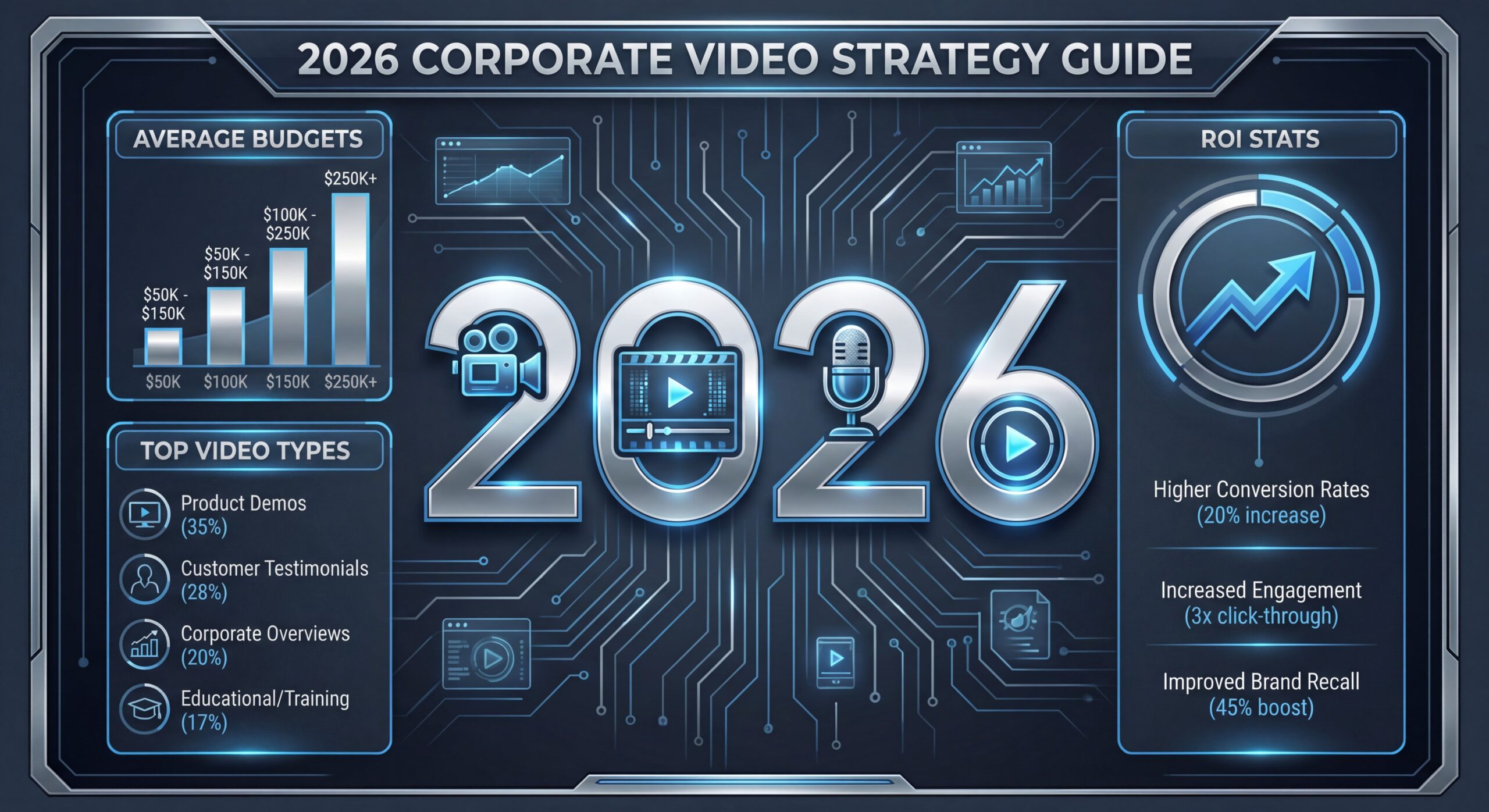
One of the most common questions about corporate video production is "How much does it cost?" The answer varies dramatically based on video type, production quality, and who's producing it. Here are realistic budget ranges based on our experience:
Ranges reflect U.S. market rates for professional production in 2026.
Several factors influence the cost of corporate video production:
Regardless of video type, professional corporate video production follows a consistent workflow. Understanding this process helps you plan timelines, allocate resources, and collaborate effectively with your production team.
Pre-production is where the video is planned. This phase includes:
Production is the actual capture phase:
Post-production transforms raw footage into a polished video:
A finished video is worthless if nobody sees it. Distribution planning should start during pre-production:
The industry is evolving rapidly. Here are the trends shaping corporate video production this year:
AI isn't replacing video producers — it's making them faster and more efficient. In 2026, AI tools are commonly used for:
The key is knowing when AI is sufficient and when human production is essential. For high-stakes assets like your primary brand video or customer testimonials, human production remains superior. For supplementary content and rapid iteration, AI tools offer tremendous value.
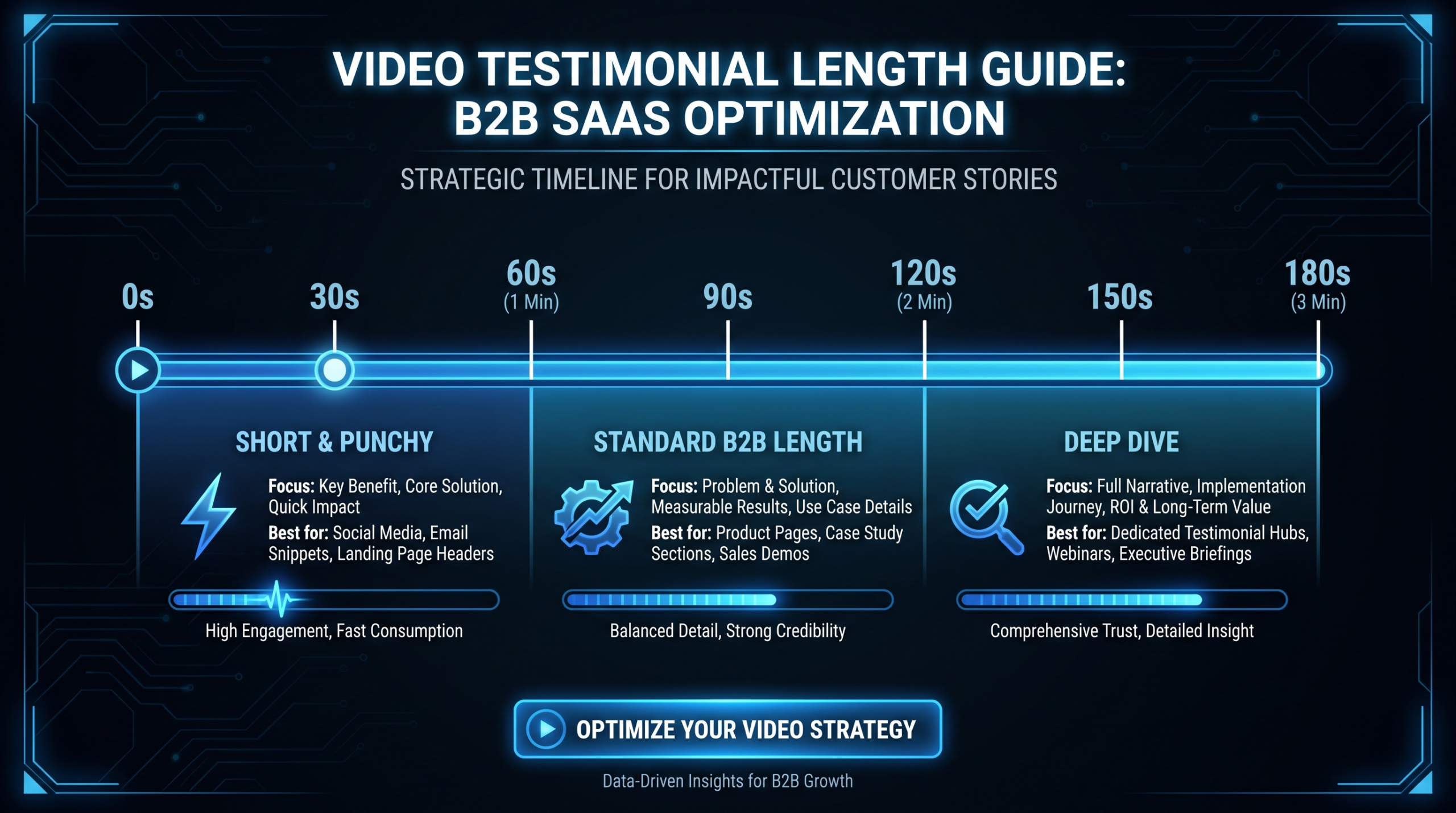
The influence of TikTok, Instagram Reels, and LinkedIn short-form video has reshaped expectations. Corporate videos are getting shorter. Many companies now produce a 60–90 second "hero" video alongside a set of 15–30 second clips for social distribution. The long-form corporate overview is being replaced by a series of micro-content pieces.
While production quality still matters, there's a growing preference for authenticity over polish. Viewers — especially younger professionals — respond better to genuine, human content than to overly produced corporate pieces. This doesn't mean sloppy production; it means natural performances, real locations, and conversational tone.
Interactive video — where viewers can click, choose paths, or input information — is moving from experimental to mainstream. Platforms like Vidyard and HippoVideo offer personalization at scale, allowing companies to insert prospect-specific details into otherwise standardized video content.
Producing only landscape (16:9) video is no longer sufficient. Productions now plan for multiple aspect ratios from the start: 16:9 (web/YouTube), 1:1 (feed), 9:16 (stories/reels/TikTok). The smartest companies frame their shots with all formats in mind during filming.
Producing a great video is only half the battle. Maximizing ROI requires strategic thinking about how each video asset is used, repurposed, and measured.
Every corporate video you produce should generate multiple assets:
Think of each production as creating a content library, not a single deliverable. Run a video content audit to identify repurposing opportunities in your existing library.
Different video types require different success metrics:
Consistency beats intensity. Rather than producing a flurry of videos once a year, establish a sustainable cadence. A realistic starting point for most companies:
While the production process is consistent, the approach varies by industry:
Product demos and explainer videos are the priority. Screen-capture-based content supplemented with motion graphics. Focus on product demo video production and conversion optimization. Fast iteration cycles to keep up with product changes.
Thought leadership and credibility are paramount. Emphasis on polished interview-style videos with firm partners, case study narratives, and educational content that demonstrates expertise.
Compliance and accuracy are non-negotiable. Patient testimonials (with proper releases), physician education, procedure explanations, and facility tours. Regulatory review adds time to the production process.
Product demonstrations, factory tours, safety training, and engineering showcases. Often requires specialized crew familiar with industrial environments and safety protocols.
Product videos, brand campaigns, influencer collaborations, and user-generated content programs. High volume, fast turnaround, and strong emphasis on social media distribution.
One of the biggest decisions companies face is whether to build in-house video capabilities or partner with external agencies. Here's how to think about it:
Best for: Companies producing 4+ videos per month, needing fast turnaround for social content, and wanting full creative control.
Best for: Companies producing fewer than 4 videos per month, needing high production value, or tackling projects outside their team's expertise.
Best for: Most mid-size to large companies. Keep a small in-house team for day-to-day content (social clips, quick updates, internal comms) and partner with an agency for high-stakes projects (brand videos, campaigns, testimonials).
Starting production without a documented creative brief is the most expensive mistake you can make. It leads to misaligned expectations, excessive revisions, and mediocre results. Invest the time upfront to align on objectives, audience, messages, and success metrics.
When too many stakeholders have equal say in creative decisions, the result is a bland, consensus-driven video that tries to please everyone and excites no one. Designate one person as the creative lead with final approval authority.
Producing a beautiful video and then uploading it to YouTube with no promotion is like publishing a book with no marketing. Allocate 20–30% of your video budget to distribution: paid promotion, social distribution, email integration, and sales enablement.
A single video doesn't make a video strategy. The companies that see the best ROI from corporate video treat it as an ongoing program, not a project. Commit to a publishing cadence and build a library over time.
A beautifully shot video with a weak story will underperform a simply shot video with a compelling narrative. Story always comes first. Invest in scripting and concept development before worrying about production value.
Video is a powerful SEO asset when deployed correctly:
Corporate video production costs range from $1,000 for simple social media clips to $150,000+ for multi-video brand campaigns. A typical professional corporate video (2–3 minutes, live-action with motion graphics) costs $10,000—$25,000. The primary cost drivers are production complexity, video length, number of shoot days, talent, and the level of motion graphics and post-production work required.
Most professional corporate videos take 4–8 weeks from kickoff to final delivery. Simple projects (social clips, screen-capture demos) can be completed in 1–2 weeks. Complex projects (multi-location shoots, custom animation, large campaigns) can take 8–12 weeks. The biggest variable is the review and approval process — streamlined feedback loops significantly reduce timelines.
A basic in-house setup requires: a camera capable of 4K recording (Sony A7 series, Canon R series, or similar), 2–3 LED lights, a lavalier microphone and shotgun microphone, a tripod, and editing software (Adobe Premiere Pro or DaVinci Resolve). Budget approximately $5,000—$15,000 for a starter kit. However, equipment alone doesn't make great videos — you also need skilled operators and a solid creative process.
ROI measurement depends on the video's objective. For marketing videos, track metrics like lead generation, conversion rate lift, and pipeline influence. For sales enablement, measure deal velocity and win rate correlation. For training, track completion rates and support ticket reduction. Use platforms like Wistia or Vidyard that integrate with your CRM to attribute revenue to specific video views.
AI tools are excellent for specific tasks: script drafting, auto-captioning, video repurposing (creating social clips from longer videos), and generating rough voiceover drafts. However, for high-stakes content like brand videos and customer testimonials, human production remains essential. The best approach in 2026 is a hybrid: use AI to accelerate routine tasks and human creativity for strategic storytelling.
If you're starting from zero, prioritize in this order: (1) A product demo or explainer video — this has the most immediate impact on conversion. (2) 2–3 customer testimonials — social proof accelerates trust. (3) A company overview / brand video — establishes credibility across all channels. This trio covers the core of your video needs and can be produced within a single quarter. Learn more in our product demo video production guide.
Start your next corporate video project with a proven creative brief template. Covers objectives, audience, messaging, distribution, and success metrics — everything your production team needs.
Download the Brief Book a Free Strategy Call See Pricing