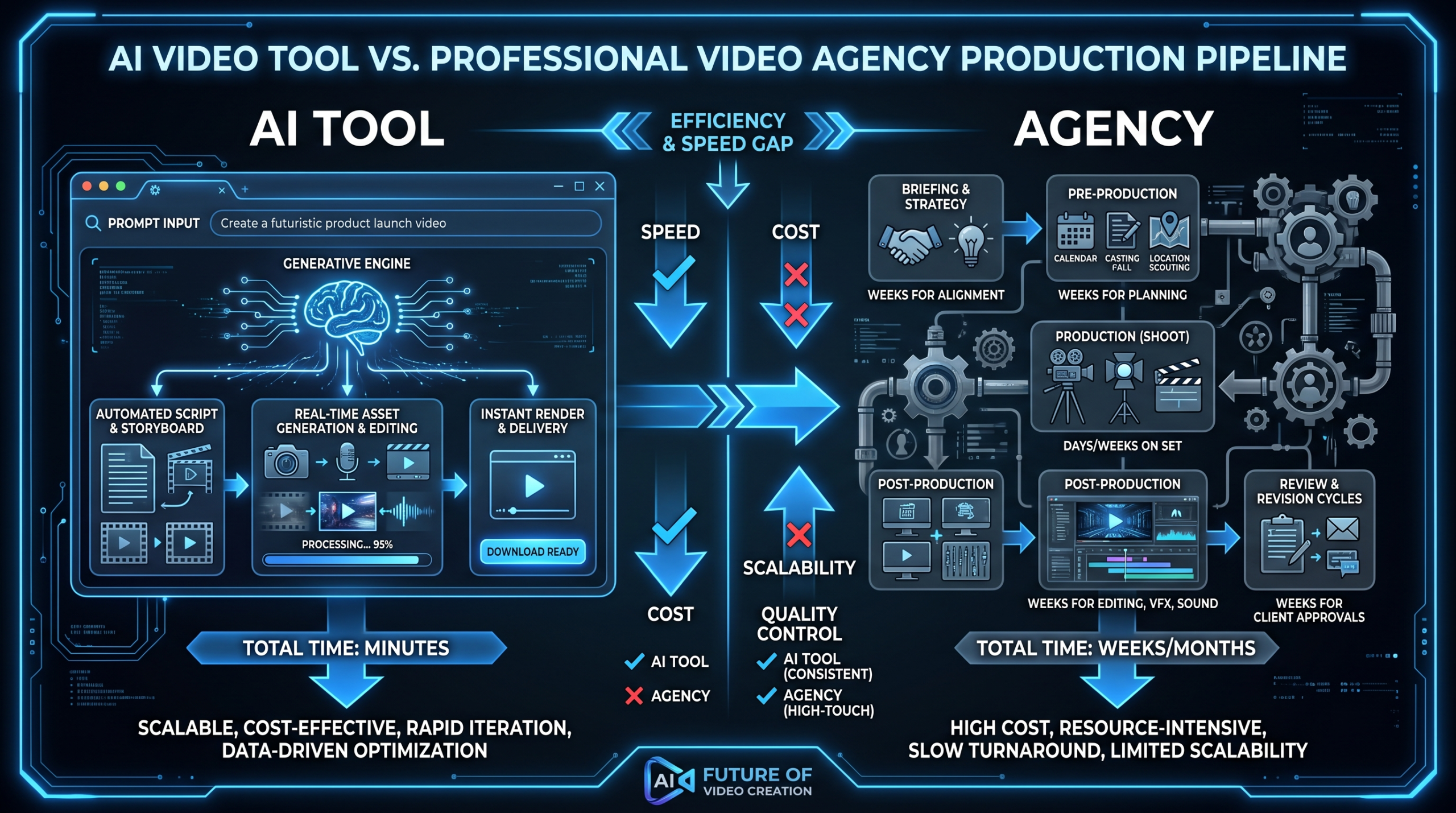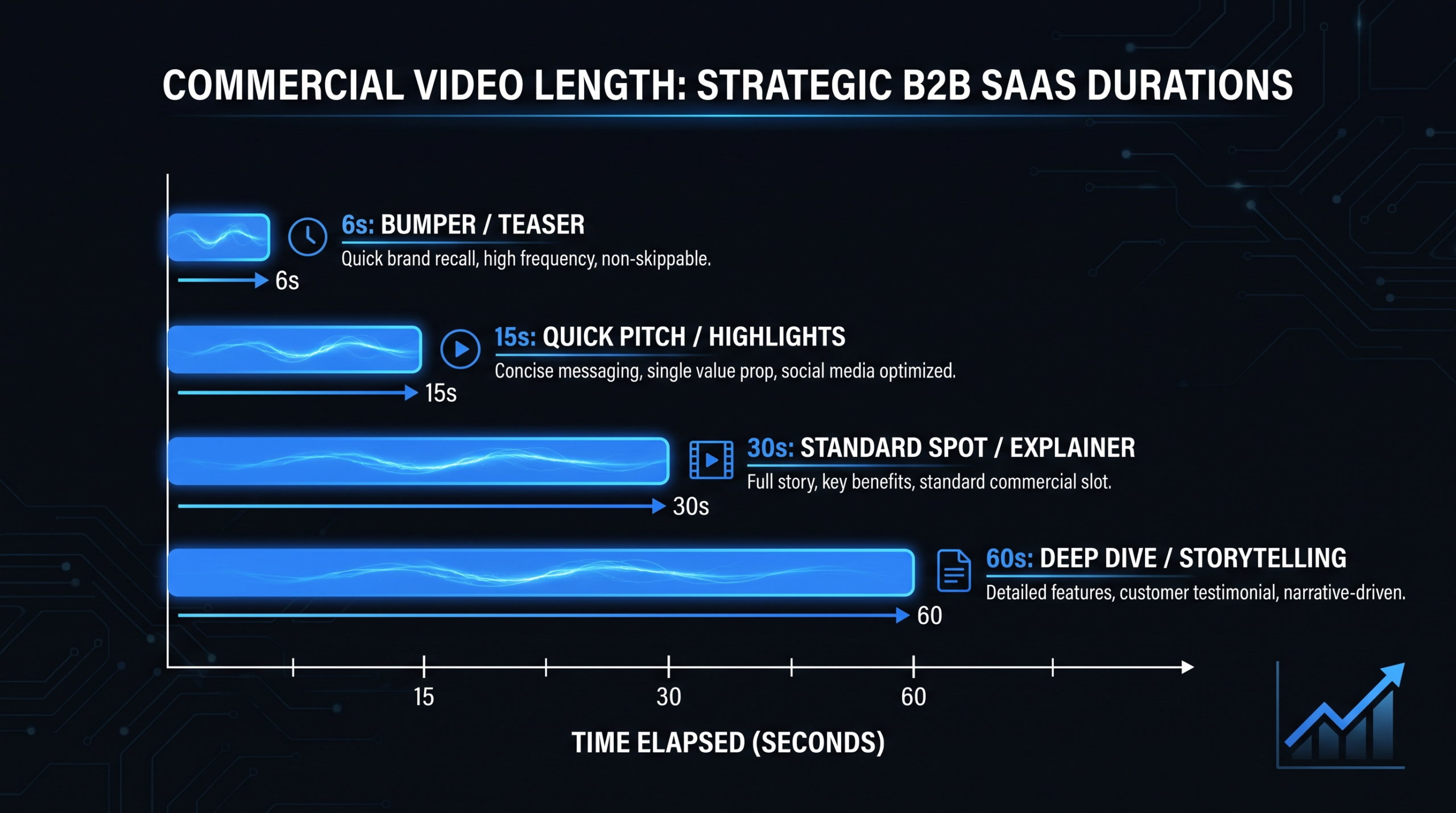


Choosing the right video production services partner is one of the most consequential decisions a growing company can make. In 2026, video isn't optional - it's the primary medium through which buyers discover, evaluate, and trust brands before ever speaking to a sales rep. Yet the landscape of video production services is more fragmented and confusing than ever: freelancers, boutique agencies, full-service production houses, subscription-based editing platforms, and AI-powered tools all compete for your budget. Making the wrong choice doesn't just waste money - it wastes months of momentum and creates content that actively undermines your brand.
This guide is designed for marketing leaders, founders, and operations teams at companies doing between $2M and $50M in annual revenue - the growth stage where video becomes essential but internal production teams are rarely justified. We'll walk through every decision point: what types of video production services exist, how they differ in scope and pricing, what questions to ask potential vendors, how to evaluate proposals, and how to structure a long-term relationship that scales with your business. By the end, you'll have a practical framework for making this decision with confidence.
The data is unambiguous. According to recent B2B marketing benchmarks, short-form video delivers the highest ROI of any content format, with 104% more marketers naming it their most valuable channel compared to the previous year. Video now accounts for over 13% of B2B content libraries and demonstrates significantly higher engagement and binge rates than blog posts or whitepapers.
But here's the nuance that most statistics miss: it's not just about having video. It's about having good video, produced consistently, aligned with your brand, and distributed strategically. A single well-produced brand video won't move the needle. What moves the needle is a sustained video program - a library of content that covers every stage of the funnel, refreshed quarterly, optimized based on performance data.
This is why the choice of video production services partner matters so much. You're not hiring someone to make a video. You're building the infrastructure for an ongoing content engine. The partner you choose determines the quality ceiling, the production velocity, the cost per asset, and - critically - whether your team enjoys the process enough to sustain it.
We've seen companies burn $30,000 to $100,000 on video projects that never shipped, shipped but performed poorly, or shipped but couldn't be iterated on because the relationship with the vendor fell apart. The most common failure modes include:
Each of these failures is preventable with the right evaluation framework, which we'll build throughout this guide.
Before you can evaluate vendors, you need to understand the different models of video production services available in the market. Each model has distinct strengths, limitations, pricing structures, and ideal use cases. Here's how they compare:
Freelancers are the most accessible entry point for video production. Platforms like Upwork, Fiverr, and specialized creative marketplaces connect you with individual shooters, editors, motion designers, and animators. The price range is enormous - from $50 for basic editing to $10,000+ for experienced cinematographers on complex shoots.
Pros: Cost-effective for simple projects. Direct communication. Flexible scheduling. You can find specialists for very specific needs (e.g., a motion graphics artist who works exclusively in After Effects with a SaaS aesthetic).
Cons: No redundancy - if they get sick or busy, your project stops. Quality varies wildly. Managing multiple freelancers for a multi-video project becomes a coordination burden. They typically don't provide strategy, scripting, or distribution guidance. You're the project manager.
Ideal for: Companies that have a strong internal marketing team capable of scripting, directing, and managing projects but need execution-level help for specific deliverables.
Boutique agencies typically have 5-30 employees and specialize in creative storytelling. They offer end-to-end production: concept development, scripting, shooting, editing, and sometimes distribution. Their strength is creative quality - they build a distinctive visual identity and produce work that stands out.
Pros: High creative quality. Dedicated team that understands your brand over time. Often includes strategy and scripting. Strong project management.
Cons: Expensive per-video cost. May be slow for high-volume needs. Often overcommitted - if they take on too many clients, your project gets deprioritized. Creative vision may sometimes override practical marketing goals.
Ideal for: Companies that need hero content - brand films, product launch videos, investor presentations - where quality is the primary concern and volume is secondary.
These are the large-scale operations with in-house studios, equipment rental departments, casting directors, and dedicated post-production teams. Think Superside, Levitate Media, or similar organizations that can handle enterprise-level programs across multiple regions and languages.
Pros: Massive capacity. Professional-grade everything. Can handle complex logistics (multi-location shoots, talent coordination, licensing). Consistent quality at scale.
Cons: Minimum project sizes often exclude smaller companies. Long sales cycles and onboarding processes. Can feel impersonal. Pricing is the highest in the market.
Ideal for: Enterprise companies with six-figure annual video budgets that need institutional-grade reliability and global reach.
This model has exploded in popularity. Companies like VEC, beCreatives, MoonB, and others offer unlimited (or high-volume) editing for a flat monthly fee. You provide raw footage, direction, and brand assets; they handle the editing, motion graphics, and delivery. Some include additional services like scripting and thumbnail design.
Pros: Predictable cost. Fast turnaround (often 24-72 hours). Scalable - more content without renegotiating contracts. Great for teams that film a lot of raw footage and need it transformed into polished deliverables consistently.
Cons: You need to provide the raw material. Quality depends on the editing team's understanding of your brand. May lack the creative vision of a boutique agency. Not all subscription services are equal - some use offshore teams with limited creative judgment.
Ideal for: Content-heavy companies that produce regular podcasts, webinars, social media content, or sales enablement videos and need a reliable editing pipeline.
The hybrid model combines elements of boutique creative work with subscription-based operational efficiency. These partners might handle everything from strategy and scripting through shooting and post-production, but on a retainer basis that provides predictable pricing and consistent collaboration. This is the model that works best for most growth-stage companies.
Pros: Single point of contact for all video needs. Strategic input combined with execution capability. Grows with you. Predictable costs with room for flexibility on special projects.
Cons: Requires commitment - monthly retainers mean you're paying even in slow months. The quality and scope depend heavily on the specific partner. Finding the right fit takes more effort upfront.
Ideal for: Companies in the $5M-$50M range that are committed to video as a core growth channel and want a partner who functions like an extension of their team.
Before contacting any vendor, invest time in defining what you actually need. The biggest source of buyer-seller friction in video production services is misaligned expectations, and that almost always stems from the buyer not having clarity on their own requirements.
Start by inventorying your existing video assets. What's been produced? What's performing? What's outdated? What gaps exist? This audit gives you a baseline and helps you articulate what you need to a potential partner.
Key questions to answer:
Growth-stage companies typically need 4-12 videos per month across different formats and channels. This might include:
Mapping this out before speaking to vendors lets you get accurate pricing and ensures you're comparing like-for-like when evaluating proposals.
This is where things get subjective but important. "Quality" in video production means different things to different people. A social media clip can look great shot on an iPhone with good lighting and clean editing. A brand anthem needs cinematic production values. Be honest about what quality level each content type actually requires.
A useful framework is to categorize your needs into three tiers:
Most growing companies need a partner who can handle Tier 2 and Tier 3 reliably, with the ability to step up to Tier 1 for occasional campaigns.
Now let's get practical. When you're evaluating video production services providers, you need a structured approach. Gut feeling matters, but it shouldn't be your only signal. Here's the framework we recommend:
Don't just look at whether their work is "good." Look at whether it's relevant to your industry, audience, and content types. A production company that makes stunning fashion commercials may struggle with B2B SaaS explainers. Specific things to evaluate:
The best production team in the world is useless if their process creates friction. Ask about:
Opaque pricing is a red flag. A good partner should be able to give you clear, itemized pricing that you can model against your budget. Look for:
You want to know who's actually doing the work. Is it a senior editor or a junior who just started? Will the same team work on your account consistently? Key questions:
Can they help you think, or just execute? The best partners bring strategic value - they challenge your briefs, suggest content ideas, and help you understand what's working and why. Evaluate:
The relationship between a company and its video production services partner evolves over time. Understanding this evolution helps you set realistic expectations and plan for growth.
Start with a single project. This is your litmus test. Choose a project that's representative of your typical needs - not the simplest thing you'll ever do, and not the most complex. A good trial project is a 2-minute product explainer or a set of three social clips from existing footage.
During the trial, evaluate everything: how they handle the brief, how they communicate during production, how they handle feedback, whether they hit the deadline, and - most importantly - whether the final product meets your quality bar without excessive hand-holding.
If the trial goes well, move to a monthly engagement. This is where you share your brand guidelines, create templates, establish workflows, and build the operational infrastructure for ongoing collaboration. Expect some friction here - this is normal. The goal is to get to a point where they can produce content that feels like it came from your internal team.
Key milestones for this stage:
This is where the relationship starts delivering outsized value. Your production partner joins quarterly planning calls, understands your product roadmap, and starts making proactive suggestions. They notice patterns in your content performance and suggest optimizations. They anticipate your needs rather than just reacting to requests.
At full maturity, your video production partner is essentially your outsourced video department. They drive the content calendar, propose new formats and experiments, and share accountability for video performance metrics. This is rare - maybe 20% of vendor relationships reach this stage - but it's the most valuable configuration.
Let's talk numbers. Pricing for video production services varies enormously, and understanding the range helps you budget realistically and evaluate proposals critically.
Monthly retainers typically range from $2,000 to $15,000 depending on scope. Here's what you can generally expect at different price points:
The key metric to track is cost per deliverable. A $5,000/month retainer that produces 20 videos costs $250/video - significantly cheaper than per-project pricing for similar quality.
In our experience working with hundreds of companies evaluating video production services, these are the warning signs that a vendor may not be the right fit:
Arm yourself with these questions when evaluating potential video production partners:
Once you've selected a partner, the contract structure matters. Here are the key provisions to negotiate:
Be specific. Don't just say "monthly video production." Define the number of deliverables, the types of content, the expected turnaround times, and the quality standards. Include examples of what "good" looks like by referencing specific videos from their portfolio or yours.
Ensure you own all final deliverables and raw project files. This is non-negotiable. If the relationship ends, you need to be able to continue producing content without starting from scratch. Specifically negotiate for:
Include measurable quality standards and turnaround time commitments. Define what happens if they consistently miss deadlines or deliver below the agreed quality standard. The best contracts include:
Hope for the best, plan for the worst. Your contract should include reasonable termination clauses - typically 30-60 days notice. Ensure that upon termination, you receive all project files, templates, and brand assets. Avoid contracts that hold your assets hostage.
Even the best video production services partner can't succeed if your internal team isn't ready for the collaboration. Here's how to prepare:
The most common process failure is "feedback by committee." Designate one person on your team as the primary contact and decision-maker for video production. This person consolidates feedback from stakeholders and provides unified direction to the production team.
Before your first project, assemble: brand guidelines, logo files (all formats), font files, color codes, approved imagery, tone of voice documents, and examples of video content you admire. The more you provide upfront, the faster ramp-up goes.
Agree on how feedback will be given. Timestamps in the video? Annotated screenshots? Written notes? A shared document? Consistency in feedback format dramatically reduces revision cycles.
Video production takes time. Build buffer into your content calendar. If you need a video for a product launch on March 15, don't brief it on March 1. A good rule of thumb:
How do you know if your video production services investment is paying off? Track these metrics:
After working with hundreds of companies navigating this decision, here are the patterns that consistently lead to problems:
The cheapest option almost always costs more in the long run. Low-cost providers often deliver work that requires extensive revision, misses your brand voice, or simply doesn't perform. The cost of rework, missed deadlines, and underperforming content far exceeds the savings from a lower monthly rate.
Always run a trial project before signing a long-term contract. Chemistry, communication style, and creative alignment can't be evaluated from a portfolio and a sales call alone. A $2,000 test project can save you from a $50,000 mistake.
If you hire experts, let them be experts. Providing overly prescriptive creative briefs - "use this exact font at this exact size with this exact transition" - eliminates the creative value you're paying for. Give direction on goals, audience, and brand parameters. Let the production team bring their creative expertise.
The companies that get the most value from their video production partnership invest time in the relationship: regular check-ins, shared planning sessions, honest feedback, and mutual respect. Treating your production partner as a vendor to be managed rather than a partner to collaborate with limits the value you'll receive.
Most growth-stage companies ($5M-$50M revenue) should budget between $3,000 and $12,000 per month for ongoing video production services. This typically provides 10-25 deliverables per month depending on complexity. For companies just starting with video, a $3,000-5,000 monthly budget is a solid starting point that allows for meaningful content volume without over-committing.
For most companies under $50M in revenue, outsourcing is more cost-effective and flexible. A single in-house video producer costs $60,000-$100,000+ in salary plus equipment, software, and management overhead. An outsourced partner provides a team of specialists - editors, motion designers, colorists, sound designers - for a fraction of that cost. Consider bringing video in-house only when you consistently need more than 30-40 videos per month and have the management capacity to lead a creative team.
A video production company handles the full lifecycle: concept, scripting, shooting, and post-production. A video editing company specializes in post-production - taking your raw footage and transforming it into finished content. If you have the ability to capture footage (through internal team members, smartphone content, or screen recordings), a video editing company may be all you need. If you need help with the entire process from concept to delivery, look for a full-service production partner.
Look beyond surface aesthetics. Good production quality means: clean audio (the most commonly overlooked element), appropriate pacing for the platform and audience, on-brand visual identity, clear storytelling that serves the business objective, and professional editing (clean cuts, appropriate transitions, good color grading). Watch their portfolio with the sound off - if the visual storytelling still communicates, that's a good sign.
Expect 2-3 months to reach full velocity. The first month is a learning period where the production team internalizes your brand, style, and preferences. By month two, they should be producing content that requires minimal revision. By month three, the workflow should be smooth and they should be proactively suggesting ideas. If you're still fighting quality or communication issues after three months, it may not be the right fit.
AI tools are increasingly capable for specific tasks - auto-captioning, rough cuts, background removal, basic editing - but they can't replace the strategic thinking, creative judgment, and brand understanding that a human production team provides. The most effective approach is to use AI tools to accelerate your production partner's workflow, not to replace them. For more on this topic, see our guide on AI video editing in 2026.
First, have an honest conversation. Many issues stem from unclear expectations that can be resolved with better communication. Share specific examples of work that missed the mark and clarify your expectations. If the problems persist after a month of focused effort to improve, begin your transition: collect all project files and assets, document your brand guidelines and templates, and start evaluating alternatives. Never burn the bridge - the video production community is small, and professionalism matters.
Choosing the right video production services partner is ultimately about finding alignment across three dimensions: capability (can they do the work?), compatibility (is the working relationship smooth?), and commitment (are they invested in your success?).
No partner is perfect from day one. The best relationships are built through honest communication, mutual investment, and a willingness to iterate on the process. Start with a trial, invest in the ramp-up, and give the relationship time to mature before making final judgments.
The companies that win with video in 2026 aren't the ones with the biggest budgets - they're the ones with the smartest partnerships. A well-chosen production partner amplifies everything your marketing team does, turns raw ideas into polished assets, and keeps the content engine running even when internal priorities shift.
Take the time to make this decision well. The framework in this guide gives you everything you need to evaluate options, ask the right questions, and build a partnership that scales with your growth.
Use our structured checklist to evaluate and compare video production services providers. Includes scoring criteria, reference check templates, and contract negotiation tips.
Download the Checklist See Pricing