Investor Pitch Video: What VCs Actually Want to See
VCs review hundreds of pitch decks per month. Most get 2 minutes of attention. A well-produced investor pitch video cuts through that noise — it's impossible to skim and significantly harder to ignore than another PDF.
But here's what most founders get wrong: they treat the pitch video like a longer version of their homepage video. Investors don't care about your product features. They care about market size, team capability, traction, and your ability to communicate clearly.
This guide covers what VCs actually want to see, how to structure your video pitch, production standards that signal competence, and the mistakes that kill investor interest.
Table of Contents
Why a Video Pitch Changes the Game
A pitch deck is a document. A pitch video is an experience. The difference matters more than most founders realize.
What video communicates that decks can't
- Founder presence: VCs invest in people. A video lets them assess communication skills, passion, and charisma before committing to a 30-minute meeting.
- Product in action: Screenshots are static. A brief product demo within the pitch video proves the product is real and functional.
- Pace and clarity: A pitch video forces you to distill your story to its essence. If you can't explain your company in 3 minutes on video, you'll struggle in a live pitch.
- Forward compatibility: VCs share promising deals internally. A video gets passed between partners more readily than a deck with notes.
When to use a pitch video
- Cold outreach to VCs (video + deck in the email)
- Application to accelerators and pitch competitions
- Investor update emails (quarterly traction video)
- AngelList, Crunchbase, and profile pages
- Follow-up after warm introductions
The Ideal Pitch Video Structure
VCs have a mental checklist they evaluate against. Your video should address each item in roughly this order:
| SECTION | DURATION | WHAT TO COVER |
|---|---|---|
| Hook | 0:00–0:15 | One sentence that frames the opportunity |
| Problem | 0:15–0:45 | The problem, who has it, why it matters now |
| Solution | 0:45–1:15 | Your approach and why it's different |
| Traction | 1:15–1:45 | Revenue, users, growth rate, notable customers |
| Market | 1:45–2:15 | TAM, SAM, SOM with clear logic |
| Team | 2:15–2:45 | Why this team wins (relevant experience) |
| Ask | 2:45–3:00 | Raise amount, use of funds, what success looks like |
Total: 2.5–3.5 minutes. Anything longer and you're losing attention. If a VC wants more detail, they'll take the meeting.
Key insight from VCs: Lead with traction if you have it. Strong revenue growth or notable customer logos in the first 15 seconds will keep a VC watching. If you're pre-revenue, lead with the problem and why it's urgent.
Scripting for Investors (Not Customers)
A pitch video script is fundamentally different from a marketing video script. Investors evaluate opportunities, not products. Here's what to emphasize and what to skip:
What investors care about
- Market timing: Why now? What changed that makes this opportunity viable today?
- Unfair advantages: Proprietary technology, unique data, founder-market fit, exclusive partnerships
- Unit economics: CAC, LTV, payback period (if available)
- Growth trajectory: Month-over-month or quarter-over-quarter growth rate
- Capital efficiency: What you've achieved with how little
What to skip
- Detailed feature walkthroughs (save for the meeting)
- Technical architecture (unless your differentiation is technical)
- Long competitive landscape analysis (keep it to one slide/sentence)
- Customer testimonials (investors want metrics, not feelings)
The "grandma test"
Your pitch should be understandable by a smart non-expert. VCs evaluate deals across dozens of industries. If your explanation requires domain expertise to understand, simplify it. The most fundable pitches are the ones that make complex problems feel obvious.
Production Quality That Signals Competence
Your pitch video doesn't need to be a Hollywood production. But it does need to signal that you take your company seriously. Here's the quality bar:
Must-haves
- Clean audio: No echo, no background noise. Use a lavalier or USB condenser mic.
- Good lighting: Professional-looking, even if simple. No harsh shadows or dark corners.
- Steady camera: Tripod-mounted. Handheld footage signals unprofessionalism in this context.
- Branded graphics: Your key metrics and market data should appear as clean, branded overlays — not screenshots of spreadsheets.
Nice-to-haves
- Shallow depth of field (blurred background) for a cinematic look
- Brief product demo clips intercut with the founder talking
- Subtle background music that builds energy
- Professional color grading
Avoid
- Over-production that makes you look like you're spending money on videos instead of building product
- Stock footage of any kind — VCs spot it immediately
- Animations that substitute for a real product demo
How to Share Your Pitch Video
Cold outreach
Embed a thumbnail in your email that links to the video (Loom, Vimeo, or a private YouTube link). Include the pitch deck as a PDF attachment. The email body should be 3–4 sentences max.
Warm introductions
After a warm intro, send the video with a brief note: "Here's a 3-minute overview of what we're building. Happy to dive deeper if it resonates." This lets the VC evaluate on their time.
Hosting recommendations
| PLATFORM | PROS | CONS |
|---|---|---|
| Loom | Easy sharing, view tracking, no signup needed | Less professional feel |
| Vimeo (private) | Professional, password-protect, embed options | Paid plans for advanced features |
| YouTube (unlisted) | Reliable, fast loading, familiar | No view tracking, no password protection |
| Wistia | View analytics, professional hosting | More expensive, B2B-focused |
Need an Investor Pitch Video?
We produce investor pitch videos for SaaS startups. From script to final cut, designed to get meetings.
Book a Free Strategy Call See PricingMistakes That Kill Investor Interest
1. Leading with the product, not the opportunity
VCs invest in markets and teams, not products. Products change. Markets and founders don't. Lead with the opportunity size and why you're the team to capture it.
2. No traction proof
Even pre-revenue companies have traction: waitlist signups, LOIs, pilot customers, technical milestones. Show progress. "We've been building for 18 months" without metrics raises red flags.
3. Vague market sizing
"The global SaaS market is $200B" tells a VC nothing. Size your specific market with bottoms-up analysis: "[Number of target companies] × [ACV] = $[TAM]."
4. Reading from a script
Investors want to see that you can articulate your vision naturally. Practice until you can deliver from memory while sounding conversational, not rehearsed.
5. Making it too long
If your pitch video is over 5 minutes, a VC will skip it. 3 minutes is the sweet spot. If you need more time, your pitch isn't focused enough.
Budget and Timeline
| APPROACH | COST | TIMELINE | QUALITY |
|---|---|---|---|
| DIY (Loom + editing) | $0–$500 | 1–2 days | Functional but basic |
| Freelance videographer | $1,000–$3,000 | 1 week | Professional basics |
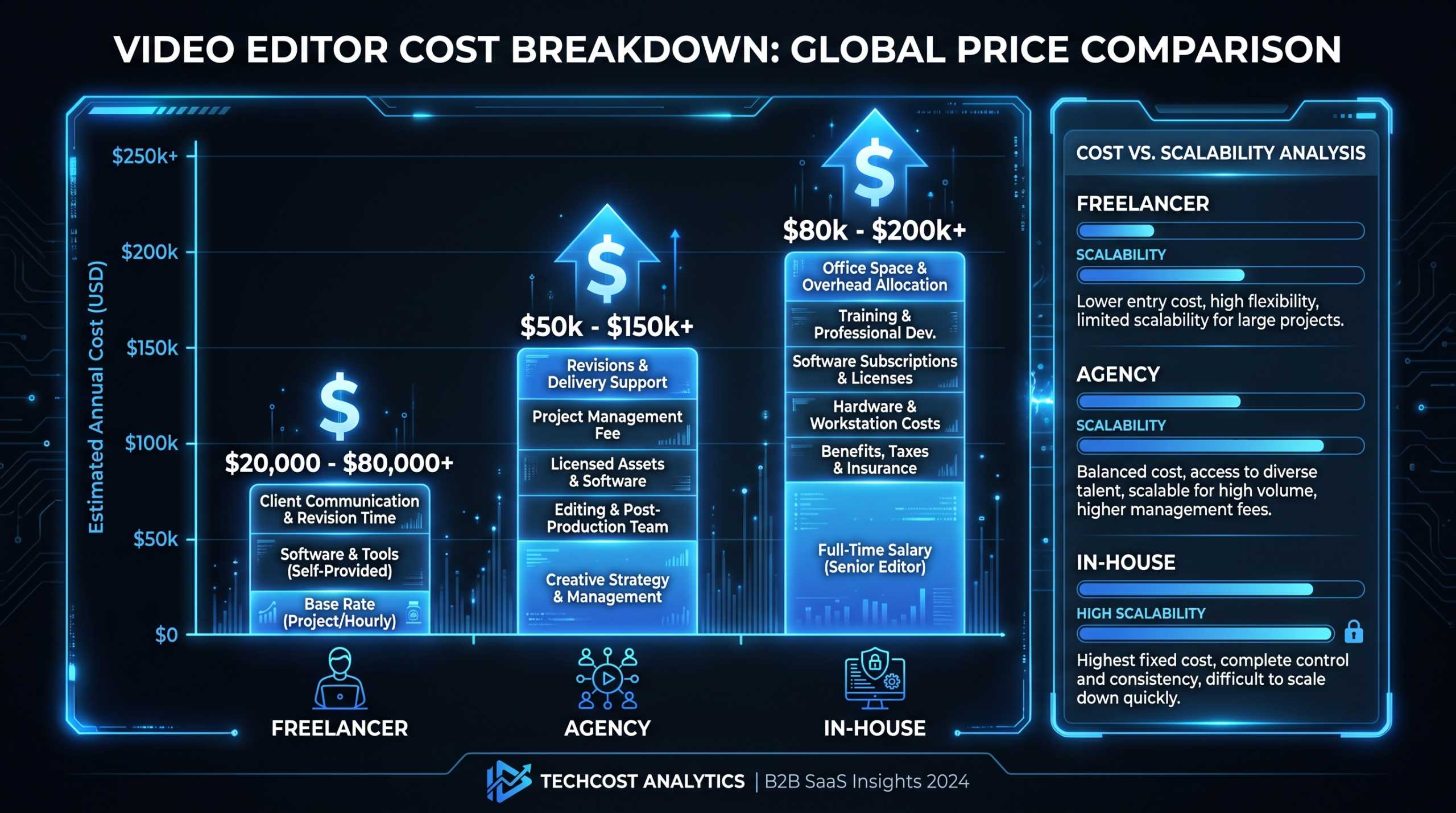
| Video production partner | $3,000–$10,000 | 2–3 weeks | Polished, investor-ready |
| Premium production | $10,000–$25,000 | 3–4 weeks | Cinematic, multi-format |
For seed-stage companies, $2,000–$5,000 hits the right balance between quality and capital preservation. For Series A+, invest in a polished production that reflects the scale of your ask.
Free: B2B Video Brief Template
Plan your investor pitch video with our comprehensive brief template. Includes the narrative framework VCs respond to.
Download the TemplateReady to get started? Explore our case studies.
Frequently Asked Questions
How long should an investor pitch video be?
2.5–3.5 minutes. VCs are time-constrained. If they want more, they'll take the meeting. Anything over 5 minutes will likely get skipped.
Should both co-founders appear in the video?
If you have a co-founder with complementary skills (e.g., technical + business), yes. It demonstrates the team dynamic. If one founder is significantly better on camera, let them carry it.
Can a pitch video replace an in-person pitch?
No. It complements a pitch, not replaces it. The video gets you the meeting. The in-person pitch closes the deal. Think of it as a trailer for the full movie.
Should we include product demo footage?
Brief clips intercut with the founder talking — yes. A full product walkthrough — no. Show enough to prove the product is real and functional, not enough to explain every feature.
When should we update our pitch video?
After every major milestone: closing a round, hitting a revenue milestone, landing a marquee customer, or pivoting the strategy. Keep the video current with your latest metrics.