

Every SaaS sales rep knows the moment. The prospect is interested, they've seen the demo, they understand the features - but they're stuck. They need one more thing before they can champion your solution internally: proof. Not your proof. Someone else's. That's exactly where a well-crafted customer story video becomes your most powerful closing tool.
In the SaaS world, where products can feel abstract and switching costs are real, customer story videos bridge the gap between "this looks promising" and "let's sign the contract." They transform intangible software benefits into tangible, human narratives that buying committees can rally around. And the data backs this up: according to research from Demand Gen Report, 78% of B2B buyers use case studies when researching purchases, making them the single most influential content type in the B2B buying journey.
But not all customer story videos are created equal. Many SaaS companies invest thousands in case study content that sits on their website collecting digital dust - watched once, shared never, impact zero. This guide will show you how to create customer story videos that your sales team actually uses and that genuinely move deals forward.
SaaS selling is uniquely challenging. Your product is intangible - prospects can't touch it, hold it, or see it on a shelf. The value is realized over time, not at the moment of purchase. And the buying committee often includes 6-10 decision-makers who all need to be convinced. A customer story video addresses each of these challenges simultaneously.
SaaS buyers have been burned before. They've signed up for tools that over-promised and under-delivered. They've been locked into annual contracts for software their team stopped using after month two. This history of disappointment creates a trust deficit that your marketing materials - no matter how polished - can't overcome on their own.
Customer story videos fill this trust gap because they feature an independent third party with no financial incentive to praise your product. When a VP of Marketing at a similar company describes how your platform helped them hit their pipeline targets, it carries infinitely more weight than your own product marketing.
In enterprise SaaS sales, the champion who found your product is rarely the person who signs the check. Between the initial discovery and the final signature, your solution needs to be approved by finance, IT, legal, and executive leadership - each with their own concerns and priorities.
A strategic customer story video program creates content for each stakeholder:
SaaS categories are crowded. There are 30+ project management tools, 50+ CRM platforms, and hundreds of marketing automation solutions. Feature comparison charts look remarkably similar across competitors. Customer story videos differentiate you not through features, but through outcomes - and outcomes are much harder for competitors to replicate.
One of the most common mistakes SaaS companies make is treating customer stories as bottom-of-funnel content only. In reality, different types of customer story videos serve different stages of the buyer's journey.
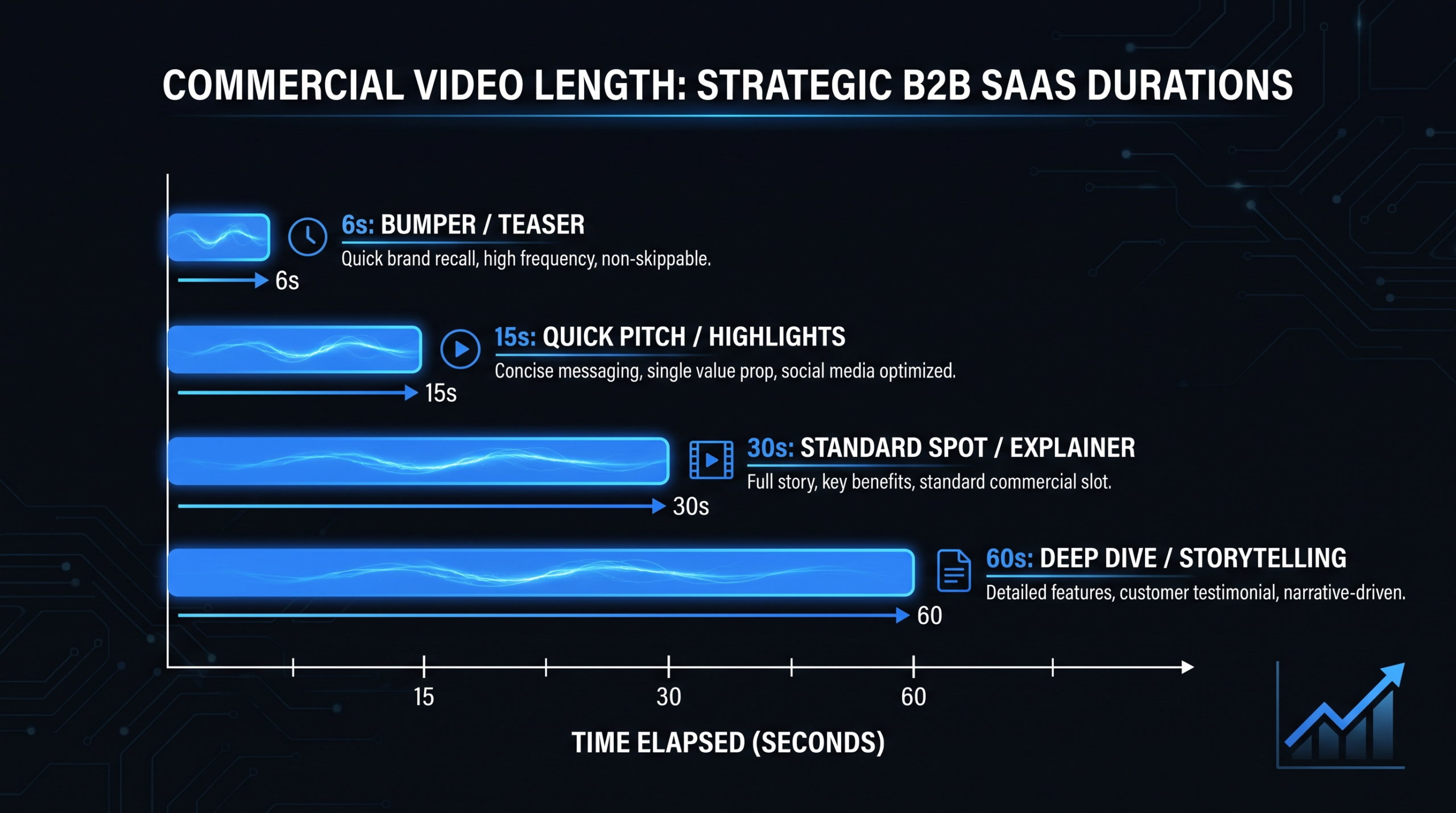
At the awareness stage, prospects don't know they need your solution - or that you exist. Short, punchy customer clips work best here. A 15-30 second soundbite where a customer shares a surprising result ("We cut our onboarding time from 6 weeks to 3 days") stops the scroll on LinkedIn and drives curiosity.
These clips don't need to tell the full story. They need to create a "wait, really?" moment that makes prospects want to learn more. Use them in social media posts, short-form ads, and website hero sections.
Once prospects are actively researching solutions, they want depth. This is where your full customer story videos shine - 2-4 minute pieces that walk through the complete problem-solution-result arc. At this stage, industry relevance matters enormously. A fintech buyer wants to see fintech customer stories. A healthcare SaaS prospect wants healthcare examples.
Deploy these videos on dedicated case study pages, in email nurture sequences, and as follow-up resources after demos. Your sales team should have these organized by industry and use case for easy access.
At the decision stage, the prospect is comparing your solution against one or two alternatives. They need ammunition to justify their choice internally. Customer story videos at this stage should focus heavily on ROI, implementation experience, and long-term value. Include specific numbers whenever possible: revenue impact, time saved, efficiency gains, customer satisfaction improvements.
After producing hundreds of customer story videos for SaaS companies, we've identified the key elements that separate videos that close deals from videos that get ignored. Here's the framework:
You have less than 10 seconds to earn the viewer's attention. Open with the most compelling result or the most relatable problem statement. Don't start with your company name or logo animation - nobody cares yet. Start with the customer.
"We were losing $50,000 a month in operational inefficiency before we found a better way."
That's a hook. It creates immediate curiosity and emotional investment. The viewer needs to know: what was the problem? What was the better way? What happened next?
Let the customer describe their pain in their own words. The more specific and vivid the description, the more prospects will recognize their own situation. Avoid generic statements like "we had challenges with productivity." Instead, push for concrete details: "Our team was spending 4 hours every Friday manually compiling reports from three different systems, and the data was always two weeks old by the time anyone saw it."
This section should feel natural, not salesy. The customer explains how they discovered your product, what made them choose it, and what the implementation experience was like. Focus on the human experience: was the onboarding smooth? Was the support team responsive? Did the product deliver on its promises?
This is the payoff. Hard numbers, specific outcomes, measurable impact. The best customer story videos include at least three concrete data points:
Close with the customer's personal endorsement. This is where emotional authenticity matters most. The best closing statements feel unrehearsed and genuine: "Honestly, I don't know how we operated without it. If you're on the fence, just try it - you'll see the difference in the first week."
Consistency is key when you're building a library of customer story videos. Use this checklist to ensure every video meets the same quality standard and includes all the elements needed to drive results.
Let's look at specific strategies that leading SaaS companies use to turn customer story videos into deal-closing weapons. These aren't theoretical - they're battle-tested approaches that we've seen drive real results.
When a sales rep is working a deal with a mid-market fintech company, they don't send a generic customer story. They send a video featuring another mid-market fintech company. This "mirror match" approach maximizes relevance because the prospect sees a company that looks like theirs, faces the same challenges, and operates in the same market.
To execute this strategy, you need a library of customer stories covering your key segments. Map your customer base by industry, company size, use case, and region, then prioritize filming customers that fill gaps in your library. The goal is to have at least one video for every major segment your sales team sells into.
Instead of the traditional interview-style case study, some SaaS companies produce "day in the life" customer stories that follow a user through their actual workflow. These videos show the product in context - how it fits into the customer's daily routine, how it interacts with other tools, and how it saves time at specific moments throughout the day.
This format is particularly effective for products with strong UI/UX that benefits from being seen in action. It also helps prospects envision their own team using the product, which is a critical step in the buying decision.
High-performing sales reps send a relevant customer story video 24-48 hours before a key meeting - a demo, a committee presentation, or a final decision call. This primes the prospect with social proof before the conversation begins. Instead of spending the first 15 minutes of the meeting establishing credibility, the rep can jump straight into solving the prospect's specific problems.
The email is simple: "Before we meet tomorrow, I thought you'd enjoy hearing from [Customer Name] at [Company], who faced a similar challenge to yours. Here's their 2-minute story." It's non-pushy, adds value, and positions the rep as someone who understands the prospect's world.
Every SaaS product faces common objections: "It's too expensive." "Implementation is too complex." "We've tried similar tools before." Smart companies create customer story videos that specifically address each of these objections. When a prospect raises a concern about implementation time, the rep shares a video where a customer describes how they were up and running in two weeks.
Build your customer story video library around the top 5-7 objections your sales team hears most frequently. Each video should directly address the objection through the customer's experience, not through your marketing team's reassurances.
For enterprise deals, create customer story videos featuring C-level executives speaking to other C-level executives. A CEO-to-CEO message carries unique weight. These videos should focus on strategic outcomes - market positioning, competitive advantage, board-level KPIs - rather than tactical details. The production quality should be premium because executive audiences have high expectations.
SaaS customer story videos have unique production requirements that differ from generic testimonial video production. Here's what to focus on:
One of the trickiest aspects of SaaS customer stories is showing the product without turning the video into a product demo. The solution is contextual product shots - brief glimpses of the product in action that illustrate the customer's story without becoming the focus.
For example, when the customer describes automating their reporting process, cut to a 3-5 second shot of the dashboard. When they mention how easy collaboration became, show a quick clip of the notification system or commenting feature. These shots add visual variety and demonstrate the product's value without breaking the narrative flow.
SaaS customers often cite specific metrics that are more impactful when visualized. Use motion graphics to bring numbers to life:
Keep visualizations clean and branded. They should reinforce the customer's words, not distract from them.
For SaaS companies, the interview environment should communicate professionalism and modernity. Shoot in the customer's office or a clean, well-lit space. Avoid sterile conference rooms - they feel corporate and cold. Look for spaces with natural light, interesting architectural elements, or visible team activity in the background.
If the customer's office isn't visually appealing, consider booking a creative studio space or co-working environment nearby. The setting should feel authentic but not distracting.
SaaS companies love data, so measuring the impact of your customer story video investment is essential. Here's a framework for tracking ROI across the funnel:
The real measure of a customer story video's value is its impact on revenue. Track these metrics by tagging deals in your CRM where customer stories were shared:
Many SaaS companies find that customer story videos are their highest-ROI marketing investment because they directly influence revenue at the most critical stages of the buying process.
The difference between companies that get sporadic value from customer stories and those that build a competitive advantage is systems. Here's how to build a scalable program:
Don't wait until you need a customer story to start looking for candidates. Build a continuous pipeline of potential advocates by:
Aim to produce 3-5 new customer story videos per quarter. This cadence gives you fresh content for sales and marketing while keeping the production workload manageable. Batch your shoots to reduce per-video costs - filming 3 customers in the same city over 2 days is much more efficient than 3 separate trips.
Every customer story video shoot should produce multiple assets:
This multiplication approach dramatically improves the ROI of each production day by creating weeks of content from a single shoot. Your marketing video production team should plan for this from the start.
Avoid these mistakes that undermine the effectiveness of your customer story videos:
Not every happy customer makes a great video subject. The ideal candidate is articulate, enthusiastic, and represents your ICP. Avoid customers who are too technical (they'll lose non-technical viewers), too vague ("it's been great"), or whose results are unrelatable to your target market. Always do a pre-screening call to assess on-camera presence before committing to a production day.
The customer story should be about the customer, not about your product. Yes, your product is part of the story, but it's the catalyst for the customer's transformation - not the main character. When the video starts feeling like a feature walkthrough, you've lost the emotional thread that makes customer stories compelling.
Don't save the best metrics for the end of the video. Modern viewers are impatient - hook them with a standout result in the first 10 seconds, then tell the story of how that result was achieved. If someone only watches the first 15 seconds, they should still walk away knowing that your product delivers real value.
A customer story video that lives only on your case studies page is massively underutilized. Distribute it across every channel - social media, email nurtures, sales outreach, paid ads, partner co-marketing, event presentations, and even customer onboarding. Every touchpoint is an opportunity for social proof.
Don't create a single 3-minute video and call it done. Edit multiple versions for different audiences and platforms. The version your sales team shares in an email should be different from the version that plays on your homepage, which should be different from the version that runs as a LinkedIn ad. Format, length, and emphasis should all be tailored to context.
Modern SaaS companies use a range of tools to produce, manage, and distribute customer story videos effectively:
The right tech stack depends on your volume and sophistication. Companies producing 2-3 videos per quarter can manage with simpler tools, while those producing 10+ need dedicated platforms for organization and distribution.
While we won't dissect specific competitor examples, here are the patterns we see in the highest-performing customer story videos across SaaS:
Open with a striking statistic displayed in large text on screen, then the customer says it out loud. "300% increase in qualified pipeline." The viewer sees and hears the number simultaneously, creating a powerful first impression that drives continued viewing.
Visually show the customer's world before and after your product. Split screen showing manual processes on one side and automated workflows on the other. This format works exceptionally well for productivity tools where the visual contrast is dramatic.
Instead of a single spokesperson, feature 3-4 people from the same company - the decision-maker, the implementer, and the daily users. Each person shares their perspective, creating a richer, more credible narrative that resonates with different members of the buying committee.
Costs range from $1,500 for a remote production with basic editing to $15,000+ for a premium on-site shoot with cinematic production, motion graphics, and multiple deliverables. Most mid-market SaaS companies invest $3,000-$7,000 per customer story when working with a professional production partner. The ROI calculation should factor in the video's influence on pipeline and deal velocity.
Start by building a strong customer relationship through exceptional product experience and customer success engagement. When you ask, make it easy: handle all logistics, offer flexible scheduling, and position it as a co-marketing opportunity. Many customers appreciate the exposure and thought leadership positioning that comes with being featured. Some companies offer conference sponsorship, product credits, or charitable donations as additional incentives.
It depends on the funnel stage. Short social clips and website embeds should always be ungated - maximum reach is the priority. Full-length case study videos can be lightly gated (name + email) on dedicated landing pages for lead generation. For sales enablement, videos should be ungated so reps can share direct links without friction. A hybrid approach maximizes both reach and lead capture.
Aim for 3-5 new customer stories per quarter. This cadence ensures your library stays fresh and relevant. Prioritize filling gaps in your segment coverage - if you have great enterprise stories but nothing for mid-market, focus there. Also consider refreshing older stories when customers achieve new milestones or when your product has evolved significantly.
The full-length version should be 2-3 minutes - long enough to tell a complete story but short enough to hold attention. Create additional cuts: 60-second versions for social media, 30-second versions for ads, and 15-second soundbites for sales outreach. The full version lives on your website and in your sales enablement library; shorter versions are for outbound distribution.
Absolutely - and you should. A single customer story video shoot should yield 8-12 distinct content pieces across video, written, and image formats. Re-edit the footage for different campaigns, pull quotes for social graphics, transcribe the interview for blog posts, and extract data points for sales one-pagers. This content multiplication is what makes customer story video production such a high-ROI investment.
Plan your next customer story video with our comprehensive brief template - includes interview guides, shot lists, and distribution checklists.
Get the Free Template See PricingThe SaaS companies that consistently win deals aren't just the ones with the best product - they're the ones with the best proof. A well-built customer story video library gives your sales team an unfair advantage in every conversation, every proposal, and every committee presentation.
Start by identifying your strongest customer relationships and most impressive results. Film those stories first. Then build systems to continuously capture new stories as your customer base grows and succeeds. Over time, you'll have a library so comprehensive that every prospect sees a company like theirs achieving results they want.
That's not marketing. That's evidence. And in SaaS sales, evidence wins.
Ready to build your customer story video program? Book a call with our production team View Pricing to discuss your goals, your customer base, and the best approach for your segment.