Video for Supply Chain & Logistics SaaS
Table of Contents
Why Supply Chain SaaS Companies Need Video
Supply Chain SaaS is experiencing rapid growth and increasing competition for buyer attention. Companies in this space sell complex solutions to sophisticated buyers who compare multiple vendors before making a commitment. Video is the format that bridges technical complexity and buyer understanding - showing the product in action, building trust through real customer stories, and conveying domain expertise through thought leadership.
The opportunity for Supply Chain SaaS companies is significant: most competitors still rely primarily on text-heavy content, generic product screenshots, and static case study PDFs. Companies that invest in strategic video content gain an immediate visual advantage - standing out in crowded inboxes, shortening sales cycles, and building stronger brand recall among target accounts.
Video is particularly powerful for Supply Chain SaaS because the products are often invisible or abstract until demonstrated. A 3-minute product demo communicates more about your platform's user experience, data visualization, and workflow efficiency than 10 pages of feature documentation ever could.
Unique Challenges for Supply Chain SaaS Video
- Complex, multi-stakeholder workflows: Supply chain software touches procurement, manufacturing, warehousing, transportation, and delivery. Video must demonstrate how your platform connects these disparate functions into a unified workflow.
- Visualizing the invisible: Supply chains are inherently physical - goods moving through space and time - managed by digital tools. Video must bridge the digital-physical gap, showing how software decisions translate to real-world logistics outcomes.
- Enterprise buying cycles: Supply chain technology purchases are enterprise-scale decisions with 12-18 month evaluation cycles. Your video library must sustain buyer engagement across this extended timeline with content for every stage.
- ROI through cost reduction: Supply chain buyers justify purchases through cost savings, efficiency gains, and risk reduction. Video must quantify: 'reduce shipping costs by 15%' or 'cut inventory carrying costs by $2M annually.'
- Integration complexity: Supply chain tech integrates with ERP, TMS, WMS, CRM, and dozens of carrier/partner systems. Integration demos are often more important than feature demos for this audience.
Video Types That Work for Supply Chain SaaS
| VIDEO TYPE | PURPOSE | LENGTH | FUNNEL STAGE |
|---|---|---|---|
| Platform Overview | End-to-end supply chain visibility demonstration | 3-5 min | Mid-funnel |
| Integration Demo | ERP, TMS, WMS connectivity walkthrough | 3-5 min | Mid-funnel |
| Dashboard & Analytics | Real-time visibility and reporting features | 3-5 min | Mid-funnel |
| Customer Case Study | Supply chain transformation story with metrics | 2-4 min | Late funnel |
| Risk Management | Disruption detection and mitigation features | 2-4 min | Mid-funnel |
| Implementation Guide | Deployment timeline and process | 3-5 min | Late funnel |
Product demonstrations
Product demos are the most-watched video type by B2B buyers (89% watch them during evaluation). For Supply Chain SaaS, demos must use realistic but anonymized data and reflect the actual workflows your customers encounter daily. Structure demos around the buyer's pain points: start with the problem, demonstrate the solution in your product, and quantify the outcome.
Use our product demo script template to maintain a consistent problem-solution-outcome structure across all your demo videos.
Customer testimonials
Peer validation from Supply Chain SaaS professionals is the most persuasive content format for this vertical. Buyers want to see companies similar to theirs achieving specific, measurable results. Focus testimonials on concrete metrics: time savings, cost reduction, efficiency improvements, and compliance benefits.
Thought leadership
Position your executives and domain experts as industry authorities through video content on trends, best practices, and strategic insights. This builds trust before the sales conversation begins. Thought leadership videos perform especially well on LinkedIn for reaching Supply Chain SaaS decision-makers.
Use Cases & Strategy
Supply chain visibility platforms
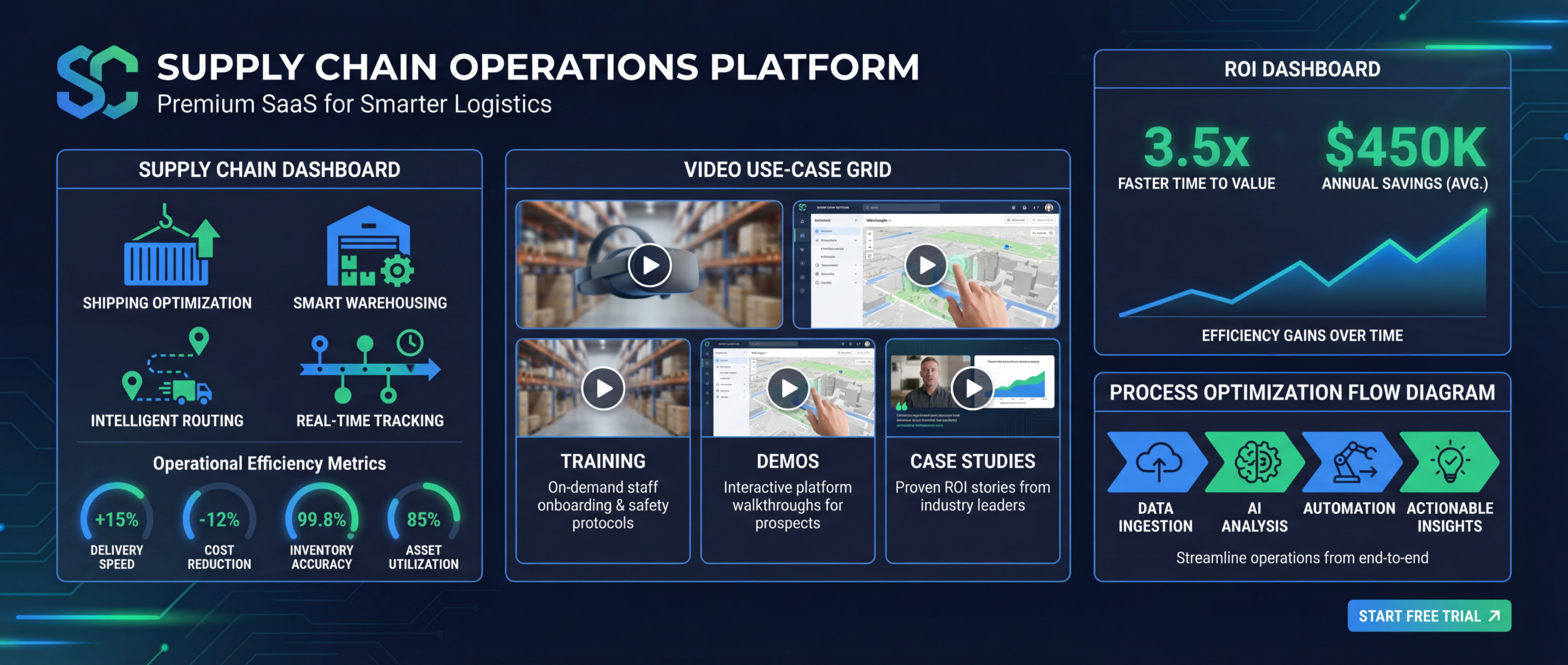
Show the real-time tracking dashboard: where every shipment is, its estimated arrival, and any disruption alerts. The most compelling demo is showing a simulated disruption (port delay, weather event) and how the platform automatically identifies affected shipments and suggests alternatives.
Warehouse management systems
Demonstrate inventory management, pick-pack-ship workflows, and space optimization. Combine screen recordings with actual warehouse footage (or 3D warehouse visualizations) to connect the digital interface to physical operations. Before/after metrics on pick accuracy and fulfillment speed.
Transportation management platforms
Show route optimization, carrier management, and cost comparison in action. Visualize how the platform evaluates thousands of shipping options to find optimal routes. Side-by-side comparisons of manual vs. automated routing with cost savings calculations.
Procurement and sourcing platforms
Demonstrate supplier management, RFQ automation, and spend analytics. Show how the platform identifies cost savings opportunities, manages supplier risk, and automates purchase order workflows. The before/after on procurement cycle time is a key metric to visualize.
Production Considerations
Technical accuracy
Supply Chain SaaS buyers are domain experts who will immediately identify inaccurate terminology, unrealistic scenarios, or oversimplified workflows. Every video script should be reviewed by a subject matter expert. The credibility cost of a single technical error outweighs the production cost of proper review.
Data sensitivity
Product demos must use synthetic or clearly anonymized data. Work with your product and compliance teams to create demonstration environments that look realistic without exposing actual customer or operational data.
Production quality
Professional production quality signals competence. This doesn't require massive budgets - it requires clean audio, proper lighting, thoughtful editing, and consistent branding. For enterprise-focused Supply Chain SaaS companies, video quality is interpreted as a proxy for product quality.
Companies leading with video
Flexport
Flexport uses video to visualize global supply chain complexity - showing real container ships, ports, and warehouses alongside their digital platform. The combination of physical logistics footage and clean dashboard demos creates a compelling 'best of both worlds' narrative.
project44
project44 creates data-rich videos showing real-time visibility across transportation networks. Their content emphasizes the scale of data processed (millions of shipments tracked) and the predictive capabilities that enable proactive supply chain management.
Coupa
Coupa produces polished enterprise-focused videos that speak the language of procurement and supply chain leadership. Their customer testimonials feature Fortune 500 procurement leaders discussing cost savings and efficiency gains.
Go-to-Market Video Strategy
Phase 1: Foundation (Month 1-2)
- 1 product overview/explainer video (90-120 seconds)
- 1 detailed product demo (5-8 minutes)
- 2-3 customer testimonials (2-3 minutes each)
- Website integration on key conversion pages
Phase 2: Scale (Month 3-4)
- 3-5 use-case-specific demo variations
- Thought leadership video series for LinkedIn and YouTube
- Sales enablement clips for SDR outreach sequences
- Webinar production and content repurposing
Phase 3: Optimize (Month 5-6)
- Video analytics setup and performance measurement
- A/B testing video placements, thumbnails, and CTAs
- Video retargeting campaigns
- Content refresh based on performance data and product updates
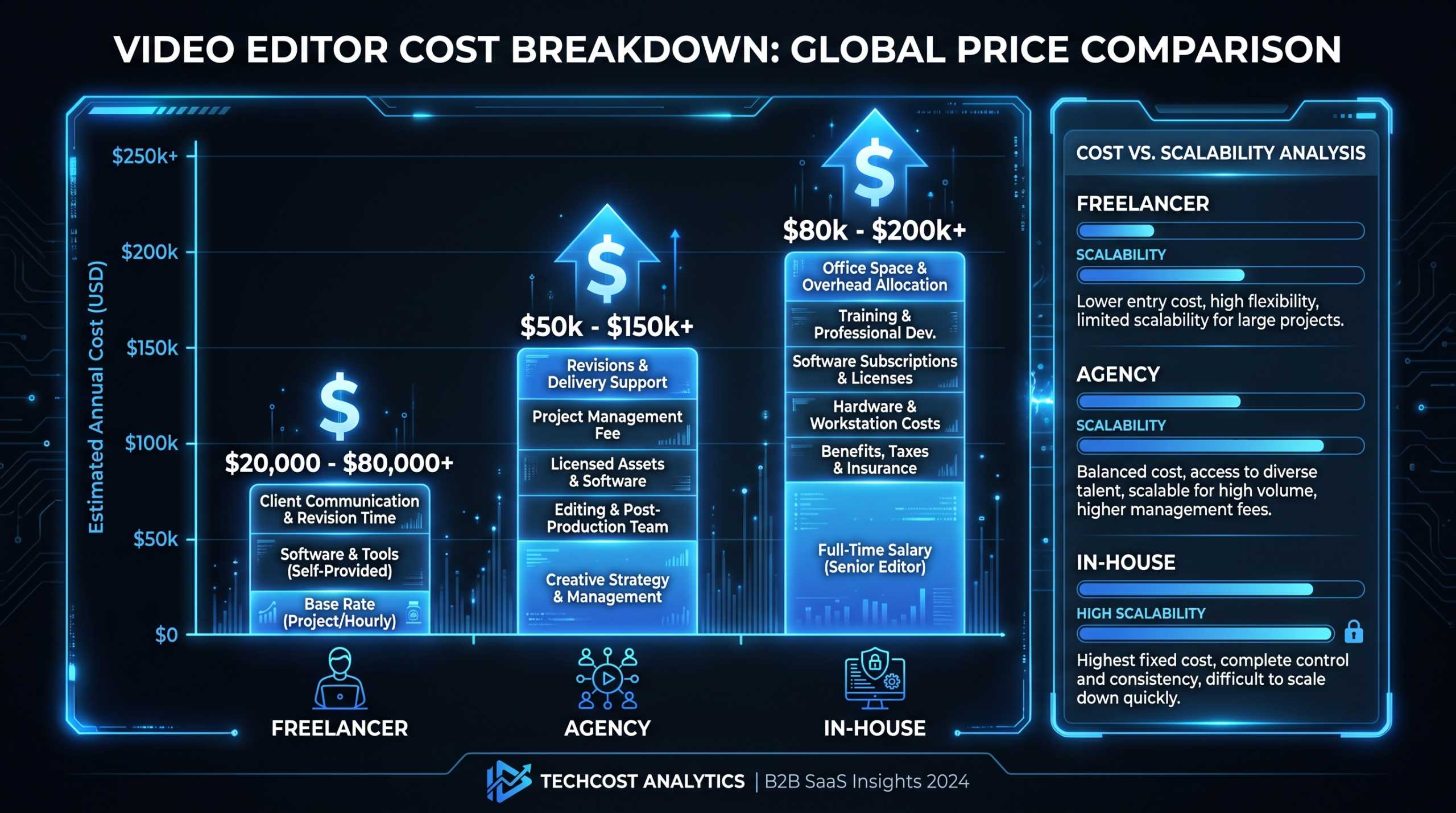
Budget framework
| VIDEO TYPE | COST RANGE | PRIORITY |
|---|---|---|
| Product demo | $3,000-8,000 | Must-have |
| Explainer video | $5,000-15,000 | Must-have |
| Customer testimonial | $2,000-5,000 each | Must-have |
| Thought leadership | $1,000-3,000 each | Recommended |
| Social clips | $500-1,500/batch | Nice-to-have |
Total recommended first-year investment: $25,000-55,000 for a comprehensive video library producing 10-15 core assets that can be repurposed into 50+ content pieces across channels.
Ready to Level Up Your Video Strategy?
Talk to our team about your video production needs. No commitment required.
Book a Free Strategy Call See PricingReady to get started? Explore our case studies.
Frequently Asked Questions
How do we demonstrate supply chain ROI in video?
Use before/after comparisons with specific metrics: shipping costs, inventory carrying costs, order accuracy, fulfillment speed, and disruption response time. The most compelling format is a customer testimonial where the supply chain leader shares their specific savings numbers.
Should we use physical logistics footage in our videos?
Yes - it differentiates your content from competitors who only show software interfaces. Showing real warehouses, trucks, ports, and delivery alongside your digital platform reinforces the connection between your software and physical supply chain outcomes.
What's the biggest challenge in supply chain video marketing?
Simplifying complexity without losing credibility. Supply chain professionals know their world is complex. Oversimplified videos feel irrelevant. The best approach: acknowledge the complexity, then show how your platform manages it - don't pretend the complexity doesn't exist.
How important are integration demos for supply chain SaaS?
Extremely important - often more important than feature demos. Supply chain leaders evaluate new tools based on how they connect to existing systems (SAP, Oracle, NetSuite). Dedicate at least one video specifically to integration capabilities and data flow.
What video platforms work best for supply chain content?
LinkedIn for reaching supply chain executives and operations leaders. YouTube for detailed demos and thought leadership content. Industry conferences (virtual and physical) for live presentations and recorded sessions. Email for nurture sequences with prospect-specific content.
SaaS Video Swipe File
50+ SaaS video examples including campaigns from leading Supply Chain SaaS companies and adjacent verticals.
Download Free