Video Marketing for Cybersecurity SaaS Companies
Table of Contents
Why Cybersecurity Companies Need Video
Cybersecurity is one of the fastest-growing segments in the SaaS landscape, and competition for buyer attention is intensifying. Companies in this space sell complex solutions to sophisticated buyers who evaluate multiple vendors before committing. Video is the format that bridges the gap between technical complexity and buyer comprehension.
The challenge for Cybersecurity companies isn't just explaining what the product does - it's building trust, demonstrating domain expertise, and showing that you understand the specific workflows and pain points of your target audience. Text-based content struggles here because the nuances of Cybersecurity are better shown than described.
Companies in this vertical that invest in strategic video content see measurable advantages: shorter sales cycles, higher conversion rates on demo requests, and stronger brand recall among target accounts. The opportunity is significant because most Cybersecurity companies still rely primarily on text-heavy whitepapers and generic product screenshots.
Unique Challenges for Cybersecurity Video
Producing effective video content for Cybersecurity requires navigating industry-specific constraints that generic video strategies don't account for:
- Fear-based messaging fatigue: The cybersecurity industry has overused scare tactics in marketing. Buyers are numb to 'you're going to get hacked' messaging. Video needs to balance urgency with practical, solution-oriented content that doesn't rely on FUD (fear, uncertainty, doubt).
- Highly technical audience: CISOs, security engineers, and IT directors are among the most technically sophisticated buyers in B2B. Your video must demonstrate genuine technical depth - surface-level content is immediately dismissed.
- Demonstrating invisible threats: Cybersecurity products protect against threats that are invisible until they materialize. Video must make the invisible visible: showing attack simulations, threat dashboards, and incident response workflows in action.
- Vendor trust and security paradox: Cybersecurity buyers are inherently skeptical of vendors. They're evaluating whether YOUR security practices are good enough to trust with their security data. Video must build trust through transparency, certifications, and technical credibility.
- Rapid threat landscape changes: New vulnerabilities, attack vectors, and compliance requirements emerge constantly. Video content can become outdated quickly, requiring a production process that supports rapid updates.
Video Types That Work for Cybersecurity
Not every video format delivers equal ROI for Cybersecurity companies. Based on buyer behavior and sales cycle patterns in this vertical, here are the video types that drive results:
| VIDEO TYPE | PURPOSE | LENGTH | FUNNEL STAGE |
|---|---|---|---|
| Threat Simulation Demo | Show how the product detects/responds to attacks | 3-5 min | Mid-funnel |
| Platform Walkthrough | Technical deep-dive of the security dashboard | 5-10 min | Mid-funnel |
| Incident Response Demo | Show the workflow during a security event | 3-5 min | Mid-to-late |
| CISO Testimonial | Peer validation from security leaders | 2-3 min | Late funnel |
| Threat Landscape Analysis | Thought leadership on emerging threats | 3-8 min | Top-funnel |
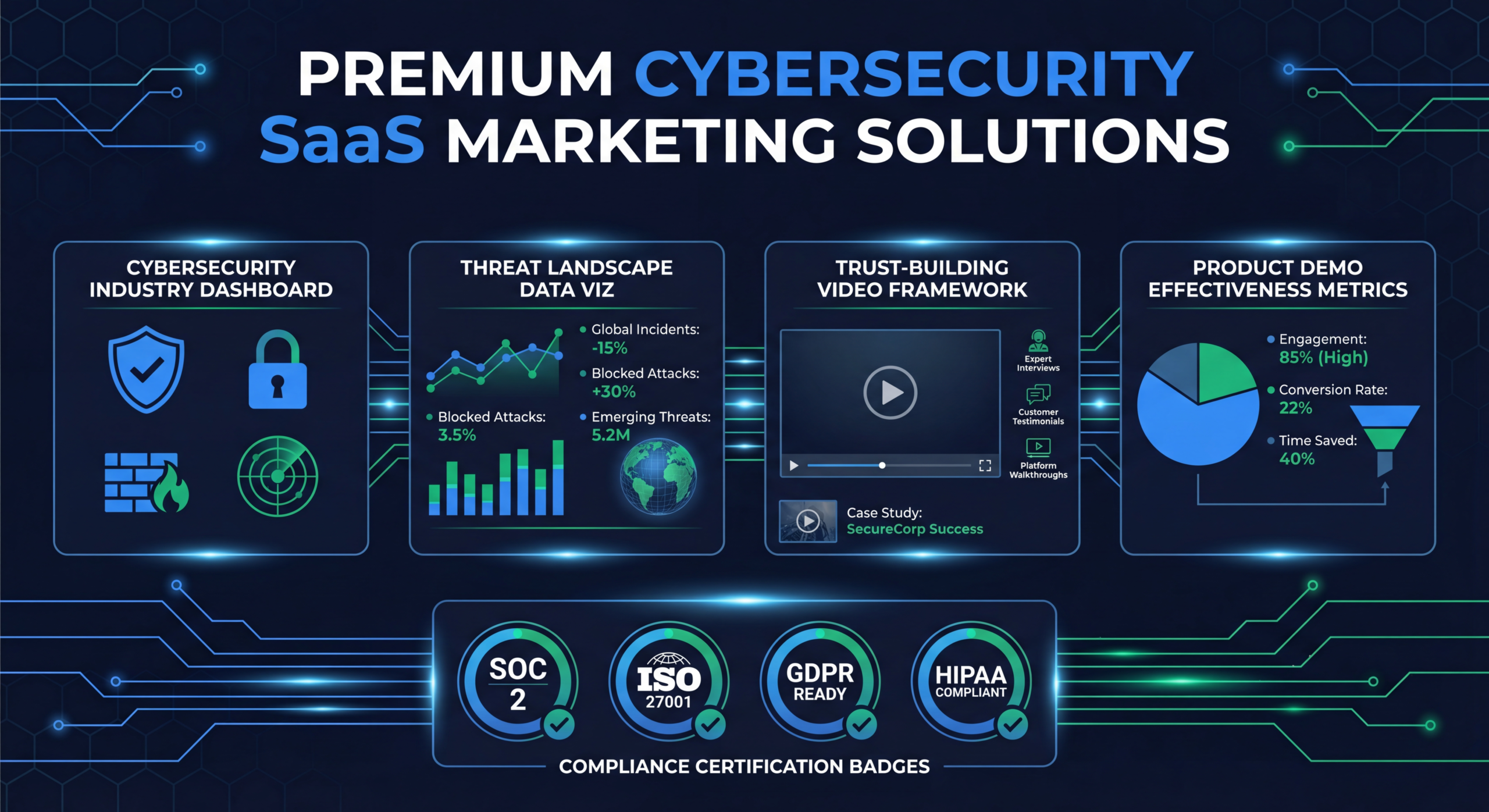
| Compliance Overview | SOC 2, ISO 27001, GDPR capabilities | 3-5 min | Mid-funnel |
Product demonstration videos
Product demos are the single most-watched video type by B2B buyers (89% watch them during evaluation). For Cybersecurity, demos need to show realistic workflows using your target customer's language and scenarios. Generic demos that don't reflect the industry's specific terminology and use cases will lose credibility with knowledgeable buyers.
Structure your demo around the buyer's daily challenges: start with the problem, show the solution in action, and quantify the outcome. Our product demo script template helps maintain this problem-solution-outcome structure consistently.
Customer testimonial videos
In Cybersecurity, buyers want to see proof from companies like theirs. A testimonial from a company in a different vertical won't resonate the same way. Invest in capturing video testimonials from your most successful Cybersecurity customers, focusing on specific metrics and workflow improvements rather than vague praise.
Thought leadership content
Position your executives as Cybersecurity experts by producing videos on industry trends, regulatory changes, best practices, and market analysis. This content builds trust before the sales conversation begins and establishes your company as a knowledgeable partner, not just a vendor.
Use Cases & Strategy
Endpoint security platforms
Create simulated attack scenario videos showing detection, alert, containment, and remediation in real-time. Side-by-side comparisons of 'with protection' vs. 'without protection' scenarios are highly effective. Time-to-detection metrics are the key differentiator to visualize.
SIEM and security analytics
Dashboard demo videos showing how your platform aggregates, correlates, and surfaces actionable insights from security data. Focus on noise reduction - show how your product surfaces the 5 critical alerts from 50,000 events. Real-time threat visualization is compelling content.
Identity and access management
Demonstrate the user experience alongside the admin experience. Show the seamless authentication flow for employees and the powerful governance controls for IT admins. Zero-trust architecture explainer videos help buyers understand your approach.
Cloud security platforms
Visualize multi-cloud security posture management. Show how your platform identifies misconfigurations, vulnerabilities, and compliance gaps across AWS, Azure, and GCP. Dashboard fly-throughs with real-time risk scoring create urgency and demonstrate capability.
Production Considerations
Technical accuracy is non-negotiable
Cybersecurity buyers are domain experts. They'll catch inaccurate terminology, unrealistic scenarios, or oversimplified workflows immediately. Every video script should be reviewed by a subject matter expert before production. The cost of a credibility hit from an inaccurate video far exceeds the cost of proper review.
Data sensitivity and privacy
Any video showing product interfaces must use anonymized or synthetic data appropriate to the industry. Work with your compliance and product teams to create approved demo environments that look realistic without exposing sensitive information.
Production quality reflects product quality
Professional production signals professionalism. This doesn't mean Hollywood budgets - it means clean audio, proper lighting, thoughtful editing, and consistent branding. For Cybersecurity companies selling to enterprise buyers, production quality is interpreted as a proxy for product quality.
Companies setting the standard
CrowdStrike
CrowdStrike produces dramatic threat simulation videos showing real-time attack detection alongside polished customer testimonials from Fortune 500 CISOs. Their videos balance technical depth with executive-level storytelling.
Palo Alto Networks
Palo Alto's video content includes detailed platform demos, threat intelligence briefings, and Unit 42 research presentations. Their educational content positions them as the authoritative voice on emerging threats.
Snyk
Snyk creates developer-focused videos that speak the language of their technical audience. Their content shows actual code vulnerabilities being detected and fixed - no marketing fluff, just technical capability demonstrated.
Go-to-Market Video Strategy
Phase 1: Foundation (Month 1-2)
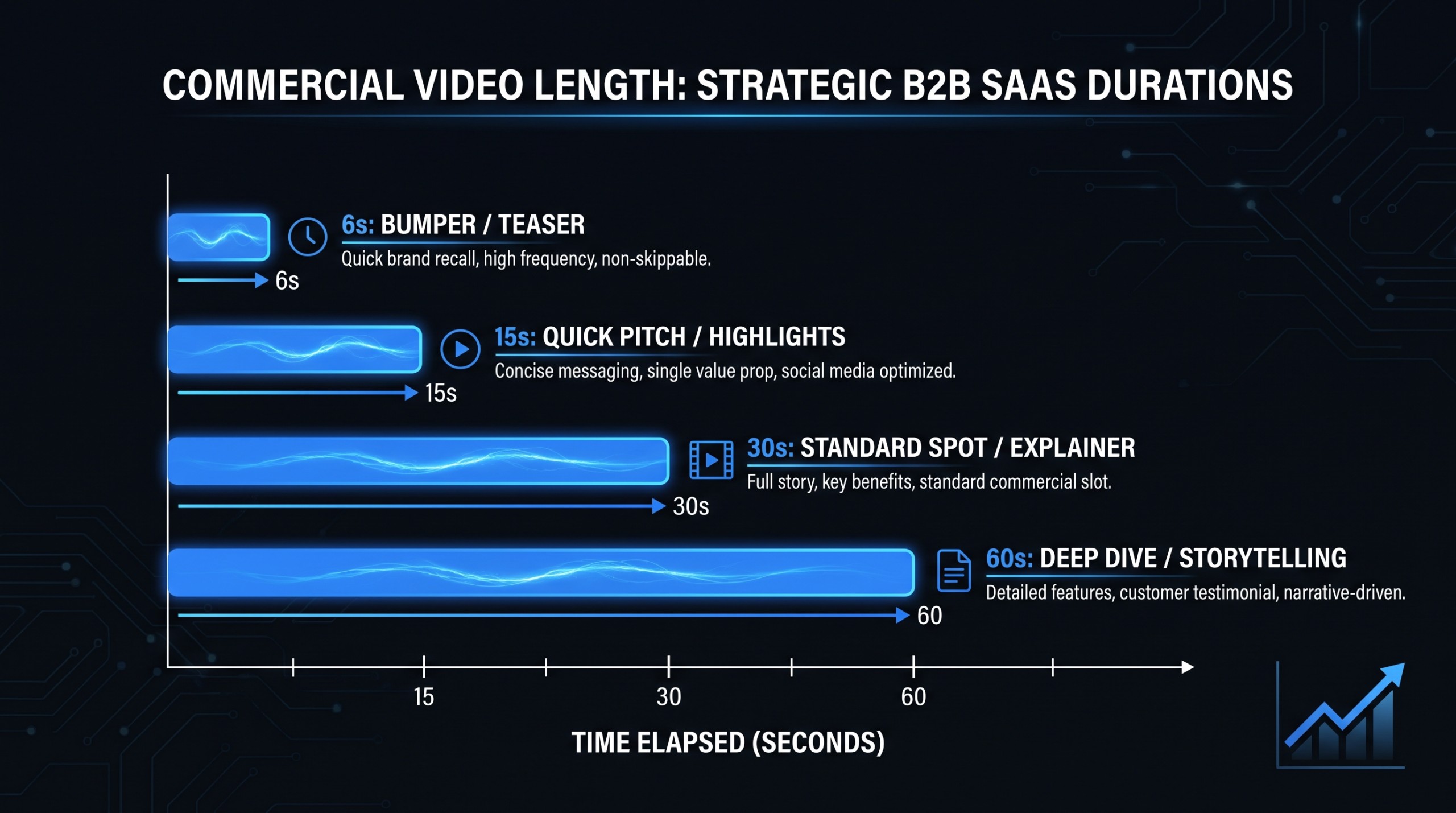
- 1 product overview/explainer video (90-120 seconds)
- 1 detailed product demo video (5-8 minutes)
- 2-3 customer testimonial videos (2-3 minutes each)
- Website integration across key conversion pages
Phase 2: Scale (Month 3-4)
- 3-5 use-case-specific demo variations
- Thought leadership video series for LinkedIn/YouTube
- Sales enablement clips for SDR outreach
- Webinar production and repurposing
Phase 3: Optimize (Month 5-6)
- Video analytics setup and performance tracking
- A/B testing video placements and messaging
- Video retargeting ads for website visitors
- Content refresh based on performance data
Budget framework
| VIDEO TYPE | TYPICAL COST | PRIORITY |
|---|---|---|
| Product demo | $3,000-8,000 | Must-have |
| Explainer video | $5,000-15,000 | Must-have |
| Customer testimonial | $2,000-5,000 each | Must-have |
| Thought leadership | $1,000-3,000 each | Nice-to-have |
| Social clips | $500-1,500/batch | Nice-to-have |
Total recommended first-year investment: $25,000-55,000 for a comprehensive video library. This produces 10-15 core assets that can be repurposed into 50+ content pieces.
Ready to Level Up Your Video Strategy?
Talk to our team about your video production needs. No commitment required.
Book a Free Strategy Call See PricingReady to get started? Explore our case studies.
Frequently Asked Questions
How do we demo cybersecurity without revealing vulnerabilities?
Use sandboxed environments with simulated attack scenarios. Show the detection, response, and remediation workflow using controlled, realistic-but-synthetic threats. Never demonstrate attacks against real systems or reveal actual customer vulnerabilities.
Should cybersecurity videos be technical or executive-level?
Both. Create separate tracks: technical deep-dives for security engineers and CISOs (5-10 min, detailed), and executive summaries for CIOs and boards (2-3 min, risk and ROI focused). The buying committee includes both audiences.
How do we avoid FUD-based marketing in video?
Lead with outcomes, not threats. Instead of 'you're vulnerable to X attack,' try 'here's how Company Y reduced their mean-time-to-detection from 6 hours to 12 minutes.' Solution-oriented messaging outperforms fear-based messaging for sophisticated buyers.
What's the biggest video marketing mistake in cybersecurity?
Using stock footage of hooded hackers and Matrix-style green text. Every cybersecurity company does this, and it looks amateurish to actual security professionals. Use real product footage, authentic technical content, and genuine expert presenters instead.
How often should we update cybersecurity video content?
More frequently than other verticals. Threat landscape and compliance requirements change quickly. Plan for quarterly content reviews and semi-annual major updates. Build a production process that supports rapid turnaround for timely threat response content.
SaaS Video Swipe File
50+ SaaS video examples including campaigns from leading Cybersecurity companies.
Download Free