20 B2B Video Content Ideas for 2026
TL;DR
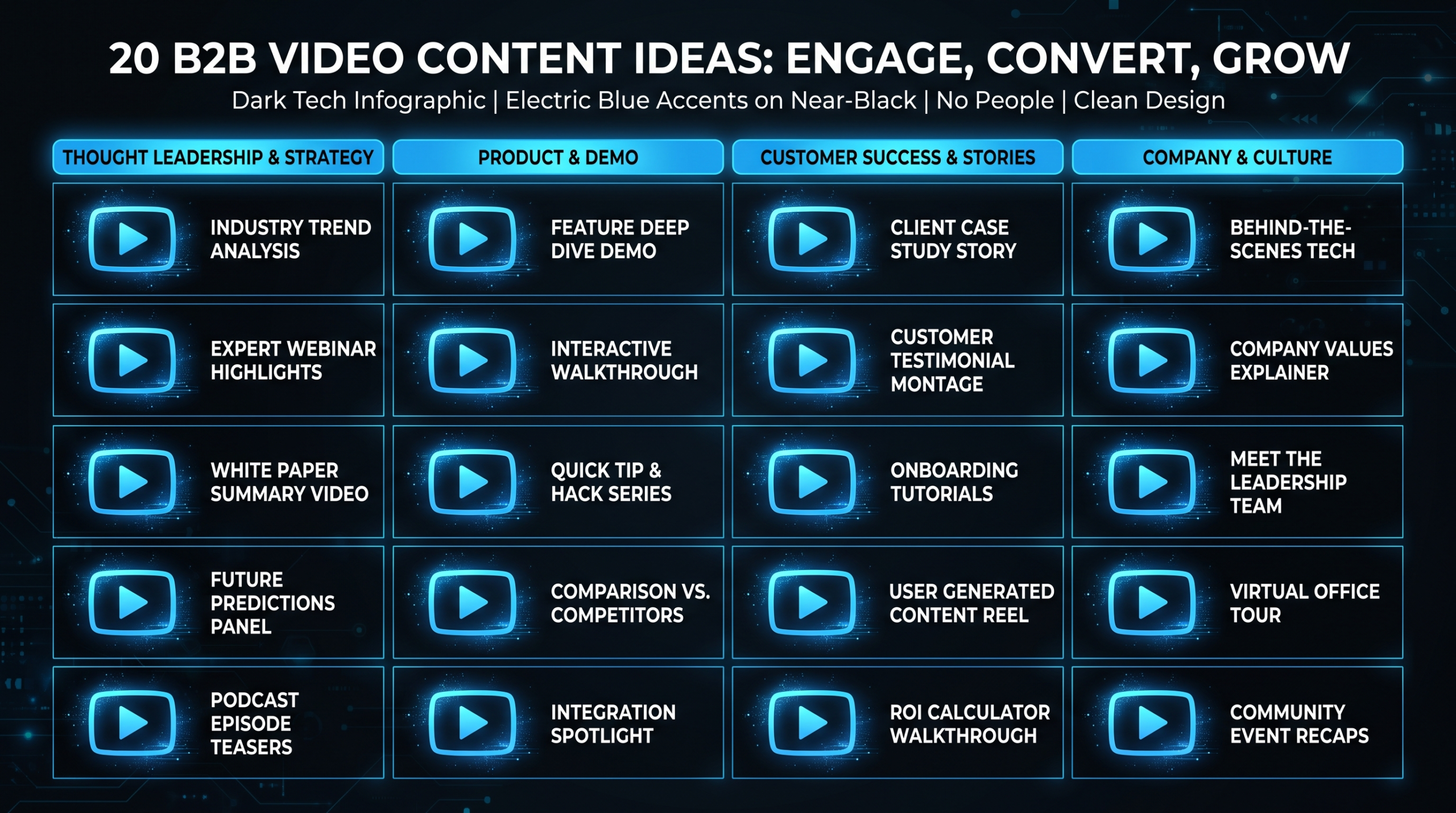
The 20 highest-ROI B2B video formats in 2026 span awareness, consideration, and conversion — from product demos and customer testimonials to personalized sales videos and data report visualizations. Each idea below is matched to a specific buyer stage, content goal, and production complexity level so your team can prioritize efficiently. No filler ideas — every format here has a clear use case and measurable outcome.
Table of Contents
Most B2B video content advice recycles the same five formats — demo, testimonial, explainer, webinar, case study — and calls it a strategy. That list hasn't changed meaningfully in a decade, which is exactly why it no longer differentiates.
Buyers in 2026 are video-literate and skeptical. They skip talking-head intros, scroll past generic product walkthroughs, and share content that actually helps them do their jobs better. The companies winning pipeline through video are not producing more content — they're producing the right formats matched to specific buyer stages, then making those videos look and sound like they were created by a team that knows their industry.
This guide gives you 20 specific B2B video ideas with clear use cases, buyer-stage alignment, and honest production-complexity notes. Use it as a brief for your content calendar or as a prioritization tool for a limited budget.
For real-world execution examples, see our roundup of 12 B2B marketing video examples that show how leading SaaS companies deploy these formats.
Why B2B Video Demands a Different Playbook in 2026
B2B video fails when teams apply consumer-media instincts to a fundamentally different buying process. B2B purchases typically involve 6–10 stakeholders, buying cycles that stretch over weeks or months, and decisions driven by ROI evidence rather than emotional appeal alone.
The implication: your video strategy needs formats that work across a long, multi-stakeholder journey — not just one polished brand film. Awareness content that reaches VPs on LinkedIn needs to coexist with technical deep-dives that satisfy the engineers who'll actually implement your product, and conversion-stage content that gives procurement teams the proof they need to sign.
According to Wistia's State of Video report, B2B companies that publish video consistently across the full funnel see stronger pipeline velocity than those treating video as a one-off campaign asset. The gap between "we have a product demo" and "we have a video content system" is where most B2B marketers leave conversion on the table.
The 20 ideas below are organized by funnel stage precisely because that's how they should be planned and measured.
Awareness-Stage Ideas (Ideas 1–6)
Awareness-stage video earns attention from buyers who don't yet know they have a problem — or don't yet know you solve it. These formats prioritize reach, shareability, and thought leadership over product promotion.
1 Thought Leadership LinkedIn Videos
Short (60–90 second) direct-to-camera videos where a founder, VP, or subject-matter expert shares a specific opinion or counterintuitive take on an industry trend. These are the highest-reach B2B format on LinkedIn in 2026 because the algorithm actively promotes native video over link posts. The key distinction: these are not company announcements. They are personal perspectives that happen to position your company as a leader. One clear, arguable point per video — no meandering talking points. Production complexity: low (smartphone or basic studio setup, edited for captions and pacing).
2 Data Visualization / "State of [Your Category]" Videos
Animate a finding from your own proprietary data or from a well-sourced industry report. A 60-second animated chart with a clear narrative spine — "here's what changed, here's what it means for you" — performs exceptionally well in email newsletters and LinkedIn feeds. This format works because it packages dense information into shareable, citable content that colleagues forward to their managers. Works best when the data point is surprising or challenges a conventional assumption. Production complexity: medium (motion graphics required, data accuracy matters).
3 Problem/Tension Explainer Videos
A 90-second to 3-minute video that names a specific pain point your ICP experiences and explains why existing solutions fall short — without pitching your product. The goal at awareness stage is to help buyers articulate a problem they've been struggling to name. When you do that first, you become the authoritative source when they enter the consideration phase. These are distinct from product explainers (idea #7): they explain the problem space, not the solution. Production complexity: medium (animation or B-roll with VO works well; avoid over-produced brand film aesthetics).
4 Conference and Event Recap Videos
A 2–4 minute edited recap of your presence at an industry conference, featuring key session moments, hallway conversations, and takeaways. These signal market presence and generate post-event engagement with attendees who want to relive highlights and non-attendees who want the cliff notes. The most effective versions lead with the most interesting insight from the event rather than a logo-heavy intro. Production complexity: medium-high (requires on-site filming; editing turnaround speed matters — publish within 48 hours).
5 "Behind the Product" Culture Videos
Show the people, process, or philosophy behind how your product is built — not as a recruitment tool, but as a trust-building signal for buyers who care about the team behind what they're buying. Enterprise B2B buyers in particular do due diligence on vendor stability and culture fit. A 2–3 minute video that humanizes your engineering or customer success team can do more for late-funnel trust than another feature overview. Keep the production style authentic — over-produced culture videos feel performative. Production complexity: low-medium.
6 Short-Form Social Series (LinkedIn and YouTube Shorts)
A recurring series of 30–60 second clips addressing one specific B2B question per episode — "How do SaaS companies calculate CAC payback period?" or "What's the actual difference between MQL and SQL?" formats. Series create compounding returns: each episode builds the audience for the next. The editorial angle should be genuinely educational rather than thinly veiled product promotion. Production complexity: low (batch-filming 8–10 episodes in a single session dramatically improves efficiency).
Consideration-Stage Ideas (Ideas 7–13)
Consideration-stage video reaches buyers who are actively evaluating solutions. These formats prioritize specificity, credibility, and differentiation. Buyers at this stage are comparing vendors — your video needs to give them a reason to choose you or continue the conversation.
7 Product Explainer Videos
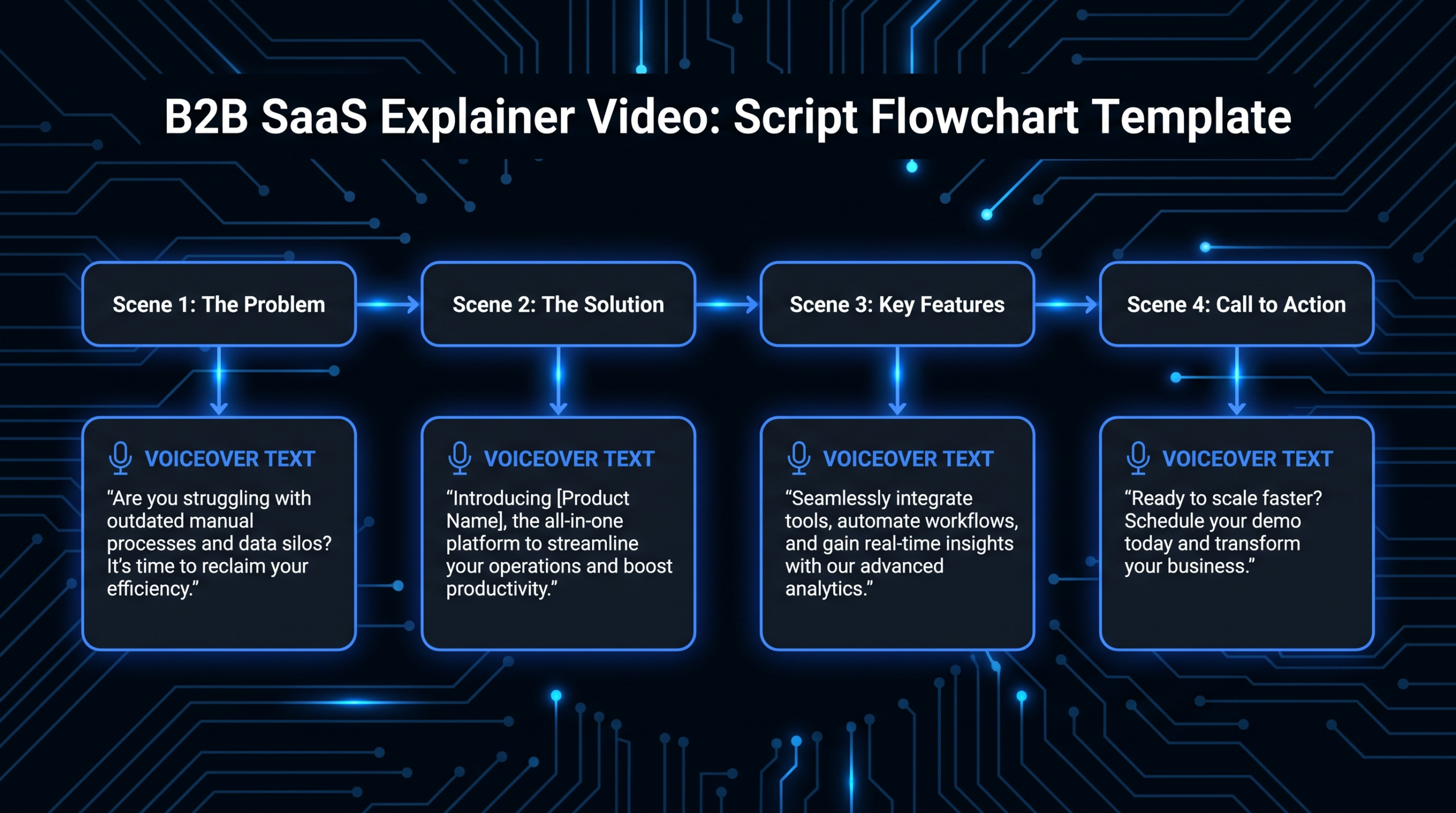
A 90-second to 3-minute video that explains what your product does, who it's for, and what problem it solves — without turning into a feature dump. The most effective B2B explainers use a problem-agitate-solve structure and end with a clear next step. This is typically the highest-traffic video on your homepage and the one that needs the most production polish. One common mistake: making the explainer too long. Every extra minute past 2:30 significantly reduces completion rates. Production complexity: medium-high (animation or screen recording with professional VO and music).
8 Detailed Product Demo Videos
A 5–15 minute walkthrough of your product's core workflows, showing a real use case from start to finish. Unlike a polished overview video, a product demo video is meant to be watched by someone who is seriously evaluating your tool. It should show enough depth that a technical evaluator or power user gets their questions answered. Segment by persona when possible — a demo for a VP of Marketing and a demo for a RevOps manager should highlight different capabilities. For SaaS companies, this is often the single highest-converting video asset you can produce. See our guide on SaaS video production for a full breakdown of what makes SaaS demo videos convert.
9 Customer Testimonial Videos
Short (90-second to 3-minute) videos featuring a real customer explaining the problem they had, why they chose you, and what changed after using your product. Testimonial videos are the most credible format in B2B — buyers trust peer voices more than vendor claims. The structure matters: the best testimonials are not generic ("great product, great team") but specific ("we reduced our video review cycle from 5 days to 18 hours"). Recruit customers with recognizable logos or job titles that resonate with your ICP. Production complexity: medium (can be filmed remotely; editing for pacing and caption accuracy is where quality shows). See our B2B marketing video examples for testimonial formats that work.
10 In-Depth Case Study Videos
A 3–6 minute narrative video that walks through one customer's journey: the challenge before, the implementation process, and the measurable results. Case study videos are longer than testimonials and designed for buyers who are already close to a decision and need proof that your solution works at their scale. The most effective case study videos include specific metrics ("reduced production cost by 40%") and show the customer using the product — not just talking about it. Production complexity: high (requires filming at the customer's site or via high-quality remote setup; editing for story arc is critical).
11 Comparison and "Versus" Videos
A fair, structured video comparison of your product against a specific competitor or category of solution. Done well, these are among the highest-intent-capturing B2B video formats because buyers actively search "[Your Product] vs [Competitor]" during evaluation. The critical discipline: be genuinely honest about trade-offs. A comparison video that only says good things about your product and negative things about competitors reads as propaganda and damages credibility. Real pros and cons for both sides convert better than puff pieces. Production complexity: medium (screen recordings, side-by-side UI shots, data tables).
12 Webinar and Virtual Event Replays
Edited replays of live webinars or virtual events — not the raw recording, but a properly edited version with chapter markers, key moments highlighted, and dead air removed. Webinar replays have a long shelf life as on-demand assets and consistently rank well for educational search queries. The editing quality gap between raw recordings and properly produced replays dramatically affects completion rates and perceived expertise. Production complexity: low (you already have the footage — this is a post-production and distribution challenge).
13 B2B Product Launch Videos
A dedicated video for a major feature launch or product release — not a product demo, but a launch narrative that builds anticipation, explains the "why now" behind the release, and drives adoption among existing customers and new prospects. Launch videos follow a different structure than demos: they lead with the problem that motivated the feature, then reveal the solution with a clear before/after. For a complete framework on structuring these, see our B2B product launch video playbook. Production complexity: medium-high (polished editing, tight scripting, and a clear call to action for each audience segment).
Conversion-Stage Ideas (Ideas 14–18)
Conversion-stage video reaches buyers who are ready to make a decision. These formats prioritize specificity, proof, and momentum — the goal is to remove the last objections standing between a prospect and a signed contract.
14 Personalized Sales Videos
Short (60–90 second) one-to-one video messages sent by an AE or SDR to a specific prospect, referencing their company, their use case, or something specific from a recent interaction. Personalized video in sales outreach consistently outperforms plain-text email for reply rates because it signals genuine attention. Tools like Loom, Vidyard, or Sendspark make recording easy — the differentiation is in the edit: adding a branded thumbnail, captions, and a clear CTA makes the video look like it came from a serious company, not a screen-recorded cold pitch. Production complexity: very low (filmed in minutes; light editing adds polish).
15 Proposal and Scope Walkthrough Videos
A recorded video walkthrough of your proposal or scope-of-work document, sent alongside the PDF. This format dramatically increases proposal engagement because prospects can hear the reasoning behind your recommendations rather than reading flat text. A 3–5 minute video narrating a proposal also surfaces objections early — if a prospect watches 30 seconds and stops, they didn't understand the value or the price shocked them, which are signals worth knowing before the follow-up call. Production complexity: very low (screen recording with VO).
16 Pricing Explainer Videos
A short (2–3 minute) video that explains your pricing model, what's included in each tier, and who each tier is right for. This is one of the most underused B2B video formats despite being highly searched ("how does [product] pricing work," "what does [product] cost"). A transparent pricing video reduces friction for self-serve prospects and pre-qualifies inbound leads before they ever talk to sales. VEC, for example, explains its dedicated team plans on the pricing page — a companion video that walks prospects through the Growth, Core, and Scale tiers and explains what deliverables each includes turns a static page into a guided experience. Production complexity: low-medium.
17 Executive Sponsor and Reference Videos
A short video message from your CEO, VP of Customer Success, or a senior leader addressed to a specific prospect or prospect segment — affirming your commitment to their success, walking through onboarding timelines, or addressing a specific concern that came up in the sales process. These are most effective in enterprise deals where stakeholder confidence in vendor leadership matters. Production complexity: very low (high-quality recording, light editing).
18 ROI and Business Case Videos
A 2–4 minute video that walks through a business case calculation — showing exactly how a company like the prospect's could expect to recoup their investment in your product within a specific timeframe. These are valuable at the procurement approval stage, where decision-makers need a clear narrative for internal budget justification. The most effective versions are personalized to the prospect's industry or company size and include conservative, realistic assumptions rather than best-case projections. Production complexity: medium (motion graphics for numbers and timelines help significantly).
Retention and Expansion Ideas (Ideas 19–20)
Post-sale video is the most neglected category in B2B content — and one of the highest-ROI opportunities, because it directly impacts renewal rates and expansion revenue.
19 Customer Onboarding and Training Videos
A library of short (3–8 minute) videos covering core product workflows, common setup scenarios, and best-practice tips for new users. Well-produced onboarding videos reduce time-to-value, decrease support ticket volume, and directly improve product adoption metrics — all of which correlate with lower churn. The key production principle: segment by role. An onboarding video for an admin user and one for an end user should cover completely different workflows. Production complexity: medium (screen recording with professional editing; this is where quality really matters — rushed onboarding videos signal a company that doesn't care about customer success).
20 Quarterly Business Review (QBR) and Success Story Videos
A short (2–3 minute) video produced before or after a QBR that highlights a customer's progress, usage milestones, and key wins over the past quarter. This replaces or supplements slide decks and creates a shareable artifact that customers can forward to stakeholders who weren't in the QBR meeting. When customers share these internally, they become advocates who spread your brand to executives who were previously unaware of the ROI being generated. Production complexity: low-medium (data visualization + motion graphics + VO).
Format Comparison: Production Cost vs. Pipeline Impact
Not all 20 ideas require the same investment. Here's how the formats stack up when balancing production cost against expected pipeline and retention impact. Use this to prioritize if budget or team capacity is limited.
B2B Video Ideas: Priority Matrix
| Video Format | Buyer Stage | Production Complexity | Pipeline Impact | Priority |
|---|---|---|---|---|
| Product demo video | Consideration | Medium-high | Very high | P1 — do first |
| Customer testimonial | Consideration | Medium | Very high | P1 — do first |
| Product explainer | Consideration | Medium-high | High | P1 — do first |
| Personalized sales video | Conversion | Very low | High | P1 — easy win |
| Thought leadership (LinkedIn) | Awareness | Low | Medium (compounding) | P2 — build over time |
| Case study video | Consideration | High | High | P2 — plan quarterly |
| Product launch video | Consideration | Medium-high | High (event-driven) | P2 — per launch |
| Pricing explainer | Conversion | Low-medium | Medium-high | P2 — underused |
| Onboarding / training | Retention | Medium | High (churn reduction) | P2 — post-launch |
| Webinar replay (edited) | Consideration | Low (post-prod only) | Medium | P2 — repurpose |
| Comparison / vs. video | Consideration | Medium | High (high intent) | P2 |
| ROI / business case | Conversion | Medium | High (enterprise) | P3 — for enterprise |
| QBR / success story | Retention | Low-medium | High (expansion) | P3 — after churn solved |
| Short-form social series | Awareness | Low | Low-medium (brand) | P3 — when bandwidth allows |
| Data visualization | Awareness | Medium | Medium (shareable) | P3 |
| Proposal walkthrough | Conversion | Very low | Medium | P3 — easy add-on |
Typical Production Timelines by Format
| Format Category | In-House Team (est.) | Dedicated Video Agency | Freelancer |
|---|---|---|---|
| Short-form (under 2 min) | 1–3 days | 3–5 business days | 2–5 days |
| Product demo / explainer | 1–3 weeks | 5–10 business days | 1–3 weeks |
| Case study / testimonial | 2–4 weeks | 7–14 business days | 2–4 weeks |
| Animated explainer | 4–8 weeks | 10–20 business days | 3–8 weeks |
| Webinar replay (edited) | 1–2 days | 2–4 business days | 1–3 days |
For guidance on how to structure and outsource video production efficiently without losing brand consistency, see our framework for how to outsource video editing.
How to Prioritize These 20 Ideas for Your Team
Start with the formats where your pipeline is currently leaking, not the ones that are easiest to produce. For most B2B SaaS companies with fewer than 50 employees, the right starting order looks like this:
- Homepage product explainer — every visitor sees this; if it's weak, everything downstream suffers.
- 2–3 customer testimonials — the fastest credibility lever you have; reach out to your happiest customers this week.
- Persona-segmented product demos — essential for any self-serve or product-led motion.
- Personalized sales videos — zero infrastructure cost; AEs can start tomorrow.
- Onboarding video library — if you have churn above your category benchmark, this unlocks more revenue than any new awareness campaign.
Everything else scales on top of that foundation. Teams that try to produce all 20 formats simultaneously with limited resources end up with 20 mediocre videos. Teams that nail the P1 formats first and layer in P2 and P3 over subsequent quarters compound their returns.
VEC's Growth plan ($5K/mo) typically covers 4–6 short-format videos per month. Our Core plan ($9.5K/mo) supports a full mixed-funnel calendar including demos, testimonials, and social series with dedicated senior editors who learn your brand over time.
If you're deciding whether to build a video production capability in-house or outsource it, our SaaS video production guide walks through the build-vs-buy math in detail. The short version: in-house makes sense above a certain volume threshold; below it, a dedicated agency with brand continuity outperforms a generalist freelancer pool every time.
HubSpot's video marketing research consistently shows that marketers who report strong ROI from video are those with a documented video strategy — not just a collection of one-off productions. These 20 ideas become a strategy when you map them to buyer stages, assign ownership, and build a production cadence that your team can sustain.
FAQ
What is the best B2B video content type for generating pipeline?
Product demo videos and customer testimonials consistently deliver the highest pipeline impact for B2B SaaS companies because they target buyers who are actively evaluating solutions. A detailed, persona-segmented product demo converts high-intent visitors who arrive from search or paid ads, while testimonials overcome the trust gap that keeps late-stage prospects from committing.
How long should B2B videos be?
Length depends on the buyer stage and format. Thought leadership and social content performs best under 90 seconds. Product explainers should stay under 3 minutes. Product demos can run 5–15 minutes for serious evaluators. Case study videos are most effective at 3–6 minutes. The rule of thumb: a video should be exactly as long as it needs to be to complete its job — not longer for the sake of seeming thorough, and not shorter if key proof points are cut.
How many B2B videos should we produce per month?
This varies significantly by company stage and content goals. Early-stage companies typically get more value from 2–4 high-quality cornerstone videos (explainer, demo, 1–2 testimonials) than from churning out 20 low-production shorts. Growth-stage companies with an established content operation commonly produce 4–8 videos per month across formats. Enterprise teams running account-based programs may produce dozens of personalized and segment-specific videos monthly.
Can B2B video content work for complex, technical products?
Yes — in fact, complex products often benefit more from video than simple ones because a 5-minute demo can convey nuance that would take 15 pages of documentation to explain in text. The key is segmenting your video content by audience: a technical deep-dive for engineers who need to understand integrations, a value-focused overview for VPs who need to justify the budget, and a quick-start tutorial for end users who need to get productive fast. One size does not fit all in technical B2B.
Should B2B video focus on product features or customer outcomes?
Customer outcomes first, product features second — always. Buyers do not purchase features; they purchase the result those features create. Lead with the outcome ("cut your video review cycle from 5 days to 18 hours"), then show the product capability that makes it possible. Feature-led video scripts consistently underperform outcome-led scripts because they make the buyer do the mental work of translating a capability into a business benefit. Do that translation for them.
Ready to Build a B2B Video Content System?
VEC provides dedicated senior editing teams for B2B SaaS companies — we guarantee double your video output in 90 days, or month 4 is free. Plans start at $5K/month with no per-video fees.
Book a Free Strategy Call View Pricing