

You know you need video. Every marketing report, every platform algorithm, every competitor confirms it. But when you start looking for a partner, the options blur together. A creative video agency promises strategy, storytelling, and full production. A video editing company offers fast turnarounds, polished post-production, and lower costs. They sound similar — but they solve fundamentally different problems.
Choosing the wrong type of partner is one of the most expensive mistakes brands make in video. Hire a full-service creative video agency when you only need editing, and you'll overpay by 3—5—. Hire an editing company when you actually need creative strategy, and you'll produce beautiful videos that nobody watches because they don't connect to a larger marketing plan.
This guide draws a clear line between the two. By the end, you'll know exactly which type of partner matches your needs, your budget, and your growth stage.
Before comparing, let's define what each actually does — because the industry uses these terms loosely, and the overlap creates genuine confusion.
A creative video agency is a full-service partner that handles the entire video lifecycle: strategy, concept development, scripting, pre-production planning, filming, editing, post-production, and distribution strategy. They function as an extension of your marketing team, not just your production department.
Key characteristics of a creative video agency:
Think of agencies like Venture Videos, Sandwich Video, or Demo Duck. They're hired to think, create, and produce — not just to edit footage you've already shot.
A video editing company specializes in post-production. You provide the raw footage (and usually a brief or style guide), and they deliver a polished final product. They don't typically write scripts, manage shoots, or develop creative strategy — though some offer lightweight consulting as an add-on.
Key characteristics of a video editing company:
Understanding the overlap is crucial because it's where most confusion (and poor hiring decisions) happens.
Both types of companies edit video. That's the overlap. But the context of that editing — and everything surrounding it — differs dramatically.
A creative agency edits as one step in a larger creative process they control from start to finish. An editing company edits as their primary service, optimized for speed, volume, and consistency using footage and direction you provide.
A full-service video agency is the right choice when the creative thinking matters as much as (or more than) the production execution. Specific scenarios include:
If you're establishing a visual identity through video for the first time, you need creative direction. An agency will help define your video style — tone of voice, visual language, music direction, pacing philosophy — and create foundational content that sets the standard for everything that follows.
A product launch video, a fundraising campaign, a recruitment series — these are strategic assets tied to business outcomes. An agency brings the marketing thinking to connect creative decisions to measurable goals: awareness, conversions, applications, sign-ups.
If your team doesn't include anyone who can write scripts, art-direct shoots, or make creative decisions about video, an agency fills that gap. They bring a creative director's eye and a strategist's brain to every project.
Brand documentaries, customer story films, TV-quality commercials, animated explainers — these require specialized crews, equipment, and expertise that editing companies don't offer.
When volume is low and each video is a significant investment, the per-project agency model makes sense. You're paying for creative quality over production velocity.
An editing company is the right choice when you already have the creative direction and footage — and need a reliable partner to turn raw material into finished content at scale.
YouTube channels, podcast shows, social media content calendars — these require editing volume and consistency that agencies aren't built for. An editing company's subscription or retainer model is purpose-built for recurring content.
If you or your team handle scripting, filming, and creative decisions, you don't need to pay for an agency's creative layer. You need skilled hands to execute your vision quickly and consistently.
When you need maximum output per dollar, editing companies deliver dramatically more content for the same budget. A $3,000/month editing retainer might produce 12 videos; the same budget at an agency might produce one.
Trending content, timely commentary, rapid-response marketing — sometimes getting content out fast matters more than achieving cinematic perfection. Editing companies with 24–48 hour turnarounds are built for this pace.
One recording session ? one YouTube video + five Shorts + three Instagram Reels + a LinkedIn clip + a podcast episode. Editing companies handle this kind of content multiplication daily. Most agencies treat each format as a separate project (and charge accordingly).
Here's what most comparison articles won't tell you: the smartest brands don't choose one or the other. They use both.
The hybrid model works like this:
This approach gives you the strategic depth of an agency where it matters most and the volume efficiency of an editing company for your content engine. Many companies find their total video spend is actually lower with this split than when they tried to force an agency to handle everything or an editing company to think strategically.
Without the hybrid approach, getting 300+ videos from an agency alone might cost $300,000—$500,000. Using an editing company for everything might save money but sacrifice strategic quality on high-stakes content.
If you've determined you need a creative agency vs. editor, here's how to evaluate your options:
Everyone's reel looks great. Look deeper. Ask for case studies that show the strategic thinking behind the creative. What was the brief? What problem were they solving? What were the results? A great agency can connect creative decisions to business outcomes.
Ask: "If we gave you our business goals and target audience, what would you recommend?" A strong agency will have a structured process for this — audience research, competitive analysis, content strategy frameworks. If they jump straight to "What kind of video do you want?", they're a production house masquerading as an agency.
Creative projects go sideways when communication breaks down. Ask about their project management process, review cycles, and how they handle creative disagreements. The best agencies document everything and maintain transparency throughout.
Who will actually work on your project? Meet the creative director, the producer, and ideally the editor. Agency pitches are often led by senior leaders who then hand off to junior teams. Clarify this upfront.
Agencies that can't give you a ballpark until they hear your brief are either highly custom (sometimes justified) or disorganized (more common than you'd think). Look for agencies that publish starting prices or standard package tiers.
If an editing company is the right fit, evaluate these factors:
The best editing companies specialize. Some focus on YouTube, others on corporate content, others on social media. A YouTube editing specialist will understand retention optimization, hook sequences, and platform-specific best practices that a generalist won't.
How do they receive footage? How do you submit briefs? How do you provide feedback? Look for companies using professional tools: Frame.io for review, Notion or Monday for project management, Google Drive or Dropbox for file transfer. Email-only workflows don't scale.
A dedicated editor learns your style and improves over time. Rotating editors means re-training on every video. Always ask, and always prefer dedicated assignment.
Reputable editing companies offer trial edits. Use them. Send the same footage to 2–3 companies and compare quality, communication, and turnaround side by side.
Understand how many revision rounds are included and how the process works. Unlimited revisions sound good but can indicate a company that doesn't get it right the first time. Two well-structured revision rounds usually indicate a mature process.
We see these errors repeatedly. Learn from others' mistakes:
A SaaS company hired a creative agency to produce their weekly YouTube series. The agency delivered beautiful content — at $3,500 per episode. After three months, they'd spent $42,000 on 12 videos. An editing company would have produced the same 12 videos for $6,000—$12,000, since the company's marketing team was already writing scripts and filming in-house.
A DTC brand hired an editing company to create their launch video. They provided footage from a phone shoot, a rough script, and a $500 budget. The result looked amateur — not because the editing was bad, but because the concept, footage quality, and creative direction were weak. They needed an agency's creative layer but only paid for execution.
Many editing companies call themselves "full-service" because they offer thumbnails and captions alongside editing. Many production houses call themselves "agencies" because they have a director. Look past labels at actual capabilities. Ask: "Walk me through a recent project from concept to delivery." Their answer reveals their true scope.
If you can't articulate what success looks like — views, conversions, brand lift, watch time — you'll struggle to evaluate any partner. Define metrics before choosing, so you can match the partner type to the outcome you're measuring.
Your needs will change. A startup might begin with an agency to establish their video identity, then transition to an editing company for scaling content. Build transition planning into your partnership decisions. The best long-term strategy often involves starting with an agency, codifying the style guide and templates they create, and then handing ongoing production to an editing company that executes within those guidelines.
A newer model is emerging that blurs the line between agencies and editing companies: Creative-as-a-Service. Companies like Superside, Design Pickle (for video), and various boutique firms offer subscription access to creative resources — including strategists, designers, and editors — at a fixed monthly cost.
CaaS aims to give you agency-caliber creative thinking with editing-company-level pricing and speed. It's not a perfect fit for everyone, but it's worth exploring if you need more than pure editing but can't afford a traditional agency retainer.
Key considerations with CaaS:
The most effective video marketing programs don't rely on a single partner. They build an ecosystem:
This ecosystem model gives you strategic depth, production efficiency, specialized expertise, and internal control — all at a manageable total cost.
What is the main difference between a creative video agency and a video editing company?
A creative video agency handles the full video lifecycle — strategy, concept, scripting, production, and post-production. A video editing company focuses on post-production: turning raw footage into polished final content. The agency thinks and creates; the editing company executes and polishes.
Can a video editing company handle creative strategy?
Some editing companies offer lightweight creative consulting (script feedback, content suggestions), but it's not their core competency. If creative strategy is essential to your success, an agency or CaaS provider is a better fit. Editing companies excel at execution, not ideation.
How much more expensive is a creative video agency?
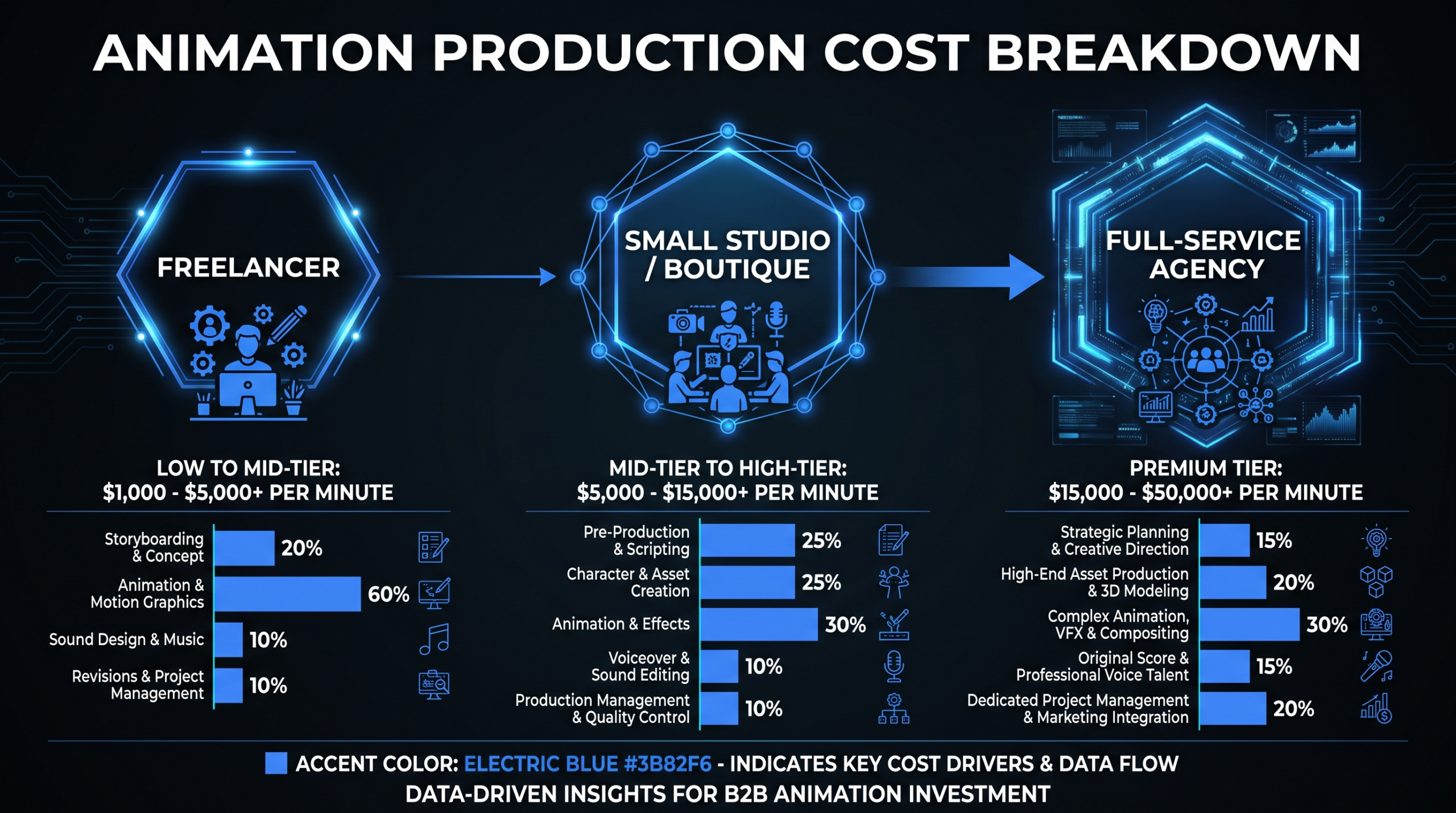
On a per-video basis, agencies typically cost 3—10— more than editing companies. A single agency-produced video might cost $5,000—$50,000, while a similar-length video from an editing company might cost $200—$800. The price difference reflects the additional layers of strategy, creative development, and production that agencies provide.
When should a startup choose an agency over an editing company?
Startups benefit most from agencies when creating foundational brand content (launch videos, brand films, investor pitch content) or when they lack internal creative resources. Once the brand identity and content templates are established, transitioning to an editing company for ongoing content is usually more cost-effective.
Can I switch from an agency to an editing company later?
Absolutely — and this is a common, smart progression. Have your agency create a detailed video style guide (fonts, colors, pacing, transitions, music direction, tone) as part of their engagement. Then hand that guide to your editing company as the blueprint for ongoing content. The style guide bridges the gap between agency-level creative thinking and editing-company-level execution.
What is Creative-as-a-Service (CaaS) and how does it compare?
CaaS is a subscription model that provides access to a team of creatives (including strategists, designers, and editors) for a fixed monthly fee. It sits between agencies and editing companies — offering more creative support than a pure editing company but at lower cost than a traditional agency. It works best for brands that have some internal creative direction but need supplemental strategic and creative support.
Download our decision-making checklist to evaluate whether you need a creative agency, an editing company, or a hybrid approach. Includes evaluation criteria, budget worksheets, and partner interview questions.
Download the Checklist → Book a Free Strategy Call View PricingThe creative agency vs. editor question isn't about which is "better" — it's about which is right for your specific situation. Agencies bring strategic thinking and full-spectrum production. Editing companies bring speed, consistency, and cost efficiency. The best brands use both, at different stages and for different content types.
Start by honestly assessing your internal capabilities, your content volume needs, and your budget. Then match those realities to the partner type that fills your actual gaps — not the gaps you wish you had.
Need help figuring out the right approach for your brand? Book a free strategy call and we'll walk through your specific situation together.