

A senior video editor in New York charges $75-$150/hour. The same skill set in Manila charges $12-$25/hour. In Lahore, $8-$18. In Bogotá, $15-$30.
Those numbers look like arbitrage — and for many SaaS companies, they are. Offshore video editing rates can cut post-production costs by 50-80% compared to US or UK-based editors. But raw hourly rates tell a fraction of the story. Communication overhead, quality variance, timezone gaps, and management costs can erode those savings fast if you don't structure the engagement correctly.
This guide breaks down actual offshore video editing rates by country and region in 2026, what those rates buy you in terms of quality, where the hidden costs lurk, and how to build an offshore editing model that delivers real savings without sacrificing the quality your brand demands.
The offshore video editing market has matured significantly. Five years ago, "offshore editing" meant finding a freelancer on Upwork and hoping for the best. Today, established teams in the Philippines, India, Pakistan, Eastern Europe, and Latin America offer dedicated editing services with project management, brand onboarding, and quality assurance processes that rival onshore agencies.
Key trends shaping offshore editing rates in 2026:
Rates reflect mid-level to senior editors with 3+ years experience (2026 data)
| Region/Country | Junior ($) | Mid-Level ($) | Senior ($) | Timezone (vs US) |
|---|---|---|---|---|
| United States | 30–50 | 50–100 | 100–150+ | — |
| United Kingdom | 25–40 | 40–80 | 80–120 | +5 to +8 hrs |
| Poland / Ukraine | 12–20 | 20–35 | 35–50 | +6 to +9 hrs |
| Serbia / Romania | 10–18 | 18–30 | 30–45 | +6 to +9 hrs |
| Colombia / Argentina | 10–15 | 15–28 | 28–40 | 0 to +2 hrs |
| Mexico / Brazil | 10–18 | 18–30 | 30–42 | 0 to +3 hrs |
| Philippines | 6–10 | 10–18 | 18–25 | +12 to +15 hrs |
| India | 5–8 | 8–15 | 15–22 | +10.5 to +13.5 hrs |
| Pakistan | 4–7 | 7–12 | 12–18 | +10 to +13 hrs |
| Vietnam | 5–8 | 8–14 | 14–20 | +12 to +15 hrs |
Hourly rates don't tell you what a finished video costs. Here's what the same video costs across regions:
| Video Type | US/UK | Eastern Europe | LatAm | South/SE Asia |
|---|---|---|---|---|
| YouTube (10 min) | $800–$2,500 | $400–$1,000 | $300–$800 | $150–$500 |
| Social clip (60s) | $200–$600 | $100–$300 | $75–$200 | $40–$150 |
| Product demo (5 min) | $1,500–$5,000 | $600–$2,000 | $500–$1,500 | $250–$800 |
| Brand video (2 min) | $3,000–$10,000 | $1,200–$4,000 | $1,000–$3,000 | $500–$2,000 |
| Testimonial | $1,000–$3,000 | $400–$1,200 | $350–$1,000 | $200–$600 |
The Philippines is the most popular offshore destination for video editing, and for good reason. English proficiency is high, the culture is Western-influenced (Filipino editors intuitively understand US/UK content pacing), and the talent pool is deep. Manila and Cebu have vibrant creative industries with editors experienced in YouTube, SaaS, and B2B content.
Best for: YouTube editing, social content, podcast editing, recurring content
Watch out for: 12-15 hour timezone gap with US teams can slow real-time collaboration
The lowest rates globally, with a rapidly growing talent base. Quality is more variable than the Philippines — you'll find exceptional editors alongside inexperienced ones. The key is working with established teams that handle QA and project management, rather than individual freelancers.
Best for: High-volume editing, motion graphics, animation
Watch out for: Communication styles can differ, quality variance is high without proper vetting
The timezone advantage makes LatAm increasingly popular for US-based companies. Colombian and Argentine editors work during US business hours, enabling same-day feedback loops. Rates are higher than Asia but lower than US — a solid middle ground.
Best for: Companies needing same-day turnaround, real-time collaboration, bilingual content
Watch out for: Smaller talent pool for specialized SaaS/B2B content compared to Philippines
High technical skill, strong design sensibility, and competitive rates. Eastern European editors tend to excel at motion graphics, color grading, and cinematic styles. The timezone works well for UK/EU-based companies and overlaps with US East Coast mornings.
Best for: High-end editing, motion graphics, brand videos
Watch out for: Rates are rising faster than other regions as demand for Eastern European tech talent grows
Not all offshore rates deliver equal quality. Here's what to expect at each price tier:
| Tier | Hourly Rate | Quality Level | Typical Experience |
|---|---|---|---|
| Budget | $5–$12/hr | Basic cuts, simple transitions, standard templates. Functional but not polished. | 1-2 years, self-taught |
| Mid-Range | $12–$25/hr | Clean editing, basic motion graphics, good pacing. Suitable for YouTube and social content. | 3-5 years, portfolio clients |
| Professional | $25–$45/hr | Polished editing, custom motion graphics, color grading. Brand-consistent quality. | 5+ years, agency background |
| Premium | $45–$70/hr | Agency-level quality, creative direction, sophisticated animation. Portfolio-worthy work. | 7+ years, top-tier portfolio |
For SaaS marketing content, the mid-range to professional tier ($12-$45/hr) hits the sweet spot. You get quality that's indistinguishable from US-produced content at 40-70% lower cost.
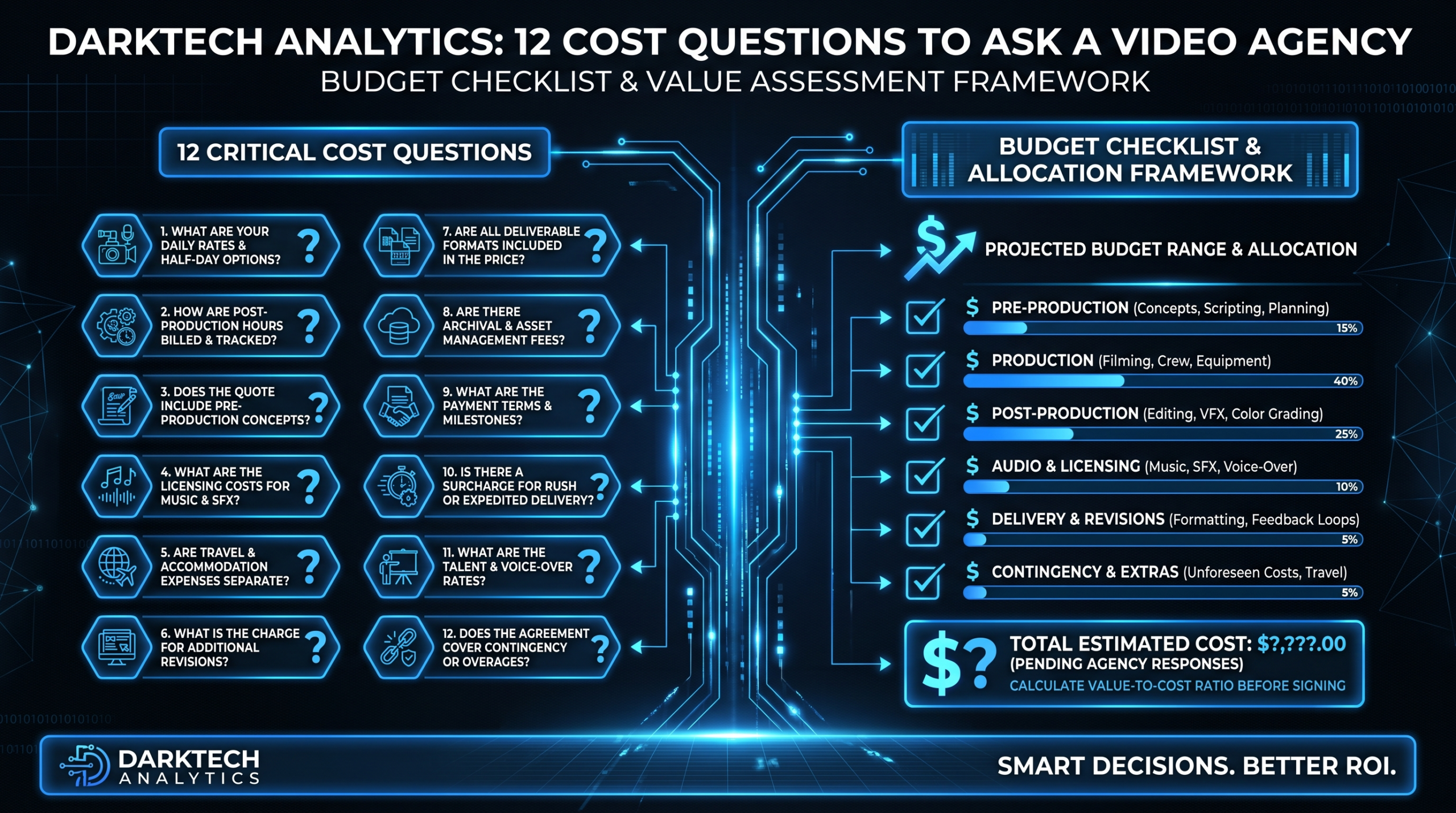
The hourly rate is the starting point. Factor these into your true cost calculation:
Timezone gaps mean async communication. A question that takes 5 minutes to resolve in-person might take 12-24 hours via Slack/Loom. Budget an additional 10-20% of project time for communication overhead, especially during the first 2-3 months before workflows are established.
Without onshore QA, quality control falls on your team. Each video needs review time — typically 20-45 minutes per video for feedback documentation. If you're producing 15 videos per month, that's 5-11 hours of internal QC time.
Offshore teams may require more revision rounds initially — 2.5-3.5 rounds vs. 1.5-2 rounds for onshore editors who share cultural context. Each additional revision round adds to both calendar time and cost (even if revisions are "included," they consume capacity).
Someone needs to manage the offshore team: assign work, review output, provide feedback, handle escalations. For a team of 3-4 editors, expect 8-15 hours per week of management time from your side.
True Offshore Cost = (Hourly Rate × Hours) + Communication Time + QC Time + Management Time + Revision Buffer
A $15/hour offshore editor producing a YouTube video in 6 hours costs $90 in direct labor. Add 2 hours of your team's communication and QC time at $50/hour (100) + one extra revision round (1.5 hours × $15 = $22.50). True cost: $212.50 — still significantly less than the $800-$1,200 US equivalent, but 2.4x the raw hourly calculation.
Before committing to an offshore partner, run them through this evaluation process:
Request 5-10 samples in your specific video category (SaaS demos, YouTube content, social clips). Generic portfolio reels hide weaknesses. You need to see work that matches your intended output.
Send a real brief with footage and pay for a test edit. This costs $100-$300 and tells you more than 10 portfolio samples. Evaluate: quality, communication, turnaround time, and how they handle feedback.
During the test project, evaluate response times, English proficiency (written and verbal), and proactive communication. Does the editor ask clarifying questions? Do they flag issues before they become problems?
Confirm: internet speed (minimum 50Mbps for reliable large file transfers), hardware specs (modern workstation with 32GB+ RAM), software proficiency (Premiere Pro, After Effects, DaVinci Resolve), and backup systems (cloud storage, version control).
Ask for 2-3 client references — specifically clients in your industry or with similar content types. Questions to ask: How consistent is quality? How do they handle missed deadlines? Would you hire them again?
For a comprehensive vetting checklist, download our Agency Evaluation Checklist — it works for both agencies and offshore teams.
The most effective offshore model isn't pure offshore — it's hybrid. Here's the structure we see working best for SaaS teams:
This is exactly the model that Video Editing Company operates. We manage the creative direction and quality assurance while our dedicated editing teams handle production. Clients get the quality and communication of an onshore partner with the economics of offshore production.
| Model | Monthly Cost (15 videos/mo) | Your Time Required |
|---|---|---|
| US-based agency | $12,000 – $25,000 | 3-5 hrs/week |
| Self-managed offshore team | $3,000 – $6,000 | 12-18 hrs/week |
| Managed offshore team (hybrid) | $5,000 – $10,000 | 3-5 hrs/week |
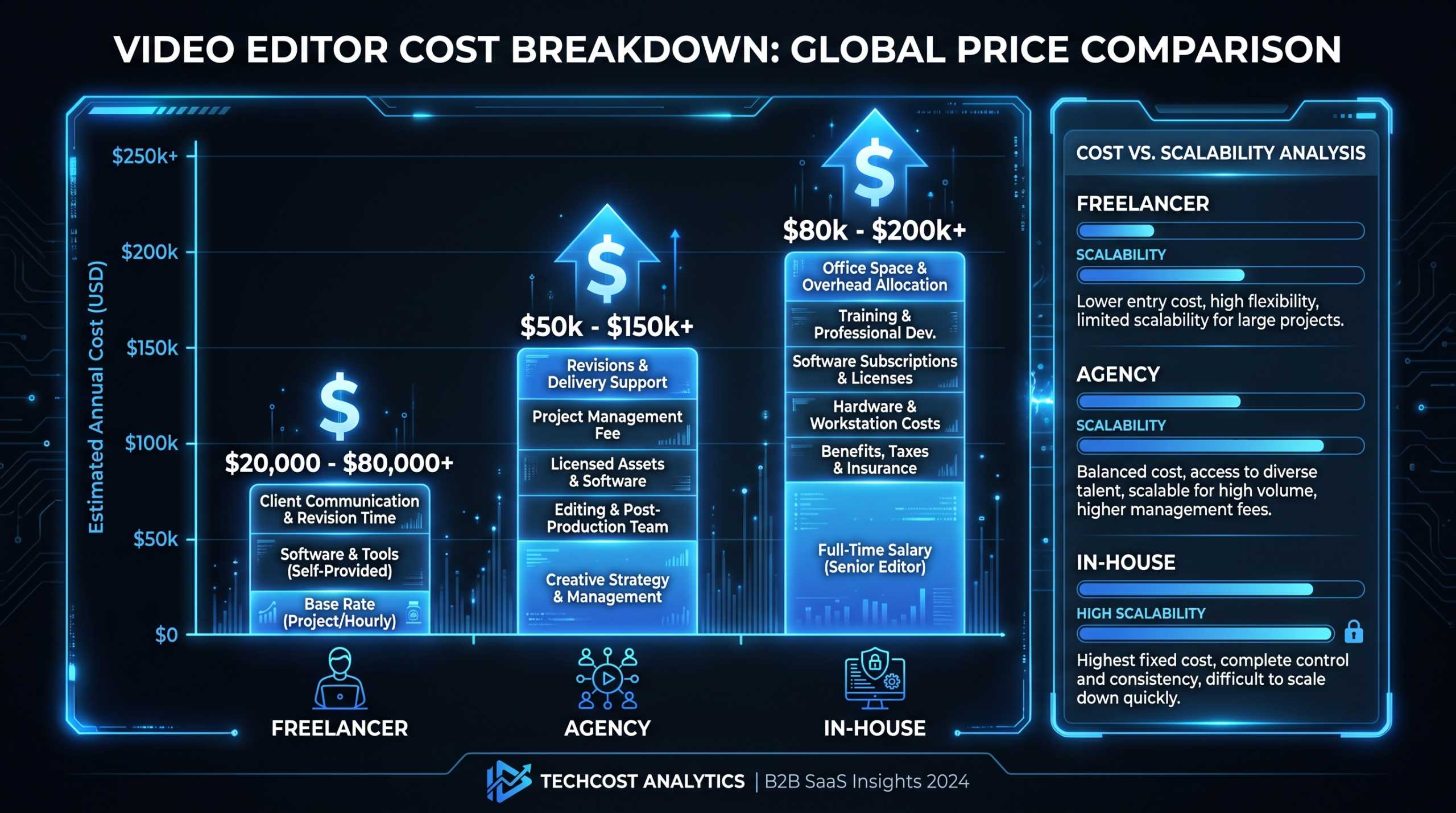
| In-house editor (US) | $7,000 – $10,000 (salary) | 5-8 hrs/week |
The managed hybrid model costs more than DIY offshore but saves 10-15 hours per week of your team's time. At $50-$75/hour for a marketing manager's loaded cost, that's $2,000-$4,500/month in recovered productivity — which often exceeds the management premium.
Want to compare these models for your specific situation? Use our Team vs. Freelancer Calculator to model total cost of ownership.
Use our free calculator to compare offshore, onshore, in-house, and hybrid editing team costs for your specific video volume.
Calculate Team Costs Discuss Your Needs See PricingRelated reading: