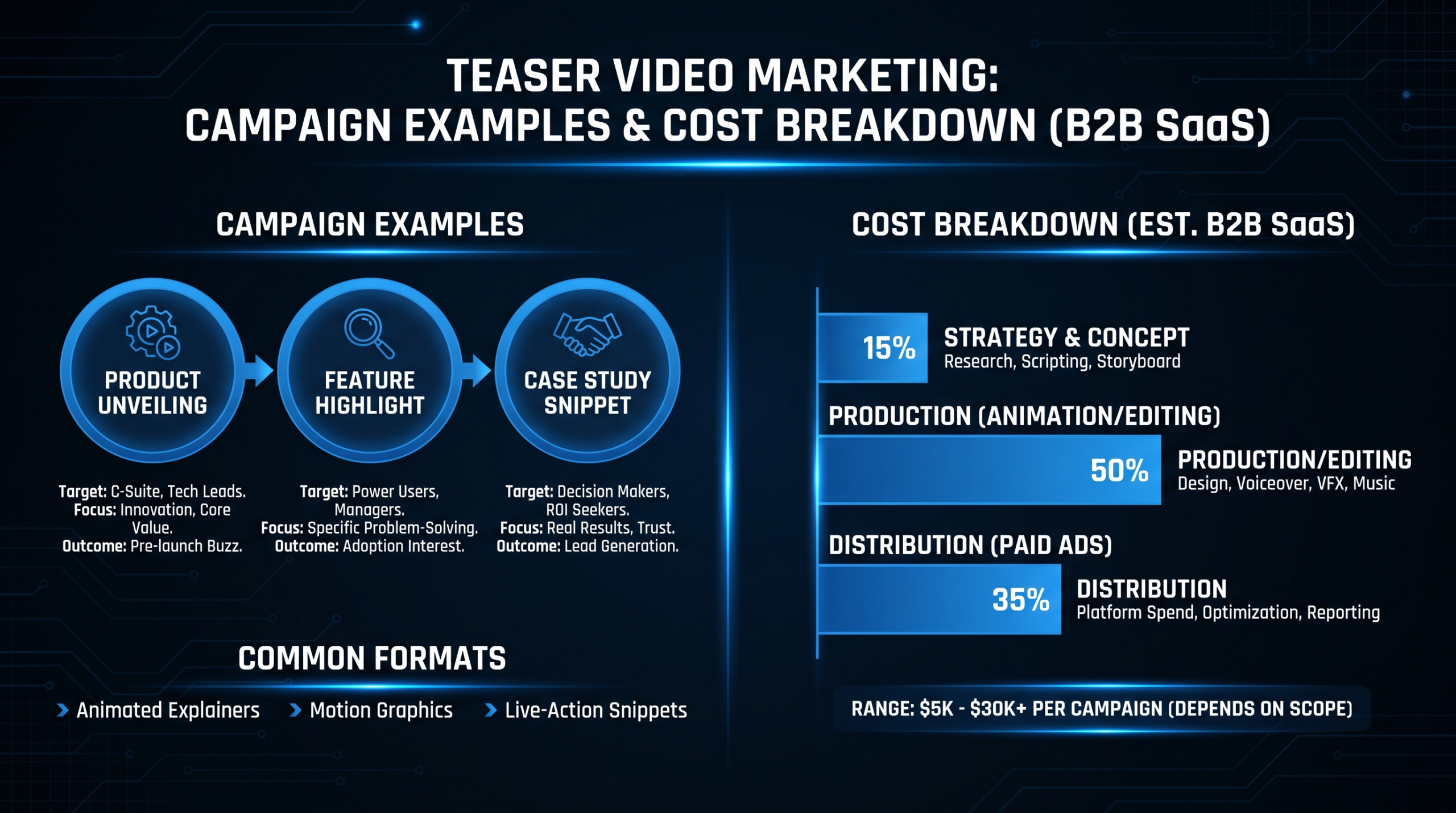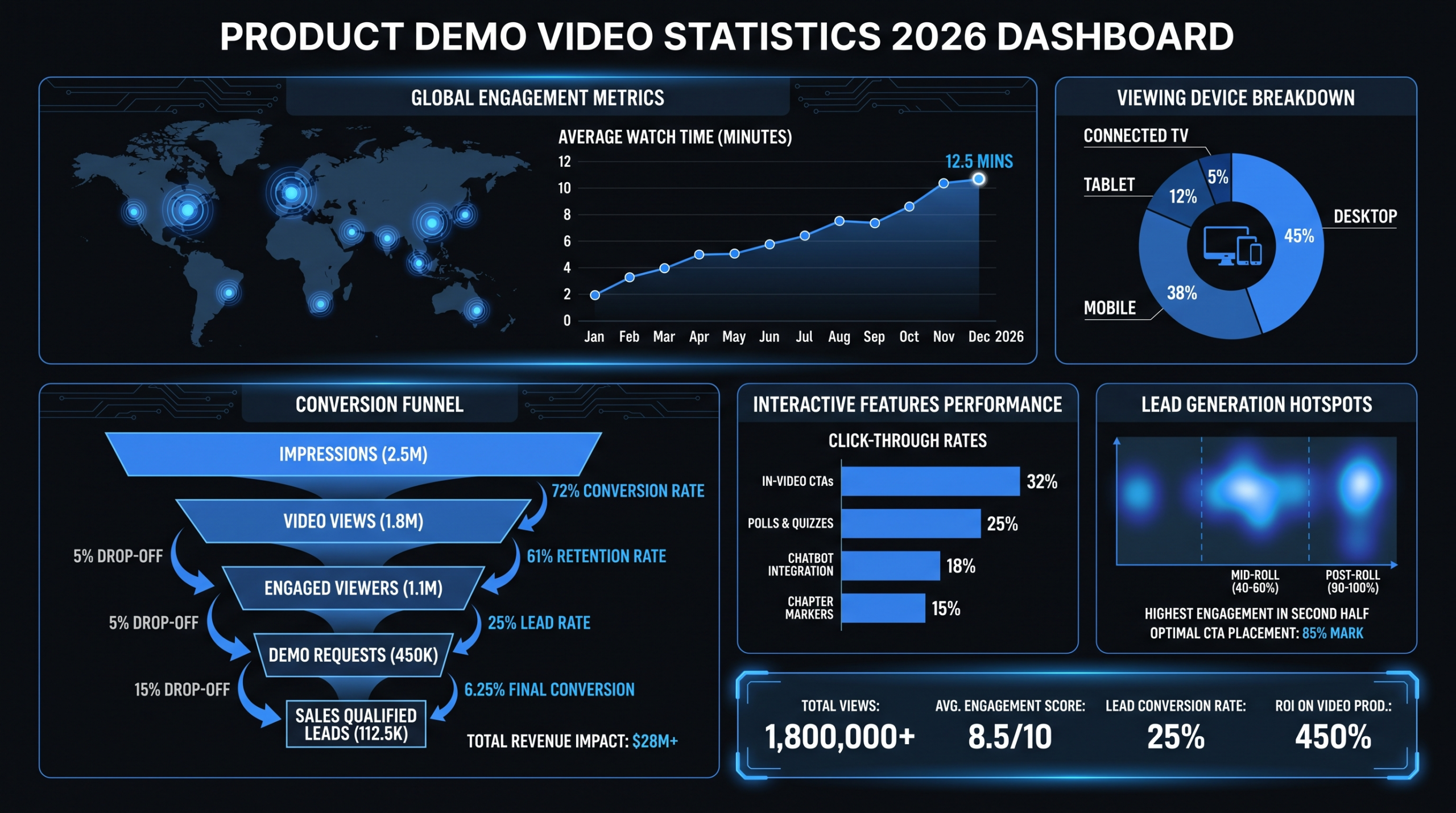
Video Production Cost in San Francisco: 2026 Rates
TL;DR — Key Numbers for Bay Area Budget Planning
- Corporate interview / talking-head video: typically $5,000–$25,000 all-in for a single-day SF shoot plus editing
- SaaS product demo (live-action): $8,000–$35,000 depending on scope and production tier
- Startup explainer (animated): $8,000–$40,000 from a Bay Area studio; $5,000–$20,000 with a remote post team
- Investor / pitch video: $15,000–$60,000+ for polished, story-driven execution
- Event coverage (single day): $3,000–$12,000 for crew plus basic edit
- Post-production retainer (remote): $3,000–$16,000/month — a controllable alternative to full local agency fees
- Bottom line: SF crew and studio costs run well above national averages. Separating local shooting from remote post-production is the budget lever most Bay Area marketing teams are under-utilizing.
Table of Contents
- Why San Francisco Video Production Costs More
- Video Production Costs by Type: SF Rate Table
- Corporate Video Production in the Bay Area
- SaaS and Product Demo Video Costs
- Startup and Investor Video Budgets
- Animation and Motion Graphics Pricing
- Event and Conference Video Filming
- Post-Production Retainers: The Remote Alternative
- How to Budget Smart in a High-Cost Market
- FAQ
San Francisco is one of the most expensive video production markets in the United States. Labor costs are elevated across every role — from cinematographers and gaffers to production assistants and studio managers. Real estate pressures drive location and studio fees well above national averages. Permitting for public shoots runs through the San Francisco Film Commission, which adds logistics most markets don't require.
For Bay Area marketing and content teams, this creates a genuine planning challenge: video is increasingly non-negotiable for SaaS growth, but the local cost of producing it keeps rising. This guide gives you honest, hedged budget ranges for every major video type, explains the specific cost drivers unique to SF, and outlines how companies are using remote post-production to control the part of the budget they actually can.
Why San Francisco Video Production Costs More
The Bay Area's video production premium isn't one thing — it's a stack of factors that compound across every project. Understanding them helps you know which costs are fixed (you're paying Bay Area rates no matter what) and which are controllable (with the right approach).
Crew Day Rates
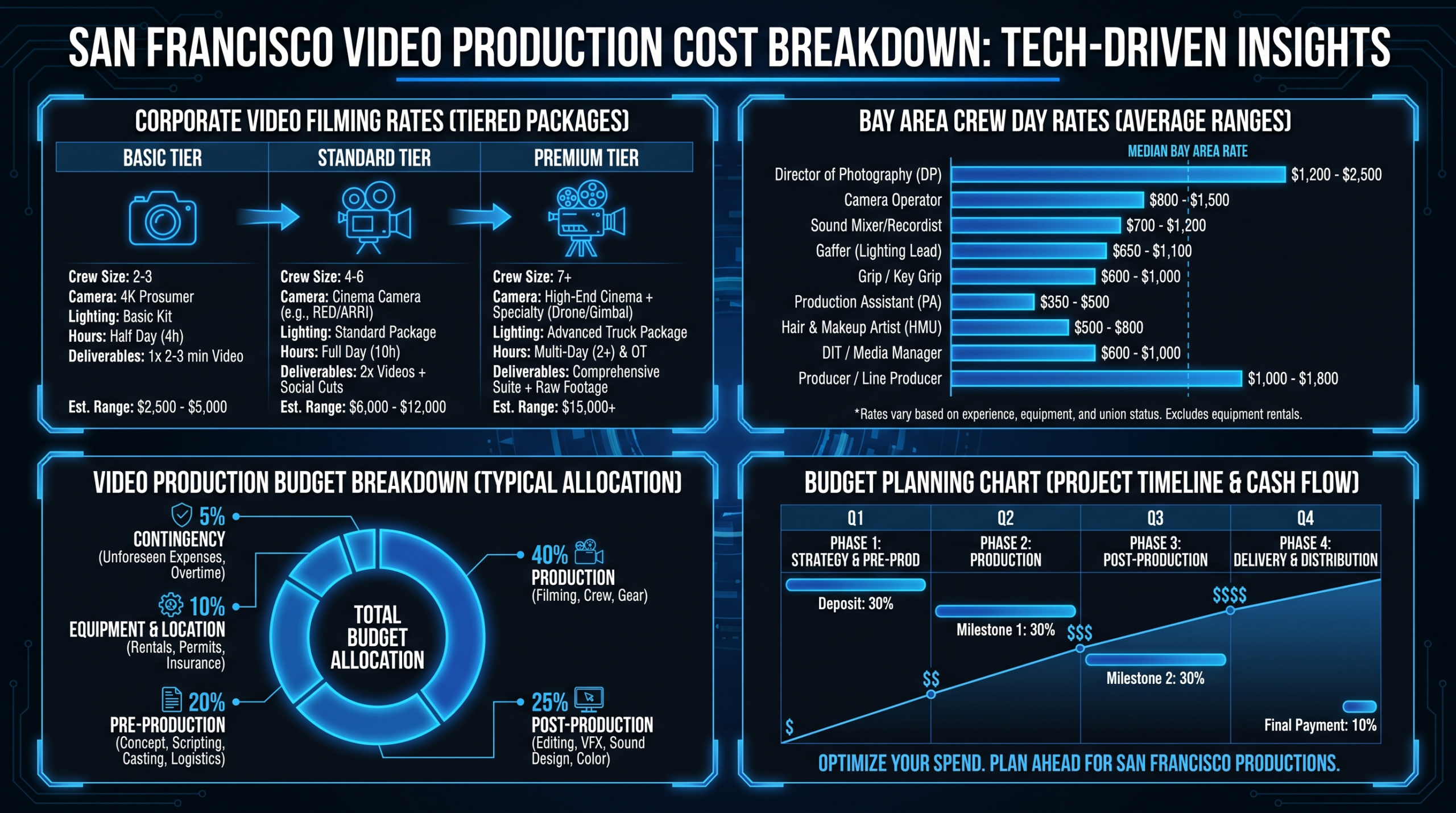
Freelance crew day rates in the Bay Area commonly run 20–45% above the national average for equivalent roles. A director of photography who might charge $800–$1,200/day in a mid-tier market may command $1,200–$2,500+/day in San Francisco, depending on their reel, gear package, and demand. Gaffer and grip day rates typically land in the $600–$1,500 range; sound mixers $650–$1,300/day. Production assistants — the bottom of the crew pyramid — generally start around $200–$400/day here versus $150–$250 elsewhere.
Union productions (SAG-AFTRA for talent, IATSE for crew) carry additional scale wages, benefits contributions, and compliance requirements. Many Bay Area tech companies default to non-union crews to keep costs manageable, though this affects the talent pool for on-camera roles.
Studio and Location Fees
Studio rental in San Francisco and the broader Bay Area spans a wide range. Small "boutique" studio spaces with basic lighting infrastructure typically start around $500–$900/day. Mid-range professional stages with grip packages, cyc walls, and production support run $1,500–$4,000/day. Top-tier stages with full grip/electric and dedicated crew support can reach $5,000+/day or higher. These numbers move depending on the day of week, minimum booking requirements, and whether the studio packages in equipment rental.
Shooting on location in SF — a startup office, a rooftop, a street exterior — avoids studio rental but introduces permit costs, logistics overhead, and weather risk that productions elsewhere don't routinely face.
Permits and Logistics
The San Francisco Film Commission oversees permits for shoots on public property, city-owned locations, and many commercial exteriors. Permit fees vary by scope, but the process adds a logistical layer — timeline, paperwork, and sometimes a film commissioner on-set — that adds cost to any shoot involving public-facing locations. Private locations (client offices, rented venues) bypass city permitting but carry their own rental and logistics costs.
Parking for production vehicles in dense SF neighborhoods is another consistent overhead that productions in suburban or campus-style markets rarely face at the same scale.
Video Production Costs by Type: SF Rate Table
The table below reflects realistic all-in budget ranges for Bay Area video projects — covering pre-production, local shooting with SF-tier crew, and post-production. Ranges are wide because scope, production value, and revision requirements vary significantly. Treat these as planning benchmarks, not quotes.
San Francisco Video Production Cost by Video Type (2026)
| Video Type | Typical Duration | SF Budget Range | Primary Cost Driver |
|---|---|---|---|
| Corporate talking-head / interview | 1–3 min | $5,000–$25,000 | Crew day rate, studio or location |
| Brand film / company story | 2–5 min | $25,000–$100,000+ | Multi-day shoot, director, motion graphics |
| SaaS product demo (live-action) | 2–4 min | $8,000–$35,000 | Scripting, on-camera talent, post complexity |
| SaaS product demo (screen-capture + VO) | 2–5 min | $2,000–$8,000 | VO talent, motion design, editing |
| Startup explainer (animated) | 60–90 sec | $8,000–$40,000 | Animation studio or team, script, VO |
| Investor / pitch video | 2–5 min | $15,000–$60,000+ | High-production shoot, story development |
| Customer story / testimonial | 2–4 min | $5,000–$20,000 | On-site shoot at client location, interview + B-roll |
| Event coverage (single day) | Varies | $3,000–$12,000 | Multi-camera crew, same-day turnaround premium |
| Animation / motion graphics (per min) | Per minute | $5,000–$20,000/min | Animation complexity, voice-over, sound design |
| Post-production retainer (remote) | Monthly | $3,000–$16,000/mo | Plan tier, volume, motion graphics needs |
For a broader look at how these numbers compare to other markets and pricing models, see our guide to video production agency pricing models.
Corporate Video Production in the Bay Area
Corporate video is the most common video production category for Bay Area tech and enterprise companies, covering executive interviews, office culture content, product launch videos, and internal communications. It's also the category where SF's local cost pressures are most directly felt.
Talking-Head and Interview Videos
A single-camera, single-day executive interview shot in SF — a common format for thought leadership content, earnings updates, or recruitment video — typically involves a cinematographer, a gaffer, a sound mixer, and sometimes a hair/makeup artist. With crew, equipment rental, and a studio or prepared office location, the production day alone commonly runs $3,000–$8,000 before post-production begins.
Add scripting support, teleprompter, on-camera coaching, a half-day of editing, and basic motion graphics for a polished deliverable, and the all-in range typically lands $5,000–$15,000 for a 2–3 minute final video. Multi-subject shoots (3–5 interviews in a single day) spread the production overhead and often bring per-video costs down by 30–40% compared to individual shoot days.
Brand Films and Company Stories
Brand films require a fundamentally different scale of commitment. A well-produced 3–5 minute company story for a Series B or later startup — with a real director, multiple shooting locations, scripted narratives, and heavy post-production — generally starts around $25,000 and scales to $100,000+ for cinematic execution. SF-based directors with strong brand and tech credentials command $2,000–$6,000+/day. Multi-location shoots in San Francisco itself add location management complexity and, for any exterior scenes, permit layers.
Many Bay Area companies produce brand films on a 12–18 month cycle — high investment, high strategic value, meant to anchor pitch decks, career pages, and investor introductions for an extended period. The cost is real, but the per-use economics often justify it at scale.
Interview Multi-Camera Productions
Conference keynote captures, panel discussions, and investor day shoots typically involve 2–4 cameras, dedicated audio, and a director of photography with multi-cam experience. Single-day multi-camera productions in SF generally range $6,000–$20,000 for the production day before post. Adding a same-day edit package for social clips typically adds $1,000–$3,000. For an in-depth look at SaaS video production strategy that ties these formats together, see our dedicated guide.
SaaS and Product Demo Video Costs
Product demo videos are among the highest-ROI video investments for Bay Area SaaS companies — and one of the most cost-varied categories. The budget gap between a basic screen-capture explainer and a live-action product film can be 10x or more, driven by entirely different production requirements.
Screen-Capture and Voiceover Demos
Screen-capture demos with professional voiceover and motion design elements are the most budget-efficient option. A well-produced 2–4 minute screen-recorded demo with professional VO talent, clean motion graphics, and sound design typically runs $2,000–$8,000. This format doesn't require a shooting day at all — the "production" is digital — so SF's local crew costs are irrelevant. The cost is almost entirely in scripting, VO casting, motion design, and editing.
This is the format where remote post-production teams deliver the strongest value proposition: the work is fully digital, time-zone-agnostic, and doesn't require anyone on-site in SF.
Live-Action Product Demos
Live-action demos — showing a real person using the product, often in a styled workspace or designed set — require a shooting day and carry full SF production costs. A single shooting day with 2–3 talent (including on-camera software users, a presenter, or customer stand-ins), small crew, and a prepared studio or location typically runs $8,000–$20,000 for the production day. Post-production for a polished 2–3 minute demo adds $3,000–$10,000 on top, depending on motion graphics complexity and revision rounds. All-in range: $8,000–$35,000.
For companies planning quarterly product demos across multiple features, the math often favors a recurring retainer arrangement over individual project quotes. Our product demo video production guide covers format strategy in detail.
Startup and Investor Video Budgets
The Bay Area startup ecosystem creates consistent demand for two specific video types that don't exist at the same scale in other markets: investor pitch videos and customer story videos for enterprise sales cycles.
Investor and Pitch Videos
Investor videos sit at the premium end of the corporate video spectrum. These are designed to tell a company's founding story, market opportunity, and product vision in a compelling 3–5 minute narrative — typically used for fundraising outreach, demo days, and LP communications. The production bar is high because the audience (VCs, angels, LPs) sees hundreds of these and calibrates quality signals quickly.
A well-executed SF-produced investor video generally involves a director with narrative experience, 1–2 days of shooting (founder interviews, product shots, office environment, B-roll of the problem space), and 2–4 weeks of post-production including color grading, original or licensed music, motion graphics, and title design. Budget range: $15,000–$60,000+. For seed-stage companies watching cash carefully, $15,000–$25,000 gets a clean, professional result; growth-stage companies preparing for Series B or C rounds often invest $35,000–$60,000+ for a cinematic treatment.
Customer Stories and Case Studies
Customer story videos are the sales-enablement workhorse for Bay Area enterprise SaaS. A 2–4 minute case study video featuring a real customer, shot on-location at their offices or remotely, is consistently one of the most-cited assets in late-stage sales cycles.
Production costs vary significantly based on whether the customer is local or requires travel. Local Bay Area shoots typically run $5,000–$15,000 all-in for a one-day interview plus B-roll and post. Out-of-market shoots add $1,500–$5,000 in travel and logistics costs. Companies running an active customer story program (4–8 videos/year) typically negotiate package pricing that brings per-video costs 20–35% below single-project rates.
Animation and Motion Graphics Pricing
Animated explainers and motion graphics are often treated as an alternative to live-action for Bay Area companies — and in many cases they are, particularly for abstracting complex SaaS workflows or building brand consistency across a content library.
Bay Area animation studios and motion designers operate in one of the most competitive talent markets in the world. Expect 2D character animation from a local studio to run $8,000–$25,000 for a 60–90 second deliverable. Complex 3D animation or data visualization work scales considerably higher. Motion graphics packages for ongoing social and presentation use typically run $3,000–$10,000/month from a local studio.
The important cost lever here: animation is entirely remote-deliverable. A 90-second SaaS explainer produced by a high-quality remote animation team often runs $5,000–$15,000 for equivalent creative quality — delivering 30–50% cost savings versus a Bay Area studio without requiring a single on-site day. The risk is quality management, which is why choosing teams with strong editorial and revision processes matters significantly. For a detailed breakdown of animation costs, see our explainer video cost breakdown.
Event and Conference Video Filming
San Francisco is a major tech conference city, hosting a steady calendar of industry events, product launches, executive summits, and company offsites year-round. Event video captures two distinct needs: documentation (a record of what happened) and marketing (highlight reels, speaker clips, social content).
Single-day event coverage in SF — 2-camera documentary-style coverage with a basic edit package — typically runs $3,000–$7,000. Adding a same-day highlight reel (a 90-second social cut delivered by end of event day) adds $1,500–$3,000 for the editorial team on standby. Multi-day conferences with multiple stages, breakout coverage, and a full highlight series can run $15,000–$50,000+ for the complete package.
Key event video cost variables in SF specifically: venue accessibility (some conference venues have complex equipment load-in logistics), union crew requirements at specific venues (the Moscone Center and similar large venues often have IATSE jurisdiction requirements), and the premium for guaranteed same-day or next-day delivery turnarounds.
Post-Production Retainers: The Remote Alternative
The most consistent insight from Bay Area marketing and content teams that produce video at scale: the highest-leverage budget decision isn't which local vendor to hire — it's separating local shooting from remote post-production.
Here's the logic. SF's cost premium is concentrated in crew day rates, studio fees, location logistics, and permitting. These are physical, location-dependent costs you cannot avoid when you need a camera on-site in San Francisco. But editing, color grading, motion graphics, sound design, caption production, and format adaptation are 100% digital — they can be produced anywhere, by anyone, with no quality degradation from being remote.
Companies that have internalized this split their video budget into two buckets:
- Local production budget: Pay SF rates for what requires physical presence — crew, camera, studio, on-site logistics. Minimize shooting days by batching content (film 6 weeks of social content in 2 shooting days rather than 3 days per month). Shoot clean footage with clear briefs to minimize post revisions.
- Remote post-production budget: Send footage to a specialized post team for editing, motion graphics, color, and delivery at predictable monthly rates. This is where companies typically save 35–55% versus paying a full-service SF agency to handle both production and post.
What Drives SF Video Costs vs. What You Can Control
| Cost Category | SF Premium? | Can You Separate It? | Typical Monthly Impact |
|---|---|---|---|
| Crew day rates (DP, gaffer, sound) | Yes — high | No — must shoot locally | $3,000–$12,000/shooting day |
| Studio / location rental | Yes — high | Partially — batch shoots | $500–$5,000/day |
| Permitting / logistics | Yes — SF-specific | Partially — minimize public shoots | $200–$2,000/project |
| Editing and color grading | No | Yes — fully remote | $1,500–$6,000/project or retainer |
| Motion graphics / animation | No | Yes — fully remote | $1,000–$8,000/project |
| Sound design / music | No | Yes — fully remote | $300–$1,500/project |
| Format adaptation (social cuts) | No | Yes — fully remote | $200–$800/video |
Video Editing Company works with Bay Area SaaS and tech companies specifically to cover the remote post-production side of this equation. Our dedicated editing teams — assigned specifically to your account — handle editing, motion graphics, social cut packages, and ongoing post-production volume on flat monthly retainers (Growth $5K/mo, Core $9.5K/mo, Scale $16K/mo). Your SF footage comes in; polished deliverables go out. See our pricing page for plan details and what's included at each tier.
The result for most Bay Area clients: they keep shooting locally when they need to, and they stop paying SF agency overhead on every single deliverable. For companies producing 6–20+ pieces of content per month, the economics are compelling. For a deeper look at cost-per-minute economics across post-production models, see our video editing cost per minute breakdown.
How to Budget Smart in a High-Cost Market
Building a realistic video budget for a Bay Area company means working within the constraints of an expensive production market while maximizing the efficiency of every dollar. Here's what experienced content teams have learned:
Batch Your Production Days
The fixed costs of a shooting day (crew call, studio booking, setup and teardown) don't scale linearly with the number of videos you produce. A day that shoots one 3-minute video has roughly the same fixed overhead as a day that shoots enough raw footage for five pieces of content. Build shooting schedules that batch interviews, B-roll, and product shots — then send the footage to post for the month's content calendar rather than shooting piecemeal.
Define the Post-Production Budget Before Shooting
Many Bay Area production projects run over budget not during the shoot, but in post — when scope creep, revision rounds, and unplanned deliverables accumulate. Define the number of final deliverables, revision rounds, and format variants before shooting starts. Then pre-negotiate a fixed post-production fee against that scope.
Separate Production Tier from Post Tier
A $40,000 brand film that goes through a local full-service agency will include an embedded post-production margin of 30–50% over what remote post teams charge for equivalent quality. Negotiate to own the raw footage and handle post separately. Most agencies will resist this — which tells you something about where their margin lives.
Use Remote Post for Recurring Content
One-off brand films and investor videos often make sense to produce end-to-end with a local full-service agency. But recurring content programs — product explainers, social clips, customer stories, quarterly updates — are a natural fit for a remote post retainer. Volume brings per-deliverable costs down; dedicated teams bring quality consistency up. Wistia's video production learning center has good frameworks for thinking about when in-house, agency, and hybrid models make sense for growing teams.
Audit Your Current Spend by Category
Before approaching any vendor or making any budget allocation, map your current video spend against the categories in the table above. Most Bay Area marketing teams that do this exercise discover they're overpaying for post-production specifically — because they've been defaulting to the same full-service agency that produced their brand film for every editing task that comes up afterward.
For a thorough breakdown of the tradeoffs in different video production agency pricing models, including when per-project, retainer, and dedicated team arrangements make the most sense, see our dedicated guide.
Frequently Asked Questions
What does a professional video shoot cost per day in San Francisco?
A standard professional shooting day in San Francisco — cinematographer, gaffer, sound mixer, and equipment — commonly runs $4,000–$10,000 before studio or location costs. Add studio rental ($500–$4,000/day), and you're typically looking at $5,000–$15,000 for a single production day before any post-production begins. Multi-person crew, production designers, or specialized equipment scale this further. These are Bay Area market rates; comparable crew in non-coastal markets typically runs 20–40% lower.
How much does a SaaS explainer video cost in the Bay Area?
For a 60–90 second animated SaaS explainer from a Bay Area studio, expect to pay $8,000–$40,000 depending on animation style, studio overhead, and revision rounds. Screen-capture explainers with professional voiceover and motion graphics are significantly more affordable — typically $2,000–$8,000 — because they don't require crew or studio time. Remote post-production teams that specialize in SaaS content can often deliver animated explainers in the $5,000–$15,000 range for equivalent creative quality, with the savings coming from lower studio overhead rather than lower quality.
Do I need a permit to film video in San Francisco?
Yes, for most commercial productions on public property or city-owned locations. The San Francisco Film Commission (sffilm.org) manages the permitting process for commercial shoots, which includes street exteriors, parks, plazas, and city-owned buildings. Permit requirements and fees vary by scope — a small corporate shoot on a public sidewalk has different requirements than a large commercial production on the Embarcadero. Shooting entirely in private locations (rented studios, client offices, private businesses) generally does not require a city film permit. Always confirm with the SF Film Commission for your specific situation.
Is it worth hiring a local San Francisco video production agency vs. a remote team?
It depends on what you're producing. If you need physical production — a crew on-site, a studio booked, on-camera talent directed in real time — a local agency or local crew is unavoidable. But for post-production work (editing, motion graphics, color grading, social clips), there is no meaningful quality difference between a strong remote team and a local SF agency. The cost difference, however, can be substantial. Many Bay Area companies now use a hybrid model: local crew for shooting, remote post-production team for everything after the footage is captured. This separation is where most of the budget optimization happens.
What's a realistic monthly video budget for a Bay Area SaaS startup?
It varies significantly by stage and content volume. Seed-stage teams running lean often budget $5,000–$15,000/month and focus spend on one high-priority format (product demos or customer stories, not both). Series A–B companies building out content programs more commonly budget $15,000–$40,000/month, covering 1–2 shooting days per month plus a post-production retainer for ongoing editing and social content. Series C+ companies with dedicated content teams often run $40,000–$100,000+/month when you include internal headcount, production days, and full-service post. The variable that matters most at each stage isn't the total budget — it's the ratio of production costs to post-production output. Remote post retainers help tilt that ratio in your favor.
Producing Video in the Bay Area? Let's Talk Budget.
Video Editing Company works with SF and Bay Area SaaS teams on the post-production side — dedicated editing teams, motion graphics, and social content at flat monthly rates. If you're shooting locally and overpaying for editing, we should talk.
Book a Free Strategy Call See Pricing Plans