8 HR Tech Video Examples That Convert
TL;DR
The best HR tech video examples share three qualities: they lead with a specific buyer pain, they show workflow outcomes rather than feature lists, and they keep enterprise complexity readable within a tight runtime. The 8 examples below span ATS platforms, payroll software, performance management, and video interviewing tools — and each one demonstrates a technique your team can replicate. Keep reading for the breakdown, a full comparison table, and a framework for applying these patterns to your own HR tech video content.
Table of Contents
HR tech is one of the harder categories to market with video. Your buyers are often dual-stakeholder — you need to win over HR directors who care about workflows, CFOs who care about cost savings, and IT teams who care about security. The software itself is complex. The value is felt in process efficiency, which is notoriously hard to show on screen.
Yet some HR tech companies consistently produce video content that earns pipeline, shortens sales cycles, and builds the kind of brand recognition that makes paid acquisition more efficient. The 8 examples below are drawn from companies that have visibly invested in video marketing and produced content worth studying — from enterprise HCM platforms to SMB payroll tools to AI-powered recruiting software.
Why HR Tech Video Is Different From Generic SaaS Video
HR tech video needs to work harder than most SaaS video because the purchase decision involves more stakeholders and more emotional friction than typical software buys.
The unique challenges in HR tech video marketing:
- Multiple buyer personas. The HR director, the CHRO, the CFO, and the IT security lead all need to be convinced — often with different messages. A video that speaks only to one persona loses the others.
- Sensitive subject matter. Videos about performance management, compensation, or workforce reduction require careful tone. A wrong note can read as tone-deaf or carry legal risk.
- Complex workflows. Features like applicant tracking, compensation banding, or compliance reporting are genuinely hard to compress into 90 seconds without losing nuance.
- Emotional stakes for end users. HR software affects how people are hired, evaluated, and paid. Employee-facing video in particular needs warmth and credibility alongside functional clarity.
The companies that win with HR tech video don't simplify their product — they simplify the story around their product. The software complexity stays in the platform; the video tells one outcome at a time.
The best HR tech video examples solve these challenges through specific, learnable techniques — and that's exactly what we'll analyze for each of the 8 examples below. For a broader look at how SaaS companies approach video production, see our guide on SaaS video production strategy.
8 HR Tech Video Examples That Convert
1. Workday — Enterprise Complexity Made Digestible
Workday serves large enterprises managing tens of thousands of employees, and their video content reflects exactly that scale. Their product demo videos consistently avoid the common mistake of demoing features sequentially — instead, they anchor every screen to an outcome a specific role cares about.
A Workday product walkthrough typically opens with a named persona scenario ("a finance manager needs to close the period with full headcount visibility across 12 countries") and then shows the software solving that exact problem. The audience never has to guess why they're looking at a given screen.
What makes it work:
- Persona-first framing before any UI screen is shown
- Voiceover that narrates outcomes, not click sequences
- Consistent visual language using Workday's brand palette, making each video feel part of a library
- Enterprise-appropriate polish: motion graphics, data overlays, professional narration throughout
Technique to steal: Before you record a single screen, write one sentence: "After watching this, the viewer will know they can [achieve specific outcome]." Use that sentence as the video's opening line, not your logo.
Learn more at workday.com.
2. Rippling — Humor That Makes HR Software Memorable
Rippling is one of the most distinctive video marketing presences in HR tech, earned by committing fully to a tone that most enterprise software companies actively avoid: wit. Their ad campaigns openly mock the pain of fragmented HR stacks, using humor to make an abstract product problem feel viscerally familiar to anyone who's managed it.
One approach Rippling uses effectively: the deadpan "before and after." The "before" scenario is played with resigned frustration — the kind every HR manager in the room recognizes immediately. The "after" is Rippling, shown as the obvious solution. The contrast sells without a single specification or pricing claim in sight.
What makes it work:
- The humor punches at the problem (fragmented HR tools), not at named competitors
- Brand voice stays consistent across every format — short ads, long demos, event content
- Emotional resonance: HR professionals feel seen and understood, not lectured to
- High production value that signals confidence and investment, not a shoestring budget
Technique to steal: Ask your best customer to describe the worst day they had with their previous HR system. That story — told verbatim — is often better video content than any marketing copy your team will write from scratch.
Learn more at rippling.com.
3. BambooHR — Relatable, Human-Scale Storytelling
BambooHR serves SMBs — companies with 10 to a few hundred employees — and their video content is built around a truth that large enterprise vendors often miss: small business HR professionals wear five hats simultaneously, have no dedicated video budget to reference, and are exhausted. BambooHR videos meet them exactly where they are.
Their explainer videos are animated, warm, and use workplace scenarios that small business owners and HR generalists recognize on contact: the "new hire paperwork chaos" opener, the "performance review spreadsheet nightmare" intro. The art style is intentionally approachable — not the cold minimalism of enterprise software, but something closer to a friendly workplace illustration.
What makes it work:
- Animation allows controlled visual storytelling without requiring live footage or actors
- The scenarios are instantly recognizable to the SMB buyer persona
- Short runtime (typically under 90 seconds) respects a busy viewer's attention window
- Tone is warm without being condescending — a difficult balance to strike and maintain consistently
Technique to steal: Your sales team's three most common discovery call questions are your three best video topics. If prospects always ask "how does onboarding work?" that answer belongs in a video, not buried in an FAQ page.
Learn more at bamboohr.com.
4. Greenhouse — Workflow-First Product Demos
Greenhouse produces video content that reflects the sophistication of their ATS product — deep workflow coverage, multi-stakeholder use cases, and integration-heavy demonstrations. Their product videos are notably structured: they announce the specific workflow they're about to show before showing it, walk through it methodically, then summarize what changed and why it matters.
This "tell-show-tell" structure is especially well-suited for recruiting software, where the workflow involves multiple parties — recruiter, hiring manager, interviewer, candidate — and the value lies in the coordination between them rather than in any single feature.
What makes it work:
- Structured narration reduces cognitive load during complex multi-step feature demos
- They show inter-role workflows, not just the admin's view of the system
- Interview and scorecard features are shown within the context of a real hiring sequence
- Consistent screen-recording quality with cursor coaching that guides the viewer's eye without hand-holding
Technique to steal: For any workflow-heavy demo, draw the hiring or process sequence on paper first: who does what, in what order, and where the handoffs happen. Use that diagram as your video script before you ever open a screen recorder.
Learn more at greenhouse.com.
5. Gusto — Simplicity as a Competitive Differentiator
Gusto competes partly on brand and experience, not just features, and their video content reflects that positioning directly. Their explainer and onboarding videos are among the cleanest in the HR tech space: minimal UI clutter in screen recordings, plain language narration, and a warm palette that feels approachable rather than corporate.
What Gusto does particularly well is showing the end-to-end employee experience alongside the employer and admin view. A payroll run video, for example, shows both what the admin does and what the employee receives in their inbox — making the value immediate on both sides of the relationship. This dual-perspective technique is underused in HR tech video and highly effective for categories where both the administrator and the employee are active users of the same platform.
What makes it work:
- Dual-perspective storytelling shows admin actions and employee outcomes in the same piece
- Screen recordings are zoomed and highlighted so small UI elements read clearly on any device
- Plain language that avoids HR or payroll jargon even when the underlying feature is complex
- Brand consistency: their visual identity is distinct enough that you recognize a Gusto video before you see the logo
Technique to steal: Film the employee outcome, not just the admin action. If your software sends a notification, an automated report, or a self-service link to an employee — show what that looks like on their end. The employee experience is often more emotionally compelling than the admin workflow that triggered it.
Learn more at gusto.com.
6. Lattice — Thought Leadership Through Video
Lattice has built a strong brand in the performance management and OKR space, and their video content extends well beyond product demos into genuine thought leadership. Their webinar series, panel discussions, and "people strategy" content videos position Lattice not just as a software vendor but as a reliable source of insight for HR and People leaders navigating a changing workforce landscape.
This is a deliberate and effective content strategy: by producing video that HR leaders would watch even if they weren't actively shopping for software, Lattice earns attention and brand trust at the top of the funnel. The product demos then work better downstream because the brand has already built credibility through non-promotional content that demonstrated genuine expertise.
What makes it work:
- A mix of educational and product video keeps the channel valuable to the audience year-round, not only during an active evaluation
- Guest experts — CHROs, analysts, practitioners — add credibility that self-produced vendor content cannot claim alone
- Panel format is efficient: one recording generates clips for LinkedIn, YouTube, and blog post embeds
- Lattice's brand language is consistent across product and thought leadership content, creating a unified voice
Technique to steal: Identify the three non-product questions your best customers ask in the first 90 days of using your software. Each one is a thought leadership video. Answer it well and you've created something worth sharing — generating brand awareness your ad budget alone cannot buy.
Learn more at lattice.com.
7. Culture Amp — Employee Story as Social Proof
Culture Amp is an employee engagement and analytics platform, and their most compelling video content turns that positioning into its own social proof. Customer story videos feature HR leaders talking about directional improvements in engagement scores, retention trends, and manager effectiveness — all outcomes that other HR leaders care about deeply and that are hard to convey in a data sheet or product screenshot.
Culture Amp's customer videos are notably candid. The customers they feature aren't delivering polished, pre-approved testimonials — they talk about what was hard, what surprised them, and what they'd do differently. This honesty is more persuasive than an optimized soundbite, because it signals that the company is comfortable letting real customers speak freely rather than controlling the narrative tightly.
What makes it work:
- Customer vulnerability builds more trust than customer advocacy alone
- Measurable outcomes are referenced directionally without precise fabricated numbers — the companies share trend data, not invented percentages
- The interview format feels documentary rather than corporate, matching Culture Amp's positioning as a people-focused platform
- Videos are long enough to tell a complete story (commonly 3–5 minutes) rather than stripped down to disconnected soundbites
Technique to steal: Ask your customer "what did you almost not do?" before you start filming. The hesitation story — and how they overcame it — is often the most compelling part of a case study video. It addresses the prospect's unspoken objection more effectively than any sales deck slide.
Learn more at cultureamp.com.
8. HireVue — Using Video to Sell a Video Product
HireVue is a video interviewing and hiring intelligence platform — which means they face a specific challenge: their video marketing needs to sell a product whose core value is also delivered through video. They handle this well, and there are transferable lessons in their approach for any HR tech company dealing with dual-audience buying committees.
HireVue's content prominently addresses candidate experience alongside recruiter efficiency — not as an afterthought. This is smart dual-stakeholder messaging: HR buyers care about time-to-fill, but they're also evaluated by candidates and leadership on hiring fairness and experience quality. HireVue videos show both perspectives, making the content work for the full buying committee rather than just the HR director who initiated the evaluation.
What makes it work:
- Dual-audience framing — recruiter efficiency and candidate experience shown in the same piece
- Showing the candidate-facing interface removes abstraction for buyers who've never experienced a structured video interview as a candidate
- Explainer content addresses the most common objection to AI-assisted hiring (fairness, potential bias) directly and early, rather than burying it in a FAQ section
- The "how it works" format stays simple enough for a hiring manager who uses the tool once a month, not only for HR tech power users
Technique to steal: If your HR tech product has a candidate- or employee-facing interface, film that experience as a core part of your sales content. Buyers often haven't seen what their people will see — and showing them builds confidence and differentiation at the same time.
Learn more at hirevue.com.
What These 8 Examples Have in Common
The companies above operate in different segments of HR tech with different buyer profiles, different content budgets, and different strategic priorities. But when you look across all eight, the same high-converting video elements appear consistently.
HR Tech Video Examples: Comparison by Type, Goal, and Technique
| Company | Primary Video Type | Primary Goal | Key Conversion Technique |
|---|---|---|---|
| Workday | Product demo | Reduce sales cycle length | Persona-first scenario framing before any UI |
| Rippling | Brand / ad | Top-of-funnel awareness | Pain-point humor, emotional recognition |
| BambooHR | Animated explainer | Educate SMB buyers | Recognizable SMB scenario, warm approachable tone |
| Greenhouse | Workflow demo | Technical evaluation support | Tell-show-tell structure, multi-role workflows |
| Gusto | Explainer + product | Acquisition and activation | Dual-perspective: admin action + employee outcome |
| Lattice | Thought leadership | Brand awareness + sustained trust | Non-promotional value, external guest credibility |
| Culture Amp | Customer story | Late-stage conversion | Candid testimonials with directional outcomes |
| HireVue | Explainer + demo | Buying committee alignment | Dual-audience framing, objection-first structure |
Three patterns appear across every example regardless of company size, budget, or vertical focus:
- Pain before product. Every video leads with a buyer problem the viewer recognizes, not a feature or a logo. Even Workday's highly polished enterprise demos open with a persona scenario before showing a single UI screen.
- Outcome framing over feature listing. The viewer is told what they'll be able to do — or what will change about their work — rather than which module is available or how many clicks the process takes.
- Audience respect. None of these videos talk down to their viewers or explain concepts a competent professional would already know. They start from expertise and build from there.
These are learnable patterns. If your HR tech videos currently open with your logo, a product screenshot, or a voiceover that begins "At [Company Name], we believe…" — you have clear room to improve, and the techniques above are your starting point.
HR Tech Video Formats by Funnel Stage
Different video formats serve different stages of the HR tech buyer journey. The examples above cover the full funnel — and most HR tech companies over-invest in mid-funnel demo content while under-investing at awareness and late-decision stages. Here's how to think about format selection based on where your prospect is:
HR Tech Video Format Selection by Funnel Stage
| Funnel Stage | Buyer Goal | Best Video Format | Target Runtime | Example in This Post |
|---|---|---|---|---|
| Awareness (TOFU) | Recognize the problem; learn the category | Brand video, humor/empathy ad, animated explainer | 30–90 sec | Rippling, BambooHR |
| Consideration (MOFU) | Understand solutions; shortlist vendors | Category explainer, thought leadership, comparison video | 2–5 min | Lattice, Gusto |
| Evaluation (MOFU/BOFU) | Assess fit; answer technical questions | Product demo, workflow walkthrough, integration video | 3–8 min | Workday, Greenhouse, HireVue |
| Decision (BOFU) | Validate choice; build internal consensus | Customer story, case study video, outcome testimonial | 2–5 min | Culture Amp |
| Expansion | Adopt new features; upgrade plan | Feature release video, training walkthrough | 1–3 min | All (ongoing) |
The companies in this post that build the most durable brand equity — Rippling, Lattice, Culture Amp — spread their video investment across the funnel rather than concentrating it at the demo stage. The demo content converts better precisely because the awareness and trust content has already done its job.
For a deeper look at how to structure production across your funnel, see our post on product demo video production for SaaS.
How to Brief a Video Team for HR Tech Content
The quality gap between good and mediocre HR tech video often lives in the brief, not the production itself. A video editor or production team that doesn't understand HR software buyer psychology will produce content that looks professional but misses the conversion mechanism entirely.
When briefing a video editor or production team on HR tech content, include these five elements:
- The specific buyer persona watching this video — not "HR professionals" but "HR directors at Series B SaaS companies with 150–500 employees evaluating their first dedicated ATS platform."
- The single outcome the viewer should understand after watching — if you can't state this in one sentence, the brief isn't ready to brief from.
- The objection this video should address — every effective HR tech video has an implicit objection it's answering. Make it explicit so the editor knows what to emphasize and what to cut.
- Competitors the viewer is likely also evaluating — not to name-drop in the video, but to understand what comparisons the viewer will make unconsciously while watching.
- Where this video lives in the funnel — a top-of-funnel brand video and a bottom-of-funnel demo require completely different pacing, tone, information density, and call-to-action structure.
At VEC, our clients' HR tech video briefs typically sharpen significantly over the first 60–90 days as the dedicated team learns the product and buyer psychology deeply enough to contribute to brief development — not just execute against it. That compounding brand knowledge is part of how dedicated teams deliver better output over time. See how we work for more on that structure.
Common HR Tech Video Mistakes to Avoid
Beyond the examples of what works, there are consistent failure patterns in HR tech video worth naming directly:
Leading with the logo
Opening with a 3-second animated logo is table stakes at best and a missed opportunity at worst. Every second of video is conversion real estate. Open with the problem or the persona — the brand mark can close the piece.
Demoing the admin while ignoring the employee
Most HR tech decisions have downstream effects on employees who didn't choose the software and can't opt out of it. A video that shows only admin screens misses the opportunity to demonstrate end-user experience — which is often what HR directors are most nervous about justifying to their own workforce and leadership.
Making the video too long for its funnel stage
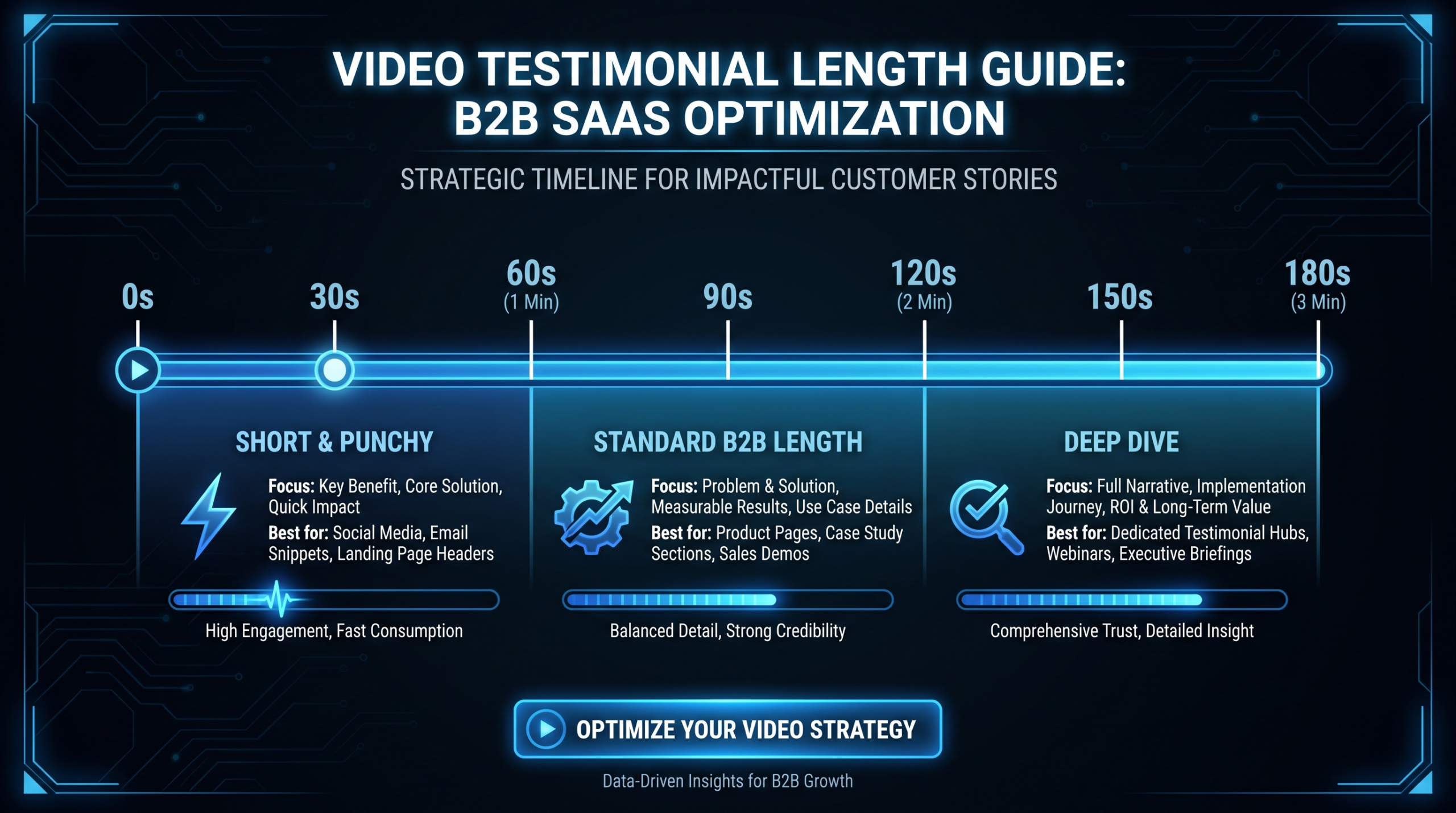
A 7-minute product demo embedded on your homepage loses most viewers before they reach your pricing section. Match video runtime to buyer intent: short and punchy at top-of-funnel, more detailed at evaluation and decision stages where the buyer is already committed to a thorough review. See our resources on what's included in video editing services for how to scope each format type.
Using unverifiable ROI numbers
HR tech buyers are sophisticated professionals. Claiming "reduces time-to-hire by 45%" without a named methodology or customer source signals that you're not being straight with them. Use directional outcomes and real customer language instead — they're more credible, more specific to your actual user base, and far more durable as market conditions change.
Using the same video for all buyer roles
The CHRO cares about strategic workforce alignment. The recruiter cares about how many clicks it takes to move a candidate to the next stage. The IT admin cares about SSO configuration and security documentation. One video cannot serve all three audiences effectively. A content library across roles and funnel stages outperforms a single "hero" video every time.
For a primer on how to build that library efficiently, our guide on how to outsource video editing walks through what a scalable production workflow looks like for a content-focused marketing team.
Frequently Asked Questions
What types of video work best for HR tech companies?
Product demos and workflow walkthroughs are the most common starting point for HR tech video, and they're effective for mid-to-late-funnel buyers actively evaluating fit. But companies that build the strongest brand awareness in HR tech combine demo content with thought leadership, animated explainers, and customer story videos distributed across the full funnel. A common pattern among well-resourced HR tech marketing teams: starting with a 90-second "what we do and who for" video before investing in deep workflow demos.
How long should an HR tech product demo video be?
For website landing pages and email campaigns, 2–4 minutes is where most HR tech companies see the best completion rates — long enough to demonstrate meaningful workflow depth, short enough that most viewers reach the end. Full-feature walkthroughs for technical evaluation can reasonably run 8–12 minutes when gated behind a sign-up or delivered in a sales context. Anything longer than 12 minutes typically works better structured as a webinar recording than as a standalone product demo.
How many HR tech videos should a marketing team produce per month?
A common pattern among Series B–C HR tech companies is 4–8 videos per month covering a mix of formats: product demos, social clips repurposed from longer content, and occasional customer story pieces. Teams operating at 8–12 videos per month typically use dedicated video editing partners to sustain that volume without burning internal headcount on post-production. The number matters less than covering all funnel stages — four excellent videos spanning awareness, consideration, evaluation, and decision will typically outperform twelve repetitive demo videos aimed at the same buyer moment.
Should HR tech companies produce videos in-house or outsource production?
In-house production is often cost-effective for screen recordings and light product walkthroughs where the main editing work is cutting, zooming, and adding narration. Higher-production content — animated explainers, brand videos, customer story pieces — typically justifies outsourcing because the production quality gap between in-house and specialist teams is large enough to affect how buyers perceive the brand's credibility. Many HR tech marketing teams handle strategy and direction in-house while outsourcing all editing and post-production to a dedicated partner. See our guide on outsourcing video editing for how to structure that relationship effectively.
What makes HR tech video content actually convert to pipeline?
The highest-converting HR tech videos share three qualities: they open with a buyer pain the viewer recognizes immediately, they show workflow outcomes rather than feature lists, and they make the complex readable within the viewer's available attention span for that stage of the funnel. A video that delivers on all three — even at modest production quality — will typically outperform a beautifully produced demo that opens with the logo and walks through the feature menu. Content strategy and buyer insight matter more than budget at every tier of the market.
Ready to Build Your HR Tech Video Library?
VEC's dedicated video editing teams specialize in B2B SaaS content — including HR tech, fintech, and vertical software. Our Growth plan starts at $5K/month with a guarantee: double your video output in 90 days or month four is free.
Book a Free Strategy Call See How It Works See Pricing