Revision Fees: When You Should Refuse to Pay
TL;DR
Most video contracts include 2–3 revision rounds. Beyond that, additional fees are typically legitimate — but only if the original brief was honored, the scope is clearly defined, and no revision clause is being weaponized against you. This guide breaks down what "revision" contractually means, what standard fee ranges look like across provider types, which red-flag clauses to reject before you sign, and exactly when you are within your rights to push back or refuse to pay entirely.
Table of Contents
- What "Revision" Actually Means in a Video Contract
- How Many Revision Rounds Are Standard?
- Revision Fee Ranges by Provider Type
- Scope Creep vs. Legitimate Revision
- Red-Flag Revision Clauses to Reject Before You Sign
- When to Push Back or Refuse to Pay
- How "Unlimited Revision" Plans Actually Work
- The Dedicated-Team Alternative to Per-Round Billing
- FAQ
You approved the first cut. The editor delivered a version that misses your brand color scheme, uses the wrong voiceover pacing, and somehow added a stock music track your team explicitly banned in the brief. You send a correction. The agency responds with a revision fee invoice.
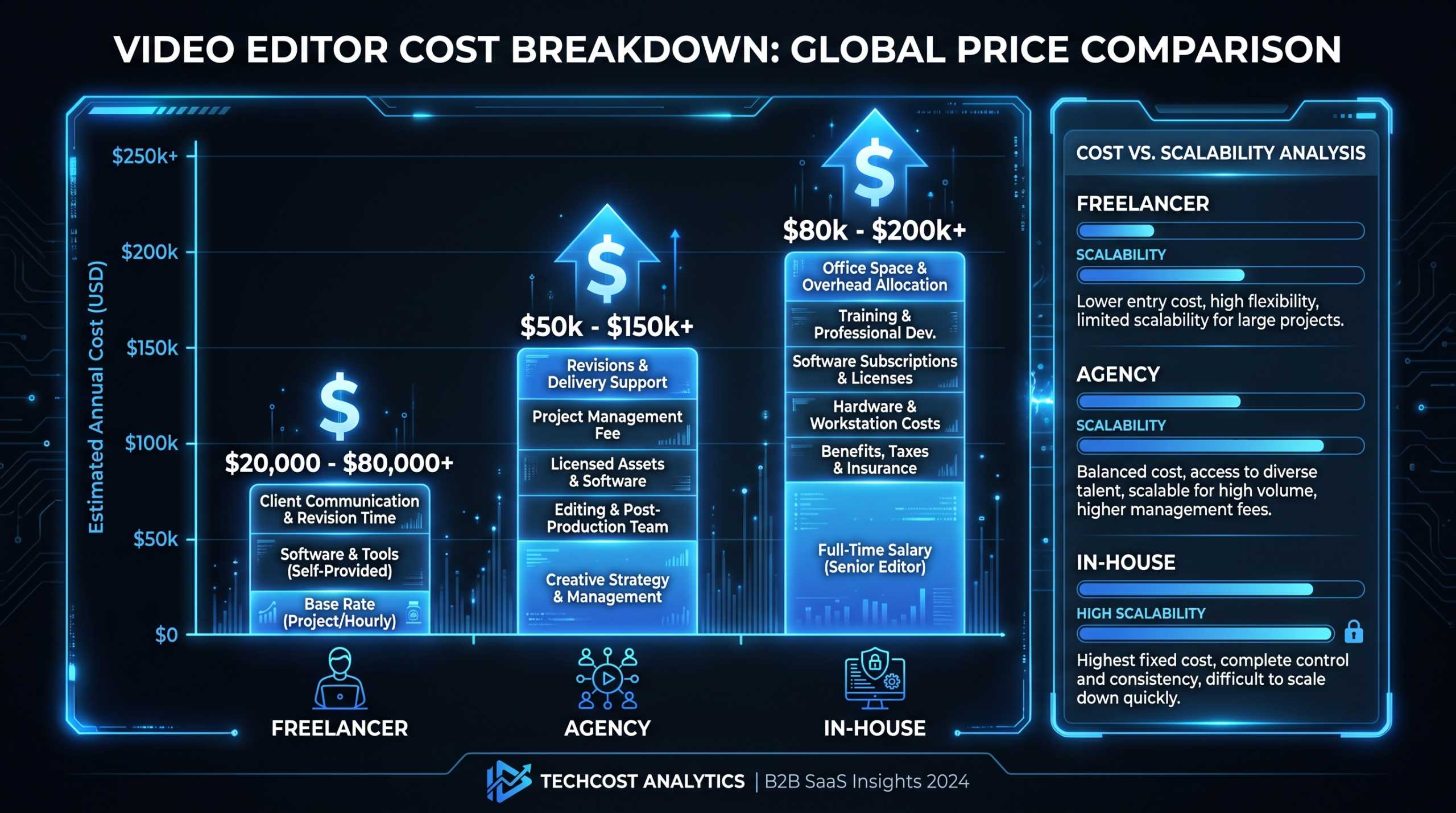
This situation plays out across video production engagements constantly. The moment a project reaches "round three," one of two things happens: the client pays silently and resents it, or a dispute erupts that poisons the entire relationship. Neither outcome is acceptable when you are investing $3,000–$15,000 per month in video production.
Understanding video revision fees is not just a negotiating skill — it is a financial protection mechanism. Knowing what a revision contractually is, what the market charges by provider type, and precisely when a fee is unjustified can save a content team thousands of dollars per year and prevent the most corrosive vendor conflicts: the ones where both sides feel wronged.
What "Revision" Actually Means in a Video Contract
The word "revision" is doing a lot of work in most video production contracts — and it is defined differently by almost every provider. Before you can push back on a fee, you need to understand the contractual framework you are operating inside.
In its strictest sense, a revision is a request to change something that was delivered as specified in the approved brief. You briefed a 90-second product demo with a voiceover, two motion graphics sequences, your brand color palette, and a specific background track. The editor delivered exactly that. You now want to change the opening line. That is a revision — a client-initiated change to an on-brief delivery.
What is not a revision by this definition: the editor delivered something that contradicts the approved brief. Wrong logo version. Different music than specified. Missing a product feature demonstration that was explicitly listed. These are corrections — and corrections should never generate an additional fee. The agency failed to deliver the agreed scope. Charging you to fix their production error is ethically indefensible and, in most jurisdictions, legally unsupported even when a broad revision clause exists.
The Three Categories of Change Requests
Most experienced production teams mentally categorize client change requests into three buckets, even when their contracts do not make the distinction explicit:
- Corrections: The edit does not match the approved brief. Wrong logo file, missing caption, incorrect subtitle timing, music that was not approved. No fee — this is a production error, not a client-requested change.
- Revisions: The brief was honored, but you want to adjust something within the agreed scope. Different music track, reordered scenes, tighter pacing on a specific section. This is what revision rounds and overage fees are legitimately designed to cover.
- Change orders: You want to add elements that were never in the original brief. A new section, additional animation sequences, resizing for a new platform, re-recording voiceover with different content. This is new scope — it should be discussed, estimated, and priced separately as a change order, not bundled into a "revision" line item.
The problem is that most video production contracts do not distinguish between these categories. They define "revisions" as any change request, giving agencies latitude to charge for corrections (their mistakes) at the same rate as legitimate revisions (your iterative changes). This contractual ambiguity is where the majority of revision fee disputes originate — and where the most money is lost by buyers who do not know to push back.
A revision clause that does not distinguish between client-requested changes and corrections for production errors is a liability, not a standard term. Push for explicit language before you sign anything.
How Many Revision Rounds Are Standard?
The industry convention — across freelancers, boutique agencies, and enterprise production houses — has converged on two to three included revision rounds for most video types. But "standard" shifts substantially by provider tier, project complexity, and whether the content is animated or live-action. For a broader overview of what is typically included in a video editing engagement, see our guide on what video editing services actually include.
Included Revision Rounds by Provider Type
| Provider Type | Typical Included Rounds | Notes |
|---|---|---|
| Freelancer (Fiverr / Upwork) | 1–2 rounds | Often vaguely defined; "gig" packages vary widely; revisions may be limited by duration of change |
| Boutique agency (per-project) | 2–3 rounds | Most common standard; should be stated explicitly in proposal or SOW |
| Full-service production house | 2–3 rounds | Major structural changes (script, talent) may be scoped and priced as change orders separately |
| Video editing subscription | "Unlimited" (throughput-limited) | Revisions queue sequentially; see section below on what this means operationally |
| Dedicated team / monthly retainer | Typically unlimited within scope | Iterative model; revisions are part of the ongoing workflow, not separately tracked |
For animated or motion-graphics-heavy content, many agencies reduce included rounds to two. Changes at later production stages require substantially more rebuild time — a script change after animation has been completed can mean reconstructing entire sequences from scratch. This is why front-loading feedback at the script stage, the storyboard stage, and the rough cut is the most cost-effective revision strategy, regardless of what your contract includes.
The Definition Problem: What Counts as One Round?
Beyond the number of included rounds, the definition of what constitutes a single round is equally consequential. Agencies typically use one of three interpretations:
- One consolidated feedback document: You compile all notes into a single email or frame.io comment thread, and that counts as one round regardless of how many individual notes are included.
- One review session: You watch the cut once, submit feedback once, and they revise once — any follow-up comments on the revised version count as a new round.
- One interaction: Any communication about changes — including follow-up clarification questions — counts as a separate round.
The consolidated feedback model is the industry standard and the most client-protective interpretation. If your contract does not specify this, confirm it in writing before production begins. A simple email stating "we understand one revision round means one consolidated set of feedback reviewed and applied in a single pass" creates a documented mutual understanding that prevents most round-counting disputes before they happen.
Revision Fee Ranges by Provider Type
When included revision rounds are exhausted, what does an additional round typically cost? The range is wide and driven more by provider tier and billing model than by the actual complexity of the changes requested. For context on how revision costs relate to overall production spend, our video editing cost per minute breakdown covers the full cost structure by video type.
Revision Overage Fee Ranges by Provider Type
| Provider Type | Per-Round Fee Range | Billing Structure |
|---|---|---|
| Freelancer (mid-level) | $50–$200 per round | Flat rate or hourly; often negotiable informally |
| Boutique agency (per-project) | $150–$500 per round | Flat rate defined in SOW; may scale with project complexity |
| Full-service production house | $300–$1,500+ per round | Often tied to day rates; major structural changes billed as separate change orders |
| Video editing subscription | $0 (absorbed into plan) | No per-round fee; throughput capacity and turnaround speed are the trade-offs |
| Dedicated team / flat retainer | $0 or minimal | Iterative model; revisions built into monthly rate, not separately invoiced |
The most expensive revision fees — and the ones most likely to generate disputes — come from full-service production houses working on per-project briefs. A single additional round on a brand film or animated explainer video can reach $1,000–$1,500 because the agency bills for editor time, project manager coordination, and a creative director review pass, all consolidated into a "revision round" line item.
Rush Revision Fees: The Surcharge Most Buyers Miss
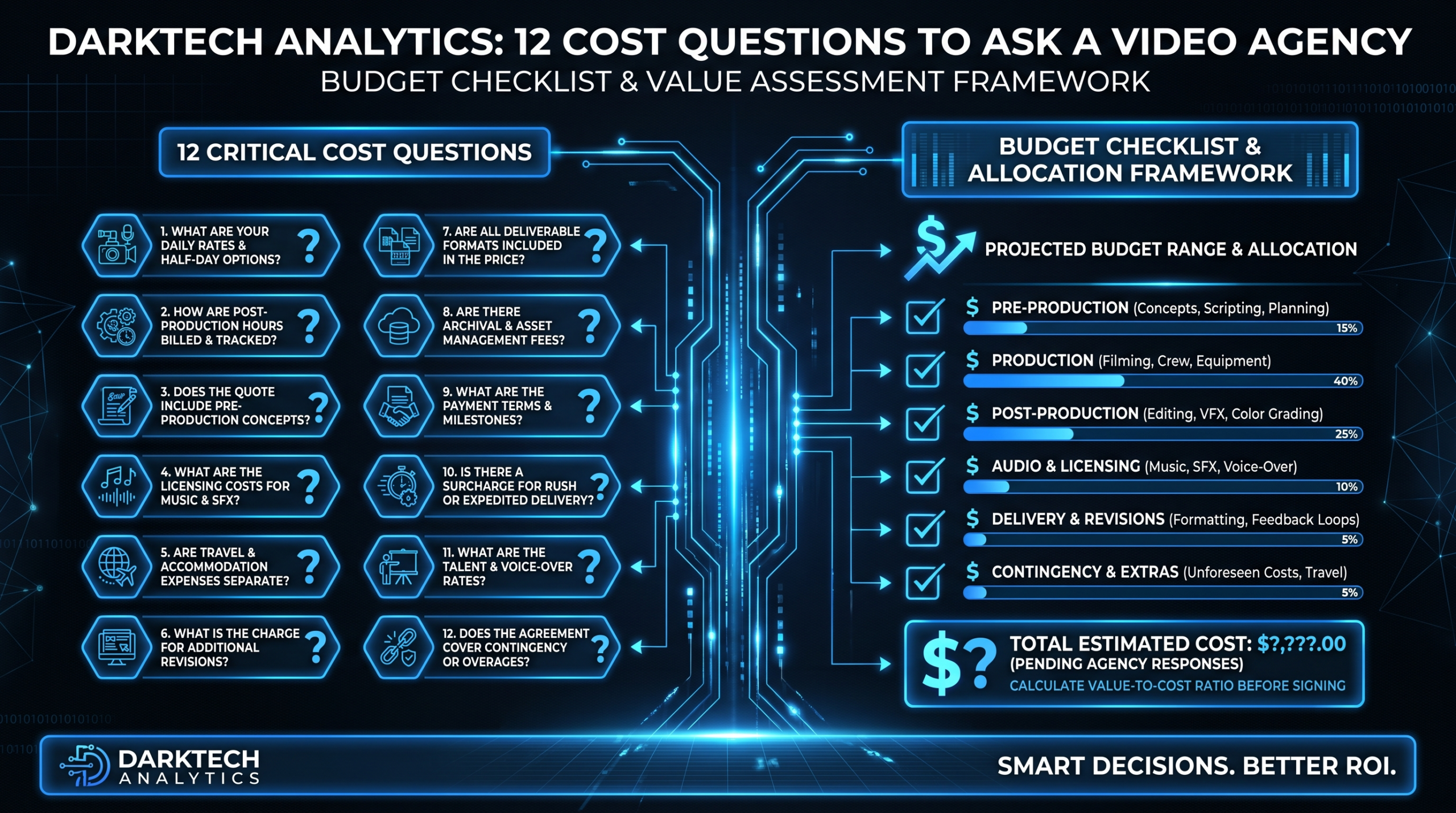
Many agencies apply an additional surcharge for revision turnarounds under 24–48 hours. Rush revision premiums of 25–50% above the standard overage rate are common practice, particularly at boutique and full-service agencies that manage multiple clients simultaneously. If your content program requires fast iteration cycles — which most SaaS marketing teams do, especially during product launches and campaign sprints — this cost multiplier needs to be evaluated at vendor selection, not discovered after the first invoice arrives.
Format Variation Billing
A related and frequently contested charge: aspect ratio variations. You approved a 16:9 YouTube cut. You now need a 9:16 version for LinkedIn and a 1:1 version for Instagram. Many agencies treat each additional format as either a new revision round or a separate mini-project. Others include a fixed number of format variations in the original scope. The question to ask before signing: "How many format variations are included at each stage, and how are additional formats billed?" This single question can prevent thousands in unexpected charges across a multi-format campaign.
Scope Creep vs. Legitimate Revision
This is the most contested territory in any video production relationship. What the client considers a reasonable creative adjustment, the agency may classify as scope creep triggering additional charges. Understanding the distinction — and documenting it contractually — is the only clean path through.
What Scope Creep Actually Looks Like
Scope creep happens when the client requests changes that go meaningfully beyond what was described in the approved brief. Clear examples:
- Requesting a 90-second edit be restructured into a 60-second version with a different narrative arc
- Adding a product feature demonstration that was not included in the original brief
- Requesting a completely different music direction after the first cut was approved with the original track
- Asking for animated lower thirds when the brief specified static text captions
- Changing the call-to-action copy in a way that requires the voiceover to be re-recorded
- Adding a new brand segment (intro sequence, logo animation) not in the original scope
These are change orders, not revisions. Agencies are right to scope and price them separately. The problem arises when legitimate scope changes are bundled into "revision" billing without transparent discussion — or when agencies label any significant client request as scope creep to reduce the work they are obligated to absorb under the included revision terms.
What a Legitimate Revision Looks Like
A legitimate revision is a request to adjust something within the agreed scope. These changes should be covered by included revision rounds:
- Requesting tighter pacing in a specific section where delivery feels slow
- Adjusting color grading to better match documented brand guidelines
- Fixing subtitle timing that is off by half a second
- Changing to a different music track within an approved style and mood
- Reordering two sections that were both specified in the original brief
- Adjusting audio levels between dialogue and background music
- Minor graphic text changes (updating a product name, correcting a URL)
The practical test: if the change can be made without rebuilding scenes, re-recording audio, or generating new creative assets from scratch, it is a revision. If it requires any of those, it is a change order — discuss and agree on scope before the work starts.
Red-Flag Revision Clauses to Reject Before You Sign
Most video agencies use contracts that have been refined over years to protect their interests. That is reasonable business practice. But certain clauses cross from "standard protection" into "license to charge at will." Here are the specific red flags to identify and negotiate before you sign any production agreement.
1. Undefined "Revision" Scope
The contract uses the word "revision" without defining it. There is no distinction between corrections (production errors) and genuine client-requested changes. This gives the agency complete discretion to invoice any change request. Push for an explicit definition that separates corrections from revisions and revisions from change orders.
2. "Reasonable Changes" as the Standard
Clauses that define included revisions as "reasonable changes" without specifying what that means in practice. In any dispute, "reasonable" is evaluated by the party issuing the invoice, not the party receiving it. Replace this language with specific examples or a clear procedural definition (consolidated feedback, single pass, no new assets).
3. No Rollover Language for Unused Rounds
Some contracts specify that unused revision rounds in one project phase do not carry over to later phases. If you use only one of your three included rounds on the rough cut, the other two are forfeit — and you pay overage rates for any revisions during color grading or sound design, even though you technically had unused rounds available. Always ask: do unused rounds from earlier phases apply to later phases?
4. Per-Comment Billing
Rare but real: contracts that bill per individual feedback comment rather than per consolidated round. A feedback document with 15 specific notes costs 15 times what a document with one summary note costs. This structure actively incentivizes clients to provide vague, minimal feedback — which produces worse final results for both parties. This clause should simply be rejected.
5. Aggressive Automatic Approval Windows
Language stating that if the client does not respond within a specified window, the current version is "deemed approved" and any subsequent changes incur revision fees. A week to 10 business days is reasonable. Windows shorter than 48–72 hours are operationally risky for any company that requires internal review cycles before approving video content. Negotiate a longer window before signing, or add explicit exceptions for documented review processes.
6. Post-Approval Change Fees With No Error Exception
Clauses that charge revision fees for any change requested after the client formally approved a version — including scenarios where the client discovers a production error hours after approval. A quality-oriented agency will fix genuine errors discovered post-approval without a fee. Contracts that eliminate this exception entirely should be negotiated or rejected. At minimum, push for language that carves out corrections for factual errors, brand asset mistakes, and clear deviations from the brief, even when discovered post-approval.
When to Push Back or Refuse to Pay a Revision Fee
Not every revision fee is legitimate. These are the specific situations where you are within your rights to push back or decline payment — and how to do it effectively.
When the Original Brief Was Not Honored
If the delivered edit contains errors, omissions, or creative choices that contradict the approved brief, any fee for correcting those deviations is unjustified. The process: document the specific deviations with timestamps, compare them line-by-line against the signed brief, and present this in writing to the agency's project manager or account lead. Most professional agencies will waive the charge immediately. If they do not, it is a meaningful signal about how the relationship will handle future disputes — which should inform whether you continue with that vendor.
When the Revision Round Definition Was Never Agreed
If you submitted consolidated feedback and the agency counted follow-up clarification emails as separate rounds, push back. If there was no written agreement on the definition of "one round" before production started, the lack of a documented standard works in the client's favor for disputes about the first occurrence. Send an email in real time confirming the definition going forward: "We understand this consolidated feedback document constitutes one revision round." That confirmation prevents the dispute from recurring on every subsequent project phase.
When the Change Is a Correction, Not a Revision
Wrong logo file used. Company name spelled incorrectly. Voiceover cut at the wrong time code. Wrong product shown in a demo sequence. These are production errors — not client-requested revisions. Any agency attempting to invoice correction of their own mistakes is acting in bad faith. State this clearly and specifically in writing, reference the exact brief section that specifies the correct element, and decline to pay. This is the clearest case for refusal, and most reputable agencies will immediately acknowledge the error.
When Extra Rounds Were Caused by Agency Error
If the project required additional revision rounds because the first delivery missed the brief significantly — requiring rounds 3 and 4 to fix what rounds 1 and 2 should have delivered — you have a reasonable argument that the overage was generated by production error, not client indecision. This case requires documentation: save every version with delivery date, every feedback email with timestamps, and every delivery receipt. If you can demonstrate that your first two rounds of feedback were about correcting production errors rather than changing your mind, the overage fees for those rounds are arguable.
When You Were in Active Communication During an Automatic Approval Window
If a contract had an aggressive automatic approval clause and you missed the window while in active communication with the agency team about the current cut, that is worth challenging — particularly with agencies you have an ongoing relationship with. Active documented communication during the approval window is a good-faith defense against a technical contract breach. Most agencies will not enforce an automatic approval clause against a client who was clearly engaged and in dialogue during the review period.
The Practical Reality of Refusing to Pay
Declining a revision fee invoice is not a risk-free position if the charge is clearly stated in a signed contract. The agency has a contractual basis for collection. However, revision fee disputes — typically ranging from $150 to $1,500 — are almost never pursued through legal action. The cost of collections exceeds the invoice amount, and the relationship damage is permanent. The practical reality is that most agencies will negotiate, waive, or credit a disputed fee rather than escalate.
The most effective approach: respond in writing within a few business days of receiving the invoice. Be specific — identify the contractual definition, explain precisely why this charge does not meet that definition, and propose a concrete resolution (waive this round's fee, apply a credit to the next deliverable, or reduce to a courtesy rate). Calm, documented pushback supported by brief references resolves the majority of revision fee disputes without escalation.
How "Unlimited Revision" Plans Actually Work
Subscription-model video editing services — the Design Pickle and Superside equivalents for video post-production — commonly market "unlimited revisions" as a core value proposition. Understanding what this means operationally is essential before choosing this model as a way to escape per-round billing.
The Throughput Constraint
Unlimited revisions on a subscription plan means you can submit as many change requests as you want. It does not mean those requests are processed simultaneously or on demand. The model works sequentially: one active request at a time, worked through to completion before the next request begins. Each revision pass is a request in the queue.
In practice: if a video requires four revision passes and each pass has a 24–48 hour turnaround, those four passes consume 4–8 days of your subscription window. During that time, you are iterating on one video rather than producing new content. For content teams with high output requirements, this is a real throughput trade-off — one that "unlimited" does not communicate upfront.
What Unlimited Revision Plans Typically Exclude
Most video editing subscription plans include unlimited revisions on editing decisions — cuts, pacing, music selection, color, subtitles — but charge separately or exclude entirely:
- Voiceover re-recording or new talent sourcing
- New motion graphics or animation sequences not in the original brief
- Stock footage sourcing and licensing
- Changes that require a substantially different narrative structure or script
- Resizing or reformatting for additional platforms (sometimes included, sometimes not)
These exclusions are typically buried in plan terms and represent the practical ceiling on what "unlimited" covers. Reviewing the exclusion list before selecting a subscription plan is more important than comparing the headline revision policy.
The Editor Consistency Problem
Subscription services frequently rotate editors across requests, meaning revision round two may be handled by a different editor than revision round one. The new editor applies the same feedback with slightly different creative judgment. For SaaS companies with strict brand consistency requirements — specific color grades, motion style, pacing preferences that develop over months of working together — this rotation introduces quality variance that fixed revision counts with a dedicated editor do not have. It is a meaningful operational consideration that rarely appears in subscription plan comparisons.
The Dedicated-Team Alternative to Per-Round Billing
Revision fee conflicts are structurally inevitable with per-project billing models. When a vendor is paid a fixed fee per deliverable, every additional revision pass is a cost they absorb from their margin. Any rational vendor protects that margin by limiting iteration. This is not bad faith — it is the predictable outcome of the incentive structure. The billing model creates the conflict.
The models that functionally eliminate revision fee disputes are the ones where the vendor's incentive aligns with output quality rather than billable rounds. Dedicated team arrangements and flat monthly retainers achieve this: the team is compensated for producing great work across the month, not for protecting a per-project margin. Revisions are part of the production process, not a separate revenue center.
Video Editing Company structures all three plans — Growth ($5K/mo), Core ($9.5K/mo), and Scale ($16K/mo) — around this model. A dedicated senior editor, junior editor, project manager, and creative director work on your account on an ongoing basis. The team learns your brand, your feedback patterns, and your quality standards. Revision cycles shorten significantly as the team builds institutional knowledge of your content. You are not iterating with strangers each month.
The guarantee is specific: double your video output in 90 days or month four is free. That level of output increase only works when the team is not constrained by revision billing — when iteration is just part of how work gets done. See the VEC pricing page for a full breakdown of what each plan includes and how revision workflow is structured within the dedicated team model. For teams evaluating how this compares operationally to per-project arrangements, the how it works page covers the full production workflow.
If your team has been running per-project engagements and accumulating revision overage fees, the financial comparison is straightforward: add up six months of base project costs plus all revision overages. That number, divided by six, is your true monthly video production cost. For many Series A–C SaaS companies, that number is meaningfully higher than a flat-rate dedicated team plan — before accounting for the productivity cost of managing revision disputes.
For teams building long-term video programs, the research reinforces this direction. Wistia's State of Video research consistently shows that iterative, high-frequency video programs — the kind that require fast revision cycles — deliver stronger results on both engagement and conversion than one-off campaign approaches. The ability to iterate quickly without billing friction is not a nice-to-have; it is how modern video programs compound. And according to Wyzowl's video marketing statistics, the majority of marketers who use video report that it directly influences purchase decisions, making the quality and speed of revision cycles a revenue-relevant question, not merely an operational one.
Understanding revision fees — what they cover, when they are legitimate, and when they are not — is ultimately about knowing what you are buying and what leverage you have when the terms are not being honored. Whether you are negotiating a new per-project contract or evaluating whether it is time to move to a flat-rate model, the frameworks in this guide give you the language and documentation standards to avoid paying for other people's errors, scope you never approved, or rounds you were never supposed to need.
Frequently Asked Questions
Are revision fees enforceable even if the original delivery didn't match the brief?
This depends on the specific clause and jurisdiction, but the general principle is that a vendor cannot charge for correcting their own failure to deliver the agreed scope. If the revision fee clause is broadly written to cover "any change request," it may technically include corrections — but this creates an unjust enrichment argument. Most disputes about corrections versus revisions resolve in the client's favor through negotiation before any legal process is needed, because agencies do not want to pursue small claims over a few hundred dollars at the cost of the relationship.
What should I do when an agency sends a revision fee invoice I believe is unjustified?
Respond in writing within a few business days. Do not ignore the invoice. Be specific: identify the contract's definition of revisions, explain precisely why this charge does not meet that definition — whether it is a correction for a production error, a disputed round count, or scope that was originally specified in the brief. Propose a concrete resolution (waive this round, apply a credit, reduce to a courtesy flat rate). Document the entire exchange. Most professional agencies will negotiate rather than lose a client or escalate to collections over a single disputed invoice of a few hundred dollars.
How many revision rounds should I negotiate for a standard SaaS product demo?
Three rounds is the market standard for a 2-minute product demo: one at rough cut for major structural and content feedback, one at picture lock for pacing, music, color, and subtitles, and one final QA pass for any remaining corrections. If you need multi-platform format variations — 16:9, 9:16, and 1:1 cuts — negotiate whether those count as a separate deliverable within the same rounds or as additional work. For a broader look at typical demo video production scope and pricing, see our product demo video production guide.
Do unlimited revision subscription plans ever truly run out of capacity?
Not technically — but practically, yes. The constraint is throughput, not policy. On a single-active-request plan with 24–48 hour turnaround per pass, a video requiring four revision cycles takes 4–8 days. During that time, no new content is being produced. For content teams with high-volume monthly output targets, this sequential processing model creates a real capacity ceiling regardless of what the "unlimited" label implies. Plans with multiple concurrent active requests address this, but their pricing typically approaches dedicated team retainer costs anyway. The "unlimited" label is accurate as a request policy — it is not accurate as a production throughput claim.
How can I protect myself from revision fee disputes before production starts?
Four things before any project begins: (1) Get the revision round definition in writing — one consolidated feedback document equals one round. (2) Require explicit language distinguishing corrections for production errors from client-requested revisions. (3) Confirm whether format variations count as revision rounds or are included as standard deliverables. (4) Use a dedicated video review tool — Frame.io or Wipster — so every feedback session is timestamped and documented. This creates an undeniable audit trail of exactly how many consolidated feedback sessions occurred, which is your primary defense if the agency attempts to count rounds differently than you understood the agreement.
Tired of Negotiating Revision Fees?
With a dedicated editing team on a flat monthly plan, revisions are part of the process — not a separate invoice. Book a call to see how VEC structures its workflow and what doubling your video output could look like in 90 days.
Book a Free Strategy Call See Pricing Plans